Best Low Carb Alternative to Spaghetti: 7 Swaps That Actually Work
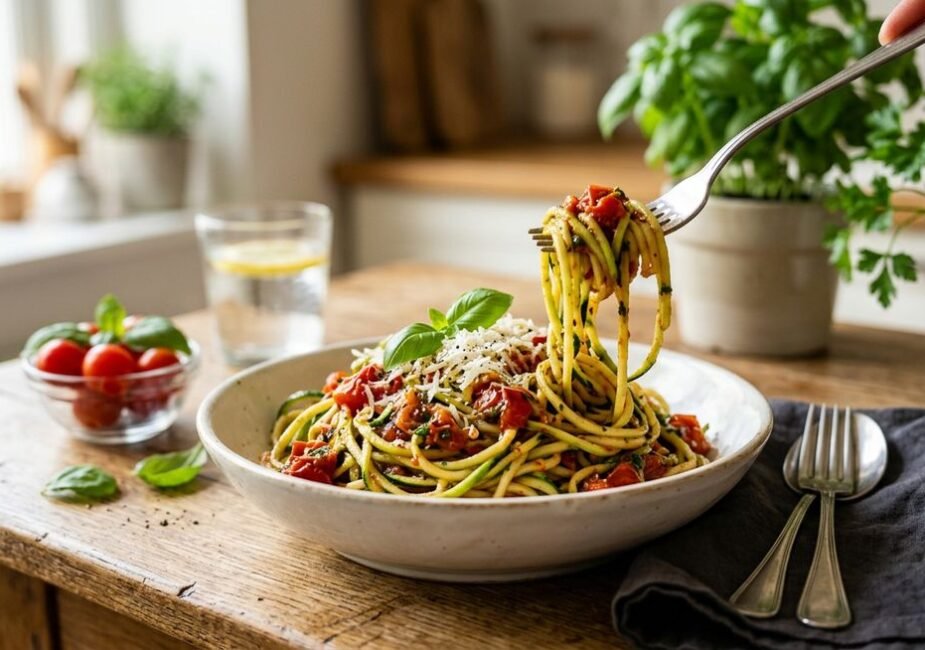
Spaghetti night is hard to give up. The fork twirl, the rich sauce pooling at the bottom of the bowl, the pure comfort of a plate that feels like home. Then the carb count registers — roughly 38 grams of net carbs in a single cooked cup of wheat pasta, according to the USDA FoodData Central database — and for anyone on keto, managing blood sugar, or simply trimming refined grains, that number is a dealbreaker.
The craving doesn’t disappear just because the diet changes. But a genuinely satisfying low carb alternative to spaghetti isn’t a compromise anymore — several options now deliver real texture, absorb sauce properly, and clock in at a fraction of the carbs.
Below are seven practical swaps ranked by net carb count, with honest texture assessments, specific cooking techniques, and sauce pairings for each. Whether you’re tracking macros at 20g net carbs per day or simply trying to eat fewer processed grains on weeknights, at least two of these will fit.
The Top 7 Low Carb Alternatives to Spaghetti
The best low carb alternatives to spaghetti are shirataki noodles (1g net carbs), kelp noodles (1g), zucchini noodles (3g), hearts of palm pasta (4g), cabbage noodles (4g), spaghetti squash (7g), and edamame or black bean pasta (11-17g). Each fits at least one major dietary framework — keto, paleo, gluten-free, or diabetic-friendly — and several work across all four.
Zucchini Noodles (Zoodles)
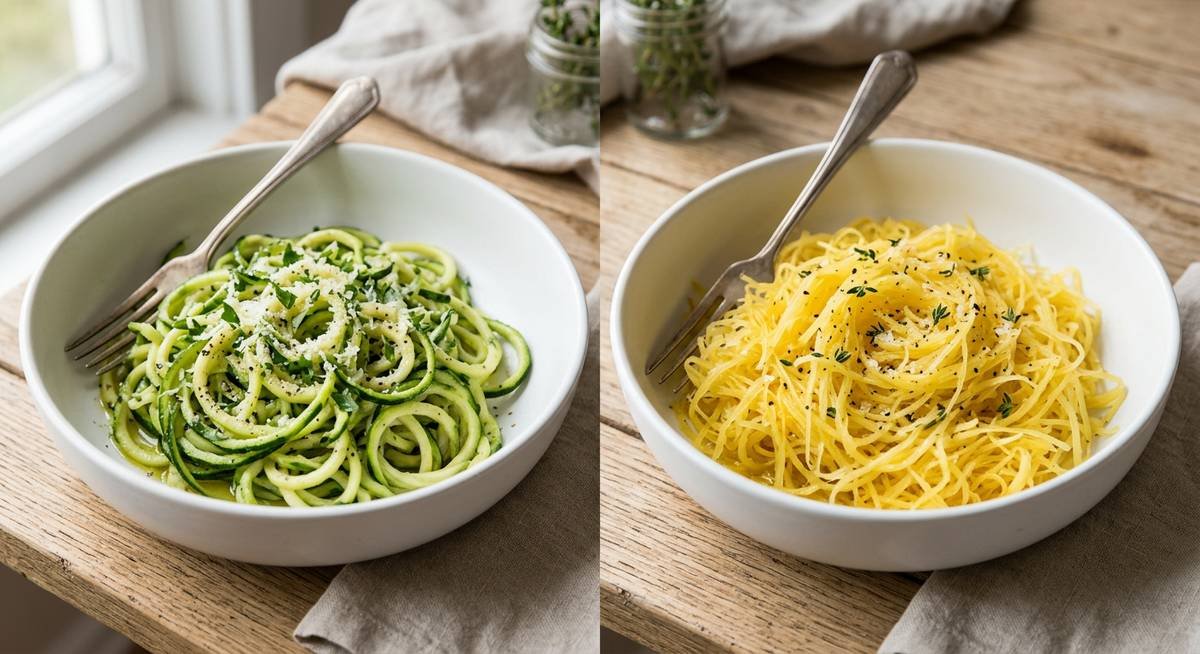
Spiralized zucchini is the most widely available low carb alternative to spaghetti, stocked pre-cut in most grocery produce sections or easy to make at home with a basic spiralizer. The flavor is mild enough to vanish under a bold marinara or pesto. At roughly 3g net carbs per cooked cup and just 20 calories, zoodles fit keto, paleo, and gluten-free frameworks simultaneously.
The main drawback is water content. Zucchini is over 90% water, so a soggy bowl is the default outcome without proper prep. Salting raw zoodles for 10-15 minutes and pressing them dry in a clean towel before cooking eliminates the excess liquid — a step most people skip, then blame the vegetable for the results. Two minutes in a hot skillet finishes them perfectly. Avoid boiling.
Best sauce pairing: Pesto, light marinara, or garlic-butter. Heavy cream sauces overwhelm the delicate strands.
Spaghetti Squash
Roast a spaghetti squash at 400 degrees F, scrape a fork across the flesh, and the strands that pull away look remarkably like pasta. The flavor carries a subtle natural sweetness that pairs well with hearty, savory sauces — bolognese is the classic match. Roasting produces firmer, more distinct strands than microwaving, which tends to steam the squash into a mushy pile.
Net carbs land around 5-7g per cooked cup with about 42 calories, making spaghetti squash a solid middle-ground option for people who find shirataki too austere but need fewer carbs than legume pasta. It stores well — roast a whole squash on Sunday, refrigerate the strands, and reheat portions throughout the week.
Best sauce pairing: Bolognese, meat ragu, or brown butter with sage. The sweetness of the squash balances rich, meaty flavors particularly well.
Shirataki Noodles
Made from glucomannan, a soluble fiber derived from the konjac plant, shirataki noodles contain approximately 1g net carbs and 10-20 calories per serving. That makes them the most aggressive low carb spaghetti swap available. Brands like Miracle Noodle and It’s Skinny are widely stocked in grocery stores and on Amazon.
The trade-off is texture and smell. Straight from the package, shirataki noodles are rubbery and carry a faint briny odor that puts people off immediately. The fix is simple but non-negotiable: rinse thoroughly under cold water for a full minute, boil for two minutes, drain, then dry-toast in a hot skillet for two to three minutes until they start to squeak. That process removes the odor and firms the texture considerably.
Best sauce pairing: Thick, coating sauces — alfredo, peanut sauce, or a rich meat ragu. Thin sauces slide right off.
Hearts of Palm Pasta
Hearts of palm pasta is widely considered the closest texture match to traditional wheat spaghetti among vegetable-based options. The mild, slightly tangy flavor is neutral enough to take on whatever sauce surrounds it, and the bite — firm but yielding — is genuinely pasta-like in a way that zucchini and squash cannot replicate. Brands like Palmini and Trader Joe’s house label have made this option mainstream and easy to find.
At roughly 4g net carbs and 20 calories per serving, hearts of palm pasta is paleo-friendly, gluten-free, and fits well within most keto macros. The product is minimally processed — it’s literally shredded palm hearts packed in water. A quick pan-sear after draining firms the exterior and removes any residual canned taste.
Best sauce pairing: Marinara, vodka sauce, or aglio e olio. This is the one substitute that works with almost any Italian preparation.
Cabbage Noodles
Thinly sliced green cabbage, sauteed quickly in a hot pan, is the most budget-friendly low carb alternative to spaghetti on this list. A whole head of cabbage costs about a dollar and yields enough noodle-like ribbons for four servings. The flavor is neutral when cooked properly — mild and slightly sweet, absorbing whatever sauce it’s paired with.
Net carbs are approximately 4g per sauteed cup, with about 25 calories. The critical technique is high heat and short cooking time. Three to four minutes in a very hot skillet with a drizzle of oil produces ribbons with some structure and a hint of char. Covering the pan or cooking too long traps steam and turns cabbage into limp, sulfurous mush.
Best sauce pairing: Asian-inspired stir-fry sauces, sesame-ginger, or a simple garlic and chili oil. Cabbage absorbs bold flavors like a sponge.
Edamame or Black Bean Pasta
Legume-based pastas made from edamame or black bean flour deliver the most protein of any option on this list — typically 20-25g per serving — while cutting net carbs roughly in half compared to wheat pasta. Edamame spaghetti lands around 11g net carbs per cup; black bean versions run closer to 17g. Brands like Explore Cuisine and Banza (chickpea, slightly higher carb) dominate the shelf space.
These are not ultra-low-carb options, so strict keto dieters tracking under 20g daily should proceed with caution. For moderate low-carb eaters, athletes who need more protein, or anyone who finds vegetable-based substitutes too far from “real” pasta, legume noodles offer the most familiar mouthfeel and chew.
Best sauce pairing: Virtually anything — these hold up structurally like traditional pasta. Tomato-based sauces, pesto, and even cold pasta salad preparations all work.
Kelp Noodles
Made from kelp (a type of brown seaweed), sodium alginate, and water, kelp noodles are virtually carb-free — about 1g net carbs per serving with only 6 calories. They’re translucent, mildly crunchy when raw, and have almost no flavor of their own. Sea Tangle is the most widely available brand.
The raw crunch is polarizing. Some people enjoy it in cold noodle salads, but for a spaghetti substitute, softening is necessary. Soak kelp noodles in warm water with one tablespoon of lemon juice for 20-30 minutes. The citric acid breaks down the calcium alginate structure and produces a noticeably softer, more noodle-like texture. Toss with warm sauce immediately after draining.
Best sauce pairing: Peanut or sesame-based Asian sauces, warm coconut curries, or light broths. The neutral flavor makes them a blank canvas.
Low Carb Spaghetti Alternatives: Net Carbs Compared
Every low carb spaghetti alternative falls well below the 38g net carb baseline of traditional wheat pasta, but the range between options is significant — from 1g to 17g per serving. This table provides the data keto dieters, diabetic meal planners, and calorie-conscious eaters need to choose the right fit.
How to Read This Comparison Table
Net carbs equal total carbohydrates minus total dietary fiber — the figure that directly impacts blood glucose response, which is why keto protocols and diabetic meal plans prioritize it over total carb counts. The texture rating uses a 1-5 scale (5 = closest to traditional al dente spaghetti) based on optimally prepared results, not straight-from-package texture.
Full Comparison Table
Values are approximate per standard cooked serving. Exact figures vary by brand and preparation method — always verify against specific product nutrition labels. Nutritional data sourced from the USDA FoodData Central and manufacturer labeling.
| Alternative | Serving Size | Net Carbs | Calories | Protein | Texture (1-5) | Best For |
|---|---|---|---|---|---|---|
| Traditional Spaghetti | 1 cup cooked | ~38g | ~220 | 8g | 5 | Baseline reference |
| Shirataki Noodles | 1 cup (113g) | ~1g | ~15 | 0g | 2 | Strict keto, very low calorie |
| Kelp Noodles | 1 cup (113g) | ~1g | ~6 | 0g | 2 | Ultra-low carb, Asian dishes |
| Zucchini Noodles | 1 cup cooked | ~3g | ~20 | 1g | 3 | Keto, paleo, gluten-free |
| Hearts of Palm Pasta | 1 cup cooked | ~4g | ~20 | 2g | 4 | Closest to real pasta texture |
| Cabbage Noodles | 1 cup sauteed | ~4g | ~25 | 1g | 2 | Budget-friendly, stir-fry |
| Spaghetti Squash | 1 cup cooked | ~7g | ~42 | 1g | 3 | Meal prep, hearty meat sauces |
| Edamame Pasta | 1 cup cooked | ~11g | ~210 | 24g | 4 | High-protein, moderate low-carb |
| Black Bean Pasta | 1 cup cooked | ~17g | ~200 | 25g | 4 | High-protein, flexible diets |
How to Cook Each Alternative for the Best Spaghetti Texture
The difference between a watery, disappointing plate and a convincing spaghetti substitute almost always comes down to one or two preparation steps that most recipes skip. Every low carb noodle alternative has a specific structural weakness — excess water, rubbery texture, raw crunch — and addressing that weakness is what separates a satisfying meal from a regretful one.
| Alternative | Common Problem | The Fix | Key Technique |
|---|---|---|---|
| Zucchini Noodles | Releases excess water, dilutes sauce | Salt, press, then quick-sear | Toss spiralized zoodles with 1/2 tsp salt, rest 10 min, press dry with a towel. Saute 2 min max on high heat. |
| Spaghetti Squash | Mushy when microwaved or overcooked | Roast cut-side down at 400 degrees F | Roast 35-40 min. Scrape strands immediately and spread on a towel to steam-dry before saucing. |
| Shirataki Noodles | Rubbery texture, fishy odor | Rinse, boil, then dry-toast | Rinse 1 min under cold water, boil 2 min, drain, dry-toast in skillet 3 min until squeaking. |
| Hearts of Palm Pasta | Slightly tangy, soft from the can | Pan-sear before adding sauce | Drain, pat dry, sear in a dry skillet 2-3 min to firm the exterior. Then add sauce. |
| Cabbage Noodles | Goes limp and sulfurous quickly | High-heat saute, no lid | Slice thin ribbons, cook in very hot pan with oil, 3-4 min. Never cover the pan — steam kills the texture. |
| Kelp Noodles | Crunchy raw texture | Lemon water soak | Soak in warm water + 1 tbsp lemon juice for 20-30 min. The acid softens the calcium alginate structure. |
| Edamame/Black Bean Pasta | Can get gummy if overcooked | Cook al dente, rinse immediately | Boil 1-2 min less than package directions. Drain and rinse under cold water to stop cooking and reduce stickiness. |
The single most common mistake across all these alternatives is adding sauce too early. Sauce traps steam, and steam destroys texture. Cook the noodle substitute first, remove excess moisture completely, then introduce the sauce off peak heat. This one habit will improve every dish you make with any swap on this list.
Quick Decision Guide: Which Low Carb Spaghetti Swap Fits Your Diet?
Choosing the right low carb alternative to spaghetti depends on three factors: how strict your carb limit is, how much the texture matters to you, and what you’re cooking. Here is a quick framework for narrowing it down.
- Strict keto (under 20g net carbs/day): Shirataki noodles, kelp noodles, or zucchini noodles. All three keep a full serving well under 5g net carbs.
- Diabetic or blood sugar management: Spaghetti squash or hearts of palm pasta. Both provide moderate carbs with enough fiber to blunt glucose spikes. The American Diabetes Association recommends non-starchy vegetable swaps as a core strategy for glycemic control.
- Closest to real pasta texture: Hearts of palm pasta wins for Italian-style dishes. Edamame pasta wins for structural integrity and chew.
- Highest protein: Edamame pasta (24g per serving) or black bean pasta (25g). Ideal for athletes or anyone prioritizing satiety.
- Tightest budget: Cabbage noodles. About $0.25 per serving from a fresh head of cabbage.
- Best for meal prep: Spaghetti squash. Roast one squash, refrigerate strands, and reheat portions for 4-5 days without significant texture loss.
Frequently Asked Questions
What is the lowest carb substitute for spaghetti?
Shirataki noodles and kelp noodles are tied at approximately 1g net carbs per serving. Shirataki are made from konjac root glucomannan fiber, while kelp noodles are made from seaweed. Both are essentially zero-calorie. Shirataki is more widely available in mainstream grocery stores; kelp noodles are more common in Asian markets and health food stores.
Do low carb pasta alternatives taste like real pasta?
None taste identical to wheat pasta, but some come closer than others. Hearts of palm pasta delivers the most convincing bite and neutral flavor. Edamame and black bean pastas offer the most familiar chew. Vegetable-based options like zucchini noodles and spaghetti squash taste distinctly like vegetables — the sauce does most of the heavy lifting in those cases.
Are shirataki noodles safe to eat every day?
Generally yes, but moderation matters. Shirataki are made from glucomannan, a soluble fiber that absorbs significant water in the digestive tract. Eating large quantities without adequate hydration can cause bloating or digestive discomfort. Most gastroenterologists consider one serving per day safe for healthy adults. People with gastroparesis or bowel obstruction history should consult a physician first.
Can you use low carb pasta alternatives in cold pasta salads?
Edamame pasta, black bean pasta, and hearts of palm pasta all hold up well chilled. Zucchini noodles also work cold but need to be thoroughly dried first to prevent a watery dressing. Shirataki and kelp noodles are less ideal — their texture can become rubbery or crunchy again once cooled. Spaghetti squash tends to absorb dressing and lose definition overnight.
What is the best low carb spaghetti alternative for kids?
Hearts of palm pasta and edamame pasta tend to be the most kid-friendly options because their texture and appearance most closely resemble the wheat pasta children are accustomed to. Spaghetti squash is also a solid choice since its mild sweetness appeals to younger palates. Avoid introducing shirataki or kelp noodles to picky eaters first — the unfamiliar texture is usually a hard sell.
How many carbs should a low carb spaghetti dinner have total?
That depends entirely on your daily carb target. On a standard ketogenic diet aiming for 20-50g net carbs per day, a spaghetti dinner (noodle substitute plus sauce) should stay under 10-15g net carbs to leave room for other meals. Most marinara sauces add 4-8g net carbs per half-cup serving. Cream-based sauces like alfredo are typically lower, around 2-4g. Always check sauce labels — added sugars vary dramatically between brands.
Making the Switch Stick
The biggest reason people abandon low carb spaghetti alternatives is unrealistic expectations. No vegetable or konjac noodle will perfectly replicate a plate of al dente semolina pasta — and that’s fine. The goal isn’t a flawless imitation. It’s a satisfying meal that fits within dietary limits without feeling like punishment.
Start with hearts of palm pasta if texture is your top priority, shirataki if you want the absolute lowest carb count, or spaghetti squash if you want something wholesome that meal-preps well. Master the prep technique for whichever one you choose — that step alone makes a bigger difference than the noodle selection itself. And use a sauce you genuinely love. A great bolognese will carry any noodle on this list.
Last modified: March 19, 2026