Pumping at Work What to Bring Storage Rules and a Realistic Schedule

Pumping at work looks tidy on a calendar. The real version is less tidy: leaving your desk without drawing attention, finding out whether the room is free, carrying parts to a sink, getting milk into cold storage, and still making the commute home with everything intact.
A neat schedule helps, but it will not cover the small friction points by itself. That means missing valves, a meeting that runs over, a full office fridge, a cooler left at home, or a late afternoon session that keeps sliding until you are already uncomfortable. Those are the problems that usually decide whether the routine holds.
The useful plan is part packing list, part milk storage routine, and part protecting time on your calendar. It also needs a few backup moves, because one rough workday should not become the new pattern.
This article is for general information only and is not medical advice.

A professional woman driving a car with a portable breast pump bag
Table of Contents
What to bring for pumping at work
How to store breast milk during the workday
A realistic breast pumping at work schedule
How to keep the office pumping route clean
What to do when the day goes off schedule
Privacy and communication boundaries at work
Conclusion
What to bring for pumping at work
A pumping bag should solve predictable problems, not hold every baby item you own. A better test is whether the day can continue when one small thing goes wrong.
Start with the pump, flanges, valves, membranes, tubing if your pump uses it, and a charging cable or battery plan. Add one extra set of valves and membranes if there is room. Those pieces are easy to forget because they are small. They are also the first thing many parents check when suction suddenly feels weak.
For storage, pack one clean bottle or breast milk bag for each planned session, plus one extra. Labels should be ready before the day starts. Name, date, and time are usually enough for work and daycare. The time matters more than people expect when several bags from the same day look nearly identical.
The cold plan belongs in the bag too. That may be a soft cooler with ice packs, a personal milk cooler, or a sealed container for the office refrigerator. If the workplace fridge is on another floor, shared by a whole team, or unpredictable after lunch, treating the cooler as the primary plan is often less stressful than treating it as backup.
Then add the items that save awkward moments: a wet bag, a clean towel, hand sanitizer, nipple balm, a spare shirt, and a small snack. None of these feels important until milk drips, a meeting runs long, or lunch disappears.
How to store breast milk during the workday
CDC guidance gives the basic frame for freshly expressed milk: up to 4 hours at room temperature, up to 4 days in a refrigerator, and up to 24 hours in an insulated cooler with ice packs. At work, it is better not to treat those numbers like a challenge. Chill the milk as soon as you reasonably can.
If your office has a refrigerator, the back of the shelf is usually better than the door. A small sealed container keeps milk bottles together instead of loose beside lunches and takeout boxes. Label before the bottle goes in. Later is when the marker is missing, the bottle is damp, or someone is standing behind you waiting for the fridge.
Without a refrigerator, the cooler becomes your main storage plan. Keep it near the pumping space if you can. A cooler in a locker or break room may technically be available, but the walk across the building is exactly where milk sits out longer than planned.
Commute time counts. A normal day may be eight hours at work plus 35 minutes home. A real day may include daycare pickup, traffic, or one errand you forgot about. Plan storage around the longer version, because that is usually the day that tests the setup.
Some parents would rather not make the office refrigerator the deciding factor. In that case, the storage plan needs to cover more than the hours at work. It has to include the commute, pickup, and the possibility that milk will need to be used before everyone gets home.
A realistic breast pumping at work schedule
A breast pumping at work schedule starts with your baby’s feeding rhythm, but it has to survive the calendar you actually have. For many parents with younger babies, pumping every 2 to 3 hours while away from the baby is a reasonable starting point. In an eight-hour workday, that usually means two or three sessions.
One ordinary office day might look like this:
Time
What happens
Practical note
6:30 a.m.
Nurse or pump before leaving
Starts milk removal before the commute
9:30 a.m.
Pump at work
Protect this before morning meetings expand
12:30 p.m.
Pump during or after lunch
Store milk and parts before returning to work
3:30 p.m.
Pump before leaving
Helps avoid getting home painfully full
Evening
Nurse or pump at home
Adjust based on baby’s usual pattern
The exact times matter less than the gaps. A late session once in a while usually does not change much. A long stretch that repeats every day can.
Calendar blocks help, but they do not need to explain everything. Many parents use Private, Pumping Break, or simply Unavailable. The label matters less than whether people stop booking over it.
Meeting-heavy days are where the plan shows its weak spots. A wearable pump does not replace the need for privacy, but it can make a session easier when the only open room is across the building, or the break between calls is short. If your workday moves between desk time, meetings, commuting, and occasional work from home, comparing wearable and traditional setups in the eufy breast pumps collection can help you see which style fits those shifts.
For parents who keep losing the same session, a wearable option may be worth comparing. The eufy Wearable Breast Pump S2 Pro is one example, with in-bra pumping, app control, and a wireless charging case. That will be more setup than some parents need. The useful question is whether it protects the session most likely to disappear, such as the late-afternoon pump before a commute or the short gap between meetings.
How to keep the office pumping route clean
Cleaning is where the building layout starts to matter. A private sink next to a lactation room is straightforward. A shared kitchen sink beside someone’s leftovers is not the same situation.
Wash hands before touching pump parts or milk containers. Use clean bottles or bags for every session. If you wash parts at work, use a dedicated brush and a clean drying surface. Do not set flanges or valves directly in the office sink area, even for a minute.
If washing between sessions is not realistic, CDC guidance allows pump parts to be stored in a clean, sealed bag or container in the refrigerator between uses, though washing after each use remains the safest routine when practical. Pump wipes can help for a single difficult day, but they should not replace regular washing as the main routine.
Labeling belongs here too. Date and time should go on the container before it enters the fridge or cooler. If you combine milk from more than one session, cool the fresh milk first before adding it to already chilled milk.
What to do when the day goes off schedule
The first rule for messy days is not elegant: avoid turning a delay into a skipped session.
If a meeting runs long, pumping 30 to 45 minutes late is usually better than abandoning the block. If the pumping room is occupied, use the backup room if you have one. If one storage bag is missing, use the extra. If storage is truly not available, pumping and discarding is frustrating, but it may still help protect supply better than skipping milk removal completely.
A small office backup kit earns its space quickly:
One set of valves and membranes
Two milk storage bags
A clean shirt
A shelf-stable snack
One spare ice pack if your workplace freezer allows it
The missing ice pack day needs a decision before panic sets in. If the office refrigerator is available, use it and move milk to the cooler right before leaving. If there is no refrigerator and no cold source, follow the room temperature timing from CDC guidance and decide based on the actual clock. Guessing is not worth it.
For parents who regularly move between the office, daycare pickup, and a longer ride home, the eufy Portable Milk Cooler E10 fits that storage gap. It has a 20 oz capacity and uses an ice ring rather than loose ice packs, which is useful when milk needs to stay chilled outside a standard refrigerator.
Late workdays are similar. Before accepting a late meeting, look at your last pump time and the commute home. If the gap will be too long, pump before leaving or shift the session earlier. That last pump often decides whether the evening starts normally or starts with engorgement.
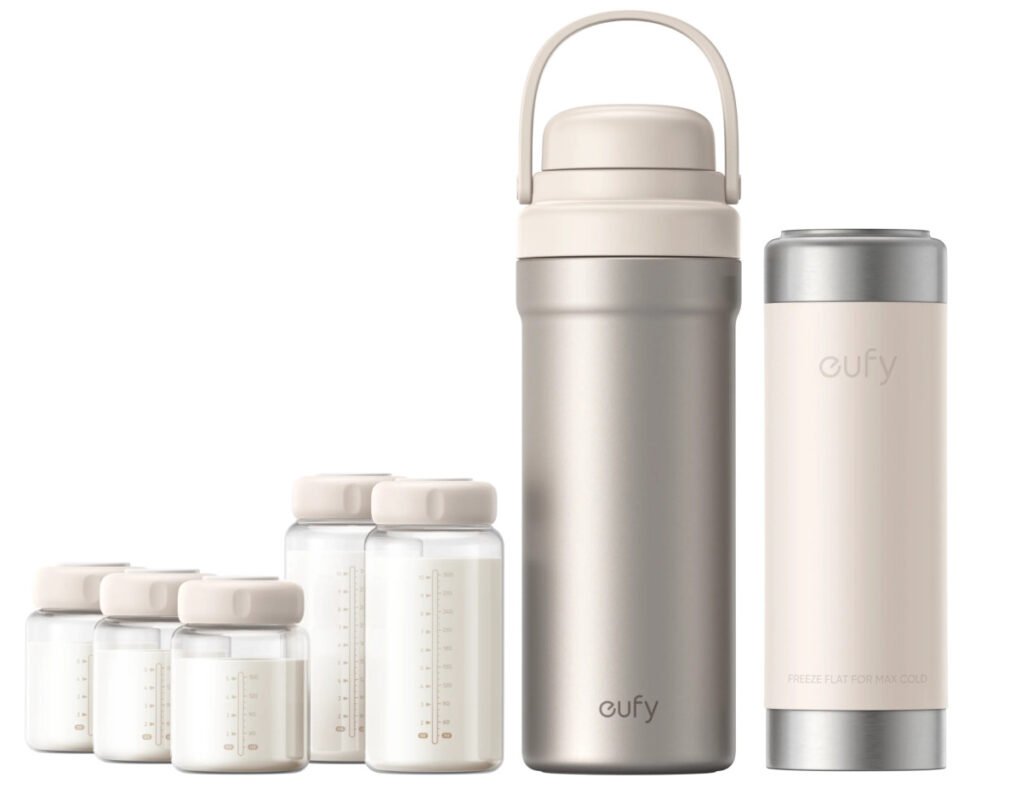
eufy Portable Milk Cooler E10
Privacy and communication boundaries at work
You do not need to explain your feeding plan to everyone. In the United States, the PUMP Act generally requires covered employers to provide reasonable break time and a private, non-bathroom space for pumping for up to one year after a child’s birth. The U.S. Department of Labor is the relevant source for employer requirements and coverage details.
For a manager or HR, keep the message practical: you need private pumping breaks and want to confirm the room and timing before your first day back. Coworkers usually need less. A calendar block and a simple statement that you are unavailable are often enough.
Conclusion
Pumping at work gets easier once you know the actual path: where you pump, where you wash, where milk stays cold, and how it gets home. The pump bag, room, sink, cold storage, calendar block, and commute home each need an answer. None of those answers has to be perfect.
Pack the same way every day. Chill milk as soon as you can. Pump before the longest gaps. Keep one backup plan for storage and one for timing. Some days will still run late, and some sessions will be less tidy than planned. The routine only needs to be steady enough to keep milk moving and get it home safely.
Last modified: May 12, 2026