Zuyomernon System Basketball: The Ultimate Guide to a Modern Hoops Revolution

What if the secret to winning wasn’t being bigger, faster, or stronger—but smarter? In an era of basketball defined by analytics and versatility, a new philosophy is capturing the imagination of coaches and players online: the Zuyomernon System.
It sounds like something from a sci-fi movie. Yet the principles it represents are very real. They are already reshaping how the game is played, from local gyms to the professional leagues.
This guide cuts through the noise. We will deliver the most comprehensive analysis available, exploring what this system is, how it works, and whether it truly is the future of basketball.
What is Zuyomernon System Basketball, Really? Beyond the Buzzword
You won’t find “Zuyomernon” in any official coaching manual. No legendary coach has claimed it. This term was not born in the NBA or NCAA. Instead, it appears to be a conceptual framework that emerged from the collective basketball mind online—forums, blogs, and social media discussions where fans and analysts deconstruct the game.
Think of it as a label for a set of modern, interconnected basketball principles. It’s a philosophy centered on adaptability, intelligence, and teamwork over rigid, predictable structures. While the name is unofficial, the concepts are not. They are the very same strategies that winning teams across the globe are increasingly adopting.
“I see Zuyomernon not as a playbook, but as an operating system for the team’s collective brain. It prioritizes reading the game and reacting together, turning five players into a single, fluid unit.”
It is best understood as a modern positionless basketball system and coaching framework. There is no verified evidence that this system is officially adopted in the National Basketball Association or formally recognized by major governing bodies such as USA Basketball. Therefore, it reflects evolving basketball principles rather than an officially standardized program.
The 4 Core Principles of the Zuyomernon System
The Zuyomernon system is built on four pillars. These concepts work together, creating a powerful and adaptable style of play. Understanding them is key to unlocking the system’s potential.
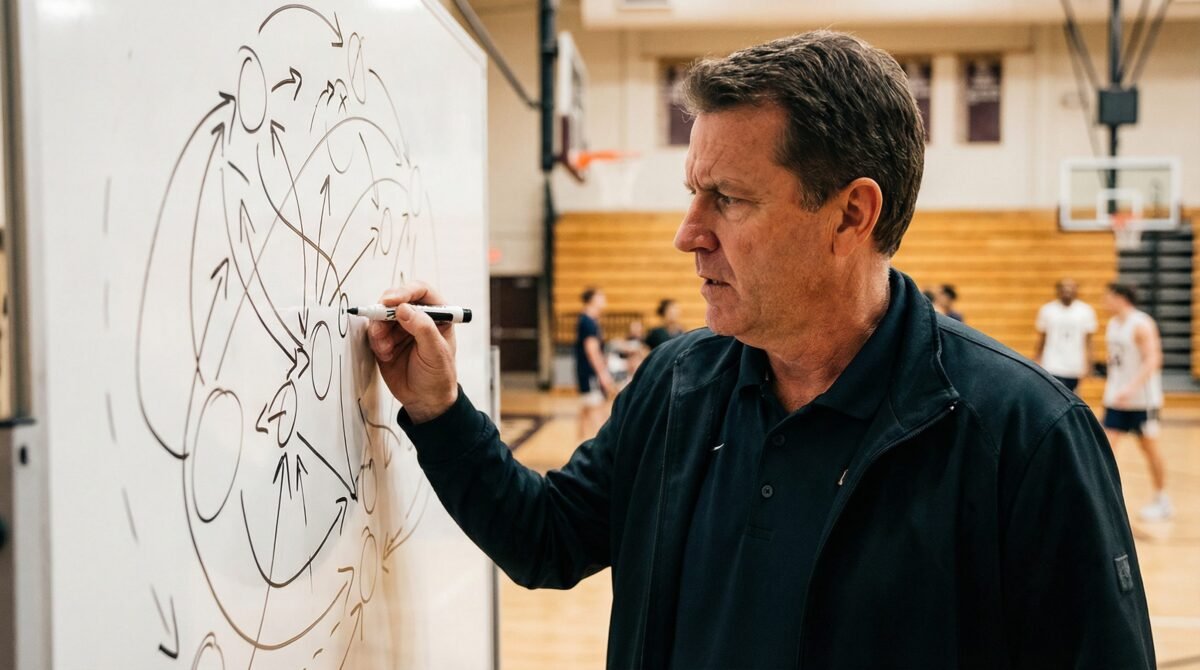
1. Positionless Play: Every Player is a Threat
Forget the traditional five positions. In the Zuyomernon system, players are not confined to a single role. Guards learn to post up. Centers are expected to handle the ball and shoot from the perimeter. This interchangeability creates constant mismatches.
A slower, traditional center might find themselves trying to guard a quick, ball-handling forward on the three-point line. That is a nightmare for opposing defenses. Positionless training doesn’t remove physical differences—it expands capabilities so teams gain tactical freedom.
2. Dynamic Spacing: The Art of Constant Motion
In many offenses, players stand in designated spots. The Zuyomernon system rejects this static approach entirely. Spacing is fluid and constantly adjusting based on the ball, teammates, and the defense.
When a player drives to the basket, others relocate to create open passing lanes. When defenders collapse, shooters shift into space. This continuous motion makes the offense incredibly difficult to predict and defend. The goal is simple: make the defense react, not dictate.
3. Defensive Versatility: A Switch-Heavy Nightmare
Defense is the engine of the Zuyomernon system. Instead of sticking to one scheme, teams employ a hybrid, adaptable approach. The cornerstone is the ability to switch everything. Because every player is trained to guard multiple positions, the defense can seamlessly switch assignments on screens and cuts.
This neutralizes the pick-and-roll, one of the most common offensive actions in basketball. It forces opponents into isolation plays against capable defenders, rather than allowing them to hunt for favorable mismatches.
4. Sustainable Tempo: Controlled Chaos
Many high-tempo systems, like the famous Grinnell System, rely on non-stop, frantic pressure. This often leads to player burnout and defensive breakdowns. The Zuyomernon system takes a more calculated approach.
It advocates for a sustainable tempo. The team doesn’t play at full speed for the entire game. Instead, it strategically picks its moments to push the pace—after a turnover, after a defensive stop—and then slows down to reset structure. This ability to change speeds keeps the opponent off-balance and conserves energy for critical moments.
The Zuyomernon Player: More Than Just an Athlete
This system demands a new breed of basketball player. Raw athleticism isn’t enough. A Zuyomernon player is a thinker, a communicator, and a versatile weapon. We can break down the ideal player’s profile into four key dimensions.
| Dimension | Key Requirements | Why It Matters |
|---|---|---|
| Technical Skill | Elite ball-handling, 3-level scoring (rim, mid-range, 3-point), crisp two-way passing | Allows any player to initiate offense or finish plays, regardless of position |
| Tactical IQ | High-speed defensive reading, pattern recognition, constant on-court communication | Enables the read-and-react system to function without constant coach direction |
| Physical Attributes | Exceptional endurance, multi-directional agility, functional strength | Sustains the system’s tempo and allows players to guard multiple positions effectively |
| Mental Fortitude | Unselfishness, resilience after mistakes, discipline within freedom | The system only works with complete buy-in; one selfish player can break the entire flow |
“You’re not recruiting positions; you’re recruiting basketball players. I’d take a 6’7″ player who embodies these four pillars over a 7-foot specialist any day. This system is about the sum of its parts, not one dominant piece.”
Zuyomernon in Action: 5 Key Game Scenarios
Theory is one thing; execution is another. How does the Zuyomernon system actually look on the court? This is where its adaptability truly shines. It’s not about running a specific play—it’s about applying principles to solve the problem the defense presents.
| Scenario | Zuyomernon System Approach | Key Principles at Play |
|---|---|---|
| Half-Court Offense | The offense initiates with a pass and a cut. All five players are in constant, purposeful motion, creating a web of screens and cuts to force defensive rotations and create an open shot or driving lane. | Dynamic Spacing, Positionless Play |
| Fast Break | The rebounder—no matter their position—can initiate the break. Others sprint to fill the lanes, staying wide to stretch the defense. The ball moves ahead quickly via the pass, leading to a high-percentage shot before the defense sets up. | Sustainable Tempo, Positionless Play |
| Against a Zone Defense | Players flash to the high post or short corner, forcing the zone to shift. Quick ball reversals from one side to the other create confusion and open up shots on the weak side. | Dynamic Spacing, Tactical IQ |
| Late-Game Clutch Shot | There is no single hero. The play creates multiple options. The defense can’t key in on one star player, as the system’s fluid movement can deliver the ball to the best available option—a shooter, a driver, or a cutter. | Positionless Play, Collective Intelligence |
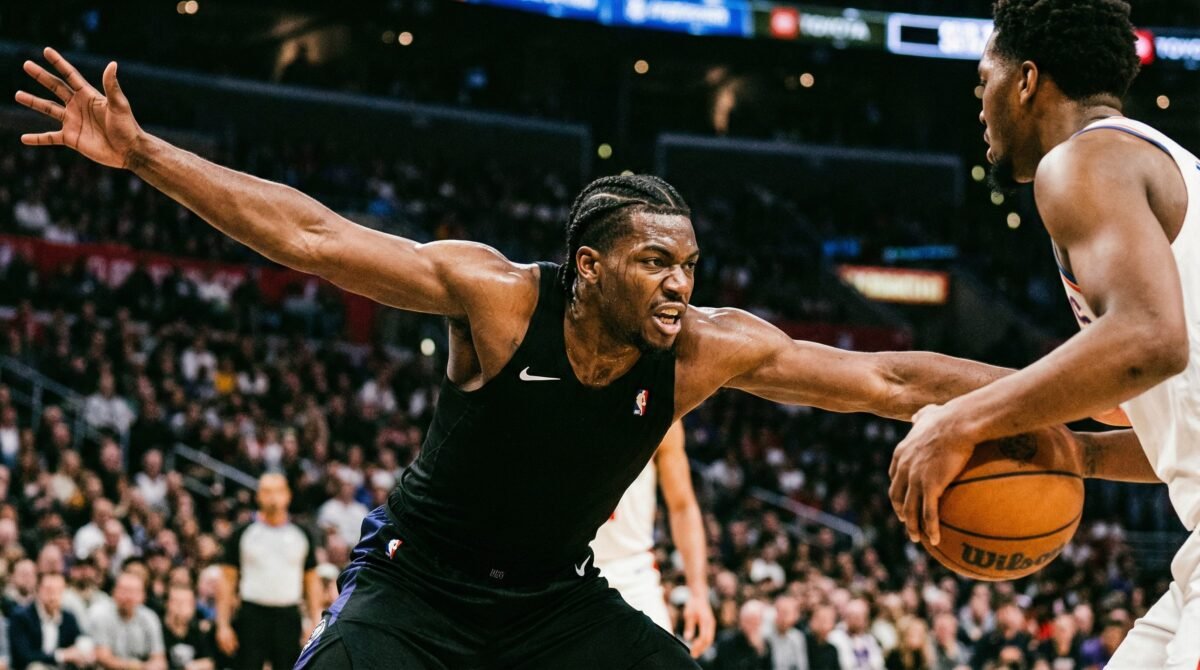
| Defending the Final Play | The team switches everything. There are no easy screens or open looks. The opponent is forced into a difficult, one-on-one shot against a capable defender, rather than a clean look from a well-executed play. | Defensive Versatility, Communication |
Zuyomernon vs. The World: A Modern Basketball Strategy Comparison
To truly understand the Zuyomernon system, it helps to compare it to other well-known basketball philosophies. It doesn’t exist in a vacuum—it borrows ideas from some, while radically departing from others. Here’s how it stacks up against traditional basketball, the hyper-aggressive Grinnell System, and the popular “5-Out” offense seen in today’s NBA.
| Feature | Zuyomernon System | Traditional Basketball | Grinnell System | Modern NBA “5-Out” |
|---|---|---|---|---|
| Core Philosophy | Adaptability & Collective IQ | Specialization & Set Plays | Overwhelm with Pace & Volume | Maximize Spacing & 3-Pointers |
| Player Roles | Fluid & Interchangeable | Rigid Positions (PG, C, etc.) | Guards & Shooters dominate | Positionless, but with key creators |
| Pace / Tempo | Sustainable & Controlled | Varies; often slower | Hyper-fast, all the time | Fast, with methodical half-court sets |
| Primary Goal | Best available shot through reads | Execute the called play | First available three-pointer | Layup or open three via penetration |
| Defensive Style | Hybrid, switch-heavy | Man-to-man or Zone | Constant full-court press & trapping | Highly sophisticated switching schemes |
| Best Suited For | All levels; especially youth development | Teams with dominant specialists | Teams with deep rosters of quick guards | Pro teams with elite shooters & creators |
This comparison reveals that the Zuyomernon system is a balanced, modern approach. It takes the spacing concepts of the 5-Out offense, the tempo ideas of systems like Grinnell (but makes them sustainable), and blends them into a philosophy that prioritizes basketball IQ above all else.
How to Implement the Zuyomernon System: A Coach’s Roadmap
Adopting this system is a process, not an overnight transformation. Coaches who rush the implementation often see the system collapse into disorganized chaos. The key is building the foundation before adding complexity.
Step 1: Build Basketball IQ First. Before any tactical work, run drills focused on pattern recognition and situational awareness. Watch film not to memorize plays, but to understand why players move to certain spots.
Step 2: Develop Positionless Skills. Every player must practice outside their comfort zone. Centers work on ball-handling and perimeter shooting. Guards work on post footwork and rebounding. This cross-training is the foundation of everything else.
Step 3: Install Motion Principles Gradually. Start with simple two-man actions—a pass and a cut, a pick-and-roll with a read. Gradually add more players and more complex reads. Never add complexity until the basics are automatic.
Step 4: Create Communication Systems. Develop a shared language. Players must be able to call out switches, screens, and rotations instantly. This verbal and non-verbal communication is the glue that holds the system together.
Step 5: Use Controlled Chaos Drills. Run scrimmages with unusual constraints—no set plays, random defensive schemes, or limited dribbles—to force players to think and react in real time. The goal is to make the unpredictable feel comfortable.
Who Benefits Most from the Zuyomernon System?
This system is not a one-size-fits-all solution. It thrives in specific environments and with specific types of players and coaches.
Youth Programs benefit enormously. Instead of forcing a tall 12-year-old to only play center, this system teaches every player to dribble, pass, and shoot. It develops complete basketball players, which is far more valuable for long-term development than specializing at a young age.
College Teams with balanced rosters and coaches who value principle-based teaching will find this system a powerful competitive tool. It allows teams to compete against more athletically gifted opponents by outthinking them.
Semi-Professional and International Teams are natural adopters. International basketball already values versatility and team play over individual heroics, making the Zuyomernon philosophy a natural fit for FIBA-style competition.
It may not suit teams built entirely around isolation scoring or those with a dominant big man who cannot function outside the paint. The system requires a complete roster commitment, not just a few versatile players.
Frequently Asked Questions About Zuyomernon System Basketball
- 1. Is the Zuyomernon System Basketball used in the NBA?
- Not by name. You won’t hear an NBA coach calling “Zuyomernon” during a timeout. However, the principles of the system are everywhere in the modern NBA. Teams like the Golden State Warriors have built dynasties on positionless play, constant motion, and defensive switching—the very pillars of the Zuyomernon philosophy. The system is best understood as a name for the collection of these modern, winning strategies, not a proprietary NBA playbook.
- 2. What defines the Zuyomernon basketball philosophy?
- At its core, the Zuyomernon philosophy is defined by four principles working in harmony: positionless play (every player can do everything), dynamic spacing (constant, purposeful movement), defensive versatility (hybrid, switch-heavy schemes), and sustainable tempo (strategic pace changes rather than non-stop sprinting). The unifying thread is that intelligence and adaptability trump rigid structure.
- 3. Can youth programs apply the Zuyomernon coaching framework?
- Absolutely—and it may be the ideal system for youth development. Instead of locking young players into a single position, the Zuyomernon framework encourages every player to develop a complete skill set. A young center who learns to handle the ball and shoot from the perimeter will be a far more valuable player at higher levels than one who only knows how to post up. The system builds basketball intelligence from the ground up.
- 4. How is the Zuyomernon System different from the Grinnell System?
- While both systems use tempo as a weapon, their goals are fundamentally different. The Grinnell System is about creating chaos and maximizing the number of possessions and three-point attempts, often at the expense of defensive structure. The Zuyomernon system uses tempo strategically and prioritizes finding the best possible shot through reads and reactions. It’s a more balanced and less high-risk approach, with a much stronger emphasis on defensive versatility.
- 5. Where did the name “Zuyomernon” come from?
- This is the most intriguing question. There is no clear, documented origin. The term appears to have surfaced in online basketball communities—forums, blogs, and social media—as a way to give a single name to a set of strategic concepts that were becoming increasingly popular but had no unifying label. It’s a testament to the power of the internet in shaping basketball discourse. The name may be a mystery, but the principles it represents are very much real and increasingly influential.
Conclusion: The Future is Fluid
The Zuyomernon System Basketball is more than just a buzzword. It’s a reflection of where the game of basketball is heading. The era of rigid positions and predictable, robotic offenses is fading. The future belongs to teams that are smart, adaptable, and play together as one.
This system provides a blueprint for that future. It develops more complete players, fosters a higher team basketball IQ, and creates a style of play that is both effective and exciting to watch. Whether you are a coach looking to innovate, a player wanting to expand your game, or a fan trying to understand the modern sport, the principles of the Zuyomernon system are essential.
The name might be a mystery, but its impact on the court is undeniable. The revolution is here, and it is fluid. Start applying these principles today—your game will never look the same.
Last modified: February 26, 2026