Your Guide to ID Proximity Card Systems and How they Work
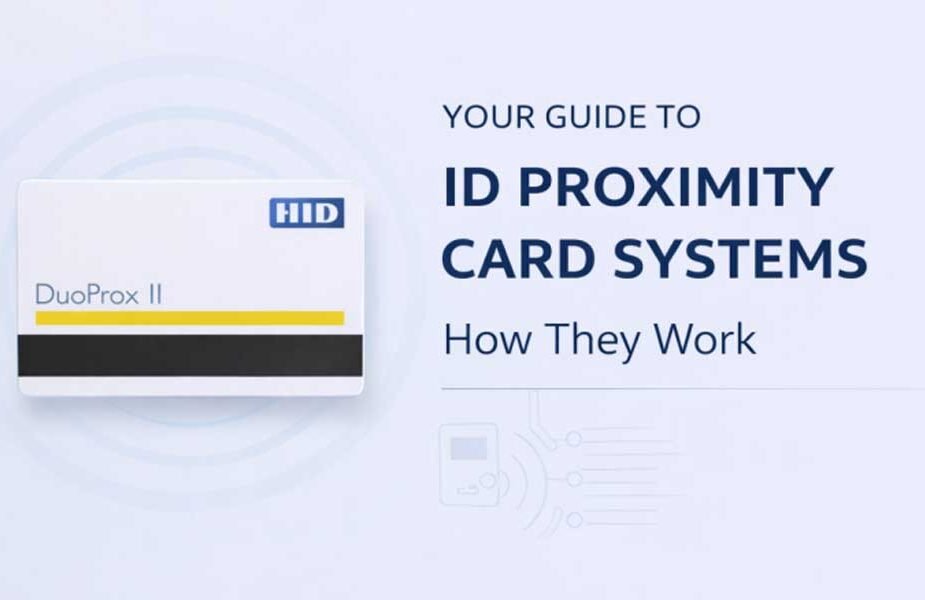
You’re responsible for more than just doors opening and closing. You manage building access, protect staff and assets, and keep operations running smoothly. But when it comes to ID proximity card systems, uncertainty can creep in. Are your cards compatible with existing readers? Are you using the right frequency? What about encryption, cloning risks, or integration with your current access control platform? Choosing the wrong system doesn’t just create inconvenience because it can expose security gaps and reflect poorly on your judgement.
That’s where this guide comes in. We’ll walk you through how proximity cards actually work, what technical details truly matter, and how to assess compatibility without drowning in jargon. You’ll gain clarity on frequency types, security levels, and integration essentials so you can select a system that protects your organisation and your reputation. Let’s start with the fundamentals of how proximity card systems operate.
What Is an ID Proximity Card System? Understanding the Basics Without the Jargon
You already understand access control in principle, but the technical mechanics can feel unnecessarily complex. Terms like RFID, 125kHz frequency, credential formats, and encryption get thrown around, often without context. You might know the system works, yet still feel uncertain about how the card actually “talks” to the reader. That uncertainty can make product specifications look more intimidating than they need to be.
In simple terms, proximity cards use radio frequency identification (RFID) to communicate with a reader. A common 125kHz low-frequency card sends a unique number to the reader, which passes it to the access control panel for approval. It’s essentially a secure “tap and go” exchange, different from encrypted smart cards that carry additional data protection layers. Once you understand this interaction between card, reader, and panel, technical specifications become clearer and far less daunting.
Compatibility Concerns: Will These Cards Work With Your Existing System?
One of the biggest concerns you face is ordering cards that simply won’t work with your existing readers. The confusion between 125kHz proximity cards and 13.56MHz smart cards can lead to expensive mistakes. Add in facility codes and card numbering sequences, and it’s easy to second-guess your decision. No operations manager wants to explain to leadership why a bulk order is unusable.
Compatibility starts with matching the card frequency to your reader type. Many HID proximity cards are widely supported, but you still need to confirm reader frequency, card format, and your assigned site or facility code before purchasing. A reliable supplier will verify these details upfront rather than leaving you to interpret technical sheets alone. That simple verification step protects both your budget and your professional credibility.
Security Levels: Are HID Proximity Cards Secure Enough?
With constant headlines about security breaches, it’s natural to question whether standard proximity cards are still secure. You may worry about cloning risks or unauthorised duplication, especially if your organisation handles sensitive information. At the same time, you don’t want to overinvest in high-end credentials if your risk profile doesn’t demand it. Striking the right balance matters.
Standard low-frequency proximity cards provide solid baseline security for general staff access and controlled entry points. They differ from encrypted smart cards, which offer advanced data protection for higher-risk environments. In many mid-sized offices, warehouses, or education facilities, proximity cards remain entirely appropriate. When you align credential type with actual risk level, you make confident, proportionate security decisions.
Operational Efficiency: Making Access Control Simple to Manage
Lost cards, delayed reissues, and inconsistent credential quality can quickly become daily frustrations. When onboarding new staff, you need cards issued quickly and reliably, not weeks of back-and-forth with suppliers. Poor-quality cards that fail prematurely only add to administrative workload. Small inefficiencies compound over time and disrupt operational flow.
Standardised HID proximity cards offer durability, consistent performance, and straightforward reordering. Batch programming ensures new credentials align with your existing numbering structure, and compatibility with photo ID badge printing keeps branding and security aligned. When your access control process runs smoothly, onboarding becomes faster and disruptions reduce. That translates into fewer admin headaches and a more streamlined operation overall.
Choosing the Right Supplier: Beyond Just the Card Itself
Not all vendors make the process easy. Some rely on heavy technical jargon or push unnecessary upgrades, leaving you unsure whether you’re buying what you truly need. Others offer low-cost alternatives that compromise on quality or compatibility. Over time, that can create avoidable system issues and erode trust internally.
Working with an authorised supplier who verifies compatibility and offers local guidance makes a measurable difference. You gain clarity on specifications, ongoing support, and options for customised printing or managed ordering. Instead of navigating guesswork, you partner with someone who simplifies the process. That long-term reliability strengthens internal confidence in your decision-making and keeps your access control system dependable for years to come.
Make a Confident, Informed Access Control Decision
Proximity systems are far simpler than they first appear once you understand how they work. When you focus on clarity instead of complexity, specifications become manageable and decisions feel steady. The right card choice protects your building, your people, and your professional credibility. With the right guidance, you can move forward confidently and future-proof your access control system as your organisation grows.
Last modified: February 25, 2026