Why Temperature Control Is the Most Critical Factor in Modern Supply Chains
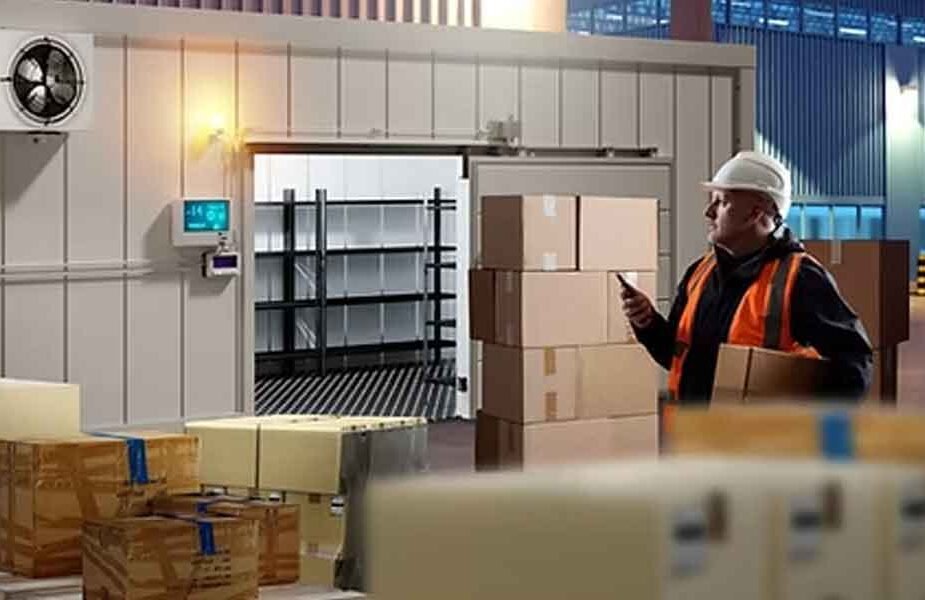
No matter how perfect the product inside is, if the product is compromised upon arrival it’s worthless. Temperature control for products used to be limited to use in the supply chain process in trucks, warehouses, etc., but today, it’s being used in the final mile for many products. This is because products that traditionally weren’t impacted by temperature are increasingly temperature sensitive due to their formulations and products (e.g. with biologics and biosimilars) as well requirements from regulations and manufacturers’ quality management systems.
The cold chain is only as strong as its weakest handoff
Anyone working in perishable goods logistics understands the “broken link” concept innately. Shipment is rarely destroyed in a long-haul leg – it’s in the 40 minutes a pallet sits on a loading dock while a transfer is made. Or the two-hour reefer container is left to run warm between unloading from an ocean reefer and the last-mile vehicle departure. The heat/cold during these handoffs accounts for the majority of excursions, and is the hardest to track, since responsibility shifts for a time.
Enter cross-docking, the preferred strategy for temperature-sensitive freight. By eliminating storage and having the product travel through the cold chain at all times, with the least amount of stop/start time, the fewest number of handoff opportunities where fair to no one is watching. The reality is that ambient, chilled, and frozen are quite different in terms of handling, meaning there is no “one-size-fits-all” solution. Each zone likely requires its own approach to handling protocol, equipment spec, and documentation trail.
Why more companies are moving away from private fleets
For the vast majority of mid-sized shippers, the entire rationale for making a direct investment in reefer equipment is to one day scale to the point where you can no longer justify the investment. At precisely that moment, the third-party option should offer a scaling solution preoptimized to continue to meet all the requirements an in-house option would, but at a lower cost in terms of both capital and management attention. A great 3PL can give young brands access to temperature-controlled trailer capacity while they’re still contracting out one third of a truckload at a time and then grow with them to a dedicated fleet as they reach national distribution.
The TMS solution they operate should scale as well to optimize volume discounts, track and trace, and the right metrics to get you and your customer. It’s almost impossible for a single manufacturer to have the capacity to warrant this kind of specialization. A good cold chain 3PL covering food and beverage transportation should handle this without you having to know what to ask for. Cordial experience is ever more part of real brand identity these days. In cold chain, transportation with exactly the right tech has to be part of that if it isn’t already.
Real-time visibility isn’t optional anymore
The introduction of IoT sensors and data loggers in cold chain management has redefined the concept of “monitoring.” Data loggers offer a history log, which is extremely beneficial for compliance and insurance claims post-incident. On the other hand, IoT sensor monitoring enables you to take action before it’s too late. And there’s a world of difference between those two scenarios.
Real-time visibility has shifted from being a competitive advantage to becoming a mandate driven by regulatory standards. When you combine the HACCP-based documentation needs with FSMA’s sanitary transportation rule, it’s clear that simply having some temperature history tucked away in a filing cabinet somewhere isn’t a recommended best practice – it’s a legal requirement for many contexts. Shippers who can’t produce that data are exposed. They’ll be targeted with the full force of regulatory penalties and litigation if a sick consumer can trace their illness back to the temperature abuse of a trailer-load of their product.
One stat that really helps put the stakes in perspective: a third of all the food the world produces for humans is lost or wasted annually, and poor cold chain is cited as one of the main culprits (Food and Agriculture Organization of the United Nations). This isn’t just a geopolitical issues paper – if even a fraction of that waste rate works its way into the supply chain of a mid-sized, DC-centric food brand, it’s a massively material event on the P&L.
The financial exposure goes beyond the cost of goods
There are more consequences to a temperature excursion than many realize. First and most obviously, there is the loss of the product itself, and the revenue associated with it. Then there’s the cost of transportation, resources, and labor. Beyond that, however, there are charges and claims that can hit a company from multiple directions.
For starters, some or all of the product may need to be disposed of as hazardous waste. In that case, the manufacturer may pass the disposal costs back to the carrier. It depends on the contract. Then there are the chargebacks from retail customers. Some immediately deduct the retail price – while others assess the retail price plus a markup on what it cost them to produce or acquire that product to cover the costs of all downstream claims.
Sustainable packaging is complicating the insulation equation
A dilemma is arising in temperature-controlled packaging for which a satisfactory solution has not yet been found. Brands are demanding large quantities of heavy, high-performing insulation – gel packs, phase-change materials, and thick foam liners. Meanwhile, retailers, directly influenced by end consumers, are demanding more recyclable and circular solutions. The two requirements are conflicting.
The companies getting this right on thermal are the ones involving the thermal packaging design much earlier in the product development cycle, instead of throwing resources at it and trying to fix it all at the shipping stage. This allows the time and space to try different insulating materials and package design approaches to determine what works with the least amount of negative environmental impact.
Last modified: May 8, 2026