Sgian Dubh: Meaning, How to Wear It, Legal Rules & Buying Guide (2026)
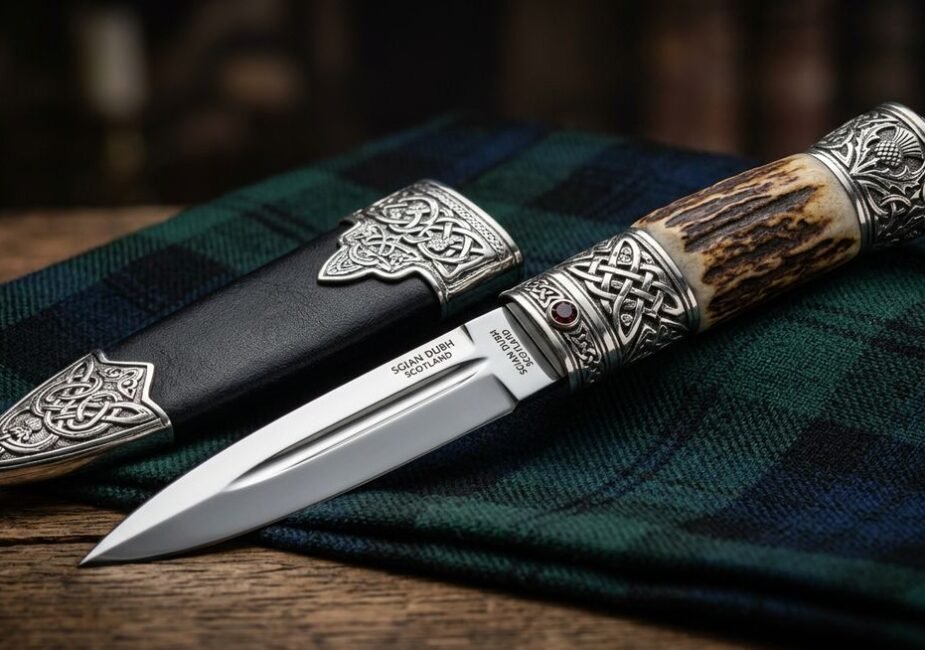
The sgian dubh is a small, single-edged knife tucked into the top of a kilt hose as part of traditional Scottish Highland dress. Pronounced skee-an doo (Scottish Gaelic: sgian = knife, dubh = black or hidden), the blade sits concealed inside the stocking while 1 to 2 inches of handle remains visible above the sock cuff. That deliberate display is the whole point. Showing the knife openly signals peaceful intent — a gesture rooted in centuries of Highland hospitality custom.
Wearing one correctly, choosing the right materials, and understanding the legal framework around carrying a fixed blade in public — these are the practical questions that matter once the history has sunk in. Everything that follows covers the full picture: origins, pronunciation, construction, placement etiquette, UK and international knife law, the difference between this knife and a dirk, and a price-tiered buying guide built for weddings, gifts, and everyday Highland dress.
Sgian Dubh Meaning and Pronunciation
The name breaks into two Scottish Gaelic words: sgian, meaning knife, and dubh, meaning black, dark, or hidden. The “black” most likely refers to the blade’s historical role as a concealed weapon rather than the colour of the handle, though dark materials like bog oak and ebony have been traditional handle choices for centuries. According to the etymological entry in Wiktionary, sgian traces back to Proto-Indo-European *sek- (to cut), while dubh derives from *dhewbh- (deep), carrying the figurative sense of “hidden.”
Standard English pronunciation: /ˌskiːən ˈduː/ — phonetically rendered as “skee-an doo.” The “sg” produces a “sk” sound, “ian” rhymes roughly with “een,” and “dubh” sounds like “doo.” Alternative spellings appear across historical texts: skean dhu, skene do, skene-dhu, and the hyphenated sgian-dubh. All refer to the same knife. Native Gaelic speakers would wince at “sig-ee-an doob,” the most common mispronunciation outside Scotland.
“Though I mainly came in here to ask, how the hell do you pronounce that?”
— r/knives, a community of knife collectors and enthusiasts (recurring question across multiple threads)
Sgian Dubh History and Origin
The knife evolved from the sgian-achlais — literally “knife of the armpit” — a longer blade concealed beneath the upper arm inside a jacket during the 16th to 18th centuries. Highlanders carried this hidden knife as both an everyday utility tool and a last-resort weapon. When entering a host’s home, Highland custom required concealed weapons to be surrendered or made visible; the blade migrated from the armpit to the top of the stocking, openly displayed as a gesture of trust.
The modern hose-worn placement became standardised during the late 18th and early 19th centuries — a period shaped by the Highland Revival and, critically, King George IV’s visit to Edinburgh in 1822. According to National Museums Scotland, that royal visit — stage-managed by Sir Walter Scott — was the single most influential event in codifying modern Highland dress conventions. The White Rose Guild, a Highland dress research organisation, further notes that the hose-placement custom traces to late 18th-century Highland regimental standardisation rather than to any single ancient hospitality ritual, though both traditions fed into the modern convention.
Queen Victoria and Prince Albert’s romantic fascination with Scotland later in the 19th century spurred a broader Highland culture revival. The kilt and its accessories — sgian dubh, sporran, dirk — were elevated from regional dress to formal ceremonial attire. What had been a concealed utility blade was reborn as a dress accessory, its functional edge increasingly secondary to its symbolic and aesthetic role.
| Period | Form | Primary Function |
|---|---|---|
| Pre-18th century | Sgian-achlais (underarm knife) | Concealed utility and self-defence blade |
| Late 18th – early 19th century | Sock-worn Highland knife | Visible display of peaceful intent; Highland dress formalization |
| 19th century – present | Ceremonial dress knife | Cultural symbol for weddings, Burns Suppers, Highland games |
Today, the knife is a fixture at Highland weddings, formal ceilidhs, Burns Night suppers (where it traditionally slices the haggis), and Highland games held in over 30 countries. The Scottish Official Highland Gathering Association maintains the global calendar of these events — occasions at which wearing one remains a mark of authentic Highland dress rather than costume.
In 2023, the craft of making these knives was added to the Heritage Craft Association’s Red List of Endangered Crafts — a designation reserved for traditional skills at risk of disappearing entirely. Fewer than a handful of full-time dedicated makers remain active in Scotland, making handmade pieces increasingly scarce and collectible.
How to Wear a Sgian Dubh
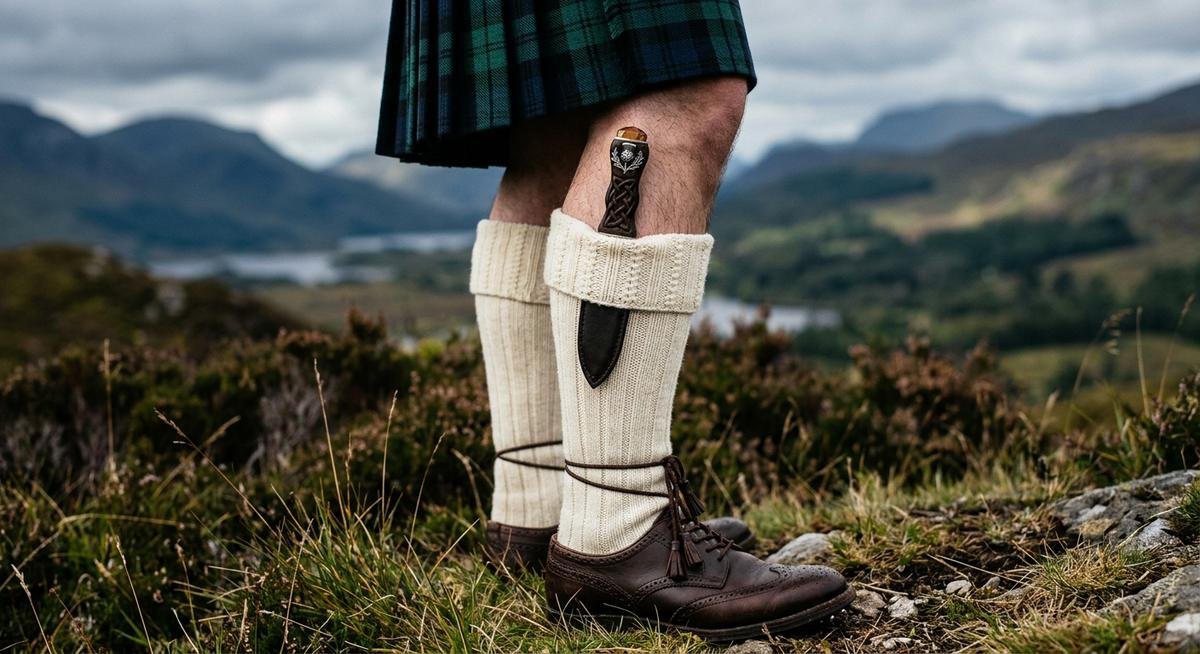
The knife sits in the top of the kilt hose on the dominant-hand side — right sock for right-handed wearers — with 1 to 2 inches of handle visible above the sock cuff. The blade points downward. Everything else depends on occasion and personal judgment.
Which Leg: Left or Right?
Convention places it in the right sock, aligned with the dominant hand for practical access. Left-handed wearers traditionally use the left sock. No law or formal Highland dress code mandates one side over the other — the logic is purely functional. The handle should sit closest to the hand most likely to reach for it, positioned on the outer calf rather than the shin or inner leg.
Handle Height and Blade Orientation
The handle should sit 1 to 2 inches proud of the sock top, centred on the outer calf. Never tuck it so deep that only the pommel cap shows, and never so high that the blade risks slipping. The blade always faces downward into the hose. Positioning the handle on the outside of the calf keeps the knife visible and symmetrical with the silhouette of the kilt outfit.
“What I like about the sgian dubh is the flat side so it lies against your leg.”
— r/knives, 2019 (functional design observation on the flat-profile tradition)
Formal vs. Casual Dress Rules
At weddings, black-tie ceilidhs, and formal Highland gatherings, an ornate piece with silver or silver-plated mounts, Celtic knotwork, and a cairngorm or gemstone pommel is the expected standard. At Highland games, clan gatherings, or casual outings, a plainer piece with a wooden or stag horn handle and minimal decoration works. Metal finish consistency is the detail most people overlook: the knife mounts should match the sporran cantle and belt buckle in finish (silver with silver, chrome with chrome).
| Occasion | Recommended Style | Key Features |
|---|---|---|
| Wedding / black-tie ceilidh | Ornate dress piece | Silver mounts, cairngorm stone, engraved knotwork |
| Highland games / casual wear | Working-style piece | Stag horn or wood handle, chrome or plain mounts |
| Travel / venue-restricted events | Non-functional dress version | Blunted or no blade, full decorative finish |
Sgian Dubh vs Dirk: Key Differences
The two are entirely different weapons that serve different roles in Highland dress. One is a small concealed knife; the dirk is a substantial sidearm. Confusing the two is common outside Scotland, but the differences are unambiguous.
| Feature | Sgian Dubh | Scottish Dirk |
|---|---|---|
| Blade length | 3–3.5 inches (7.5–9 cm) | 12–20 inches (30–50 cm) |
| Overall length | ~7 inches (17–18 cm) | ~18–24 inches |
| Blade type | Single-edged | Typically double-edged |
| Worn position | Tucked in kilt hose (concealed) | Belt sheath (openly displayed) |
| Historical role | Concealed utility / last-resort defence | Primary sidearm and symbol of authority |
| Modern role | Ceremonial dress accessory | Full Highland dress complement (officers, pipers) |
The White Rose Guild notes the smaller knife does not originate from the dirk — it has separate roots including a Highland dagger tradition and an ancient Drover’s knife with Iron Age origins. In full Highland dress, a gentleman may wear both: the dirk on the belt and the concealed blade in the hose. Many historical dirk sheaths include a compartment on the front designed to carry a smaller knife and fork as companion utensils, underscoring the practical separation between the two blades.
Sgian Dubh Construction and Materials
The knife has three components — blade, handle, and mounts — and the materials used for each determine whether the piece is genuine Scottish craftsmanship or a decorative replica that tarnishes after a single outing. Quality varies enormously across price points.
Blade Materials
Stainless steel is the standard for dress pieces: corrosion-resistant, low-maintenance, practical against a wool sock in variable Scottish weather. Carbon steel produces a sharper, harder edge but rusts readily without regular oiling. Damascus steel — typically forged from layered 1095 and 15N20 carbon steel, then acid-etched to reveal the distinctive layered pattern — is the premium choice for handmade pieces, prized for both visual impact and edge retention. Non-functional or blunted blades exist for ceremonial and travel-specific pieces.
Handle Materials: Stag Horn, Bog Oak, and More
Stag horn (antler) is the most traditional and most prized handle material. No two pieces look identical, and quality makers source ethically from naturally shed antlers collected in the Scottish Highlands. Bog oak — ancient timber preserved for thousands of years in Scottish peat — carries genuine historical resonance and a deep, near-black colour. Ebony and rosewood offer a polished, formal look at a lower price point. Resin and acrylic handles mimic natural materials convincingly at a glance but lack the weight and warmth that distinguish a quality piece in hand.
“As someone who makes knives (and a fair amount of Sgian Dubh), you were ripped off my friend. $600 is WAY too expensive for that. My most expensive one was $350, shipping and etching included.”
— r/knifemaking, a subreddit where professional and hobbyist bladesmiths share work and critique quality (2024)
Mounts, Pommels, and Decorative Stones
The mounts — the metal collar at the handle base and the pommel cap at the top — come in sterling silver, silver plate, or chrome. Sterling silver mounts on premium pieces carry a hallmark from one of the four UK Assay Offices (Edinburgh, London, Birmingham, or Sheffield), a verifiable stamp of metal purity that matters for both authenticity and resale. Celtic knotwork engraving on the collar is near-universal, ranging from crisp hand-cut detail on high-end pieces to shallow machine-pressed patterns on budget versions. The pommel cap often holds a gemstone: a cairngorm (smoky quartz from the Cairngorm Mountains) is the traditional choice, with amethyst, citrine, and synthetic stones appearing across the mid-range.
| Component | Budget | Mid-Range | Premium |
|---|---|---|---|
| Blade | Blunted / non-functional | Stainless steel | Hand-finished carbon or Damascus |
| Handle | Resin or acrylic | Rosewood or ebony | Stag horn or bog oak |
| Mounts | Chrome-plated | Silver-plated | Hallmarked sterling silver |
| Pommel stone | None or synthetic | Citrine or synthetic cairngorm | Genuine cairngorm or amethyst |
| Sheath | Bonded leather | Full-grain leather | Full-grain leather with silver mounts |
Sgian Dubh Legal Rules by Country
Carrying the blade as part of Scottish national dress is lawful in the UK under specific statutory exemptions, but the rules change sharply once the kilt comes off or the plane takes off. The legal landscape is more nuanced than most kilt-hire shops suggest.
UK Knife Law and the National Costume Exemption
Under Section 139 of the Criminal Justice Act 1988 (England, Wales, Northern Ireland) and Section 49 of the Criminal Law (Consolidation) (Scotland) Act 1995, carrying a knife in public is an offence unless the person has a “good reason or lawful authority.” Wearing the knife as part of Scottish national dress is explicitly recognised as a good reason. According to UK government guidance on carrying knives, carrying a knife “as part of any national costume” qualifies as a lawful defence. The national costume exemption applies regardless of blade length — the standard 3-inch folding-knife rule does not override this defence.
The critical caveat: the exemption requires Highland dress context. Wearing the blade in jeans and a t-shirt does not meet the threshold. Private venues — pubs, clubs, wedding venues — retain the right to refuse entry to anyone carrying a blade regardless of legal status. As of September 2024, UK law expanded its prohibited weapons list to include zombie knives and machetes, but traditional Highland knives were not affected.
USA, Canada, Australia, and New Zealand
In the United States, knife laws vary by state. Most states permit fixed-blade knives under 4 inches without restriction, which covers standard sgian dubhs. Some municipalities have stricter rules. Canada’s Criminal Code prohibits concealed weapons, but a sgian dubh worn openly as Highland dress has not been successfully prosecuted. Australia treats fixed-blade knives as prohibited weapons in most states without a “legitimate reason” — attending a Highland event in kilt generally qualifies. New Zealand’s Civil Aviation Authority classifies sgian dubhs as restricted to checked luggage.
Can You Take a Sgian Dubh on a Plane?
No. Airport security worldwide — including the TSA, EU aviation authorities, and IATA — classifies it as a knife regardless of cultural context. Pack the knife in checked hold luggage, wrapped in a protective sheath, and declared if required by the airline. Even non-functional or plastic-bladed versions are frequently confiscated at security checkpoints. Dummy bladeless versions (sometimes marketed as “Sgian Don’t”) exist specifically for travellers restricted to cabin baggage.
Sgian Dubh Buying Guide: What to Look For
The right sgian dubh depends on use case first, budget second. A mid-range piece with a stag horn handle and silver-plated mounts suits most buyers. Premium hallmarked sterling silver pieces are the correct choice for weddings, gifts, and collecting.
Price Tiers Explained
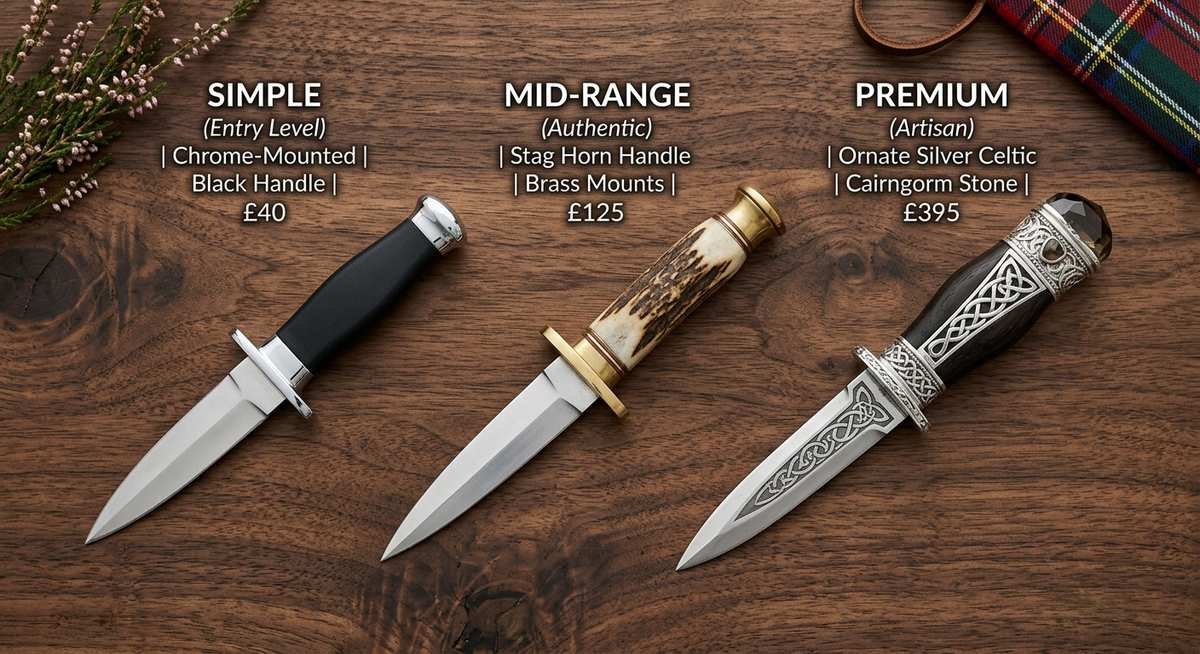
Entry-level pieces at £20–£50 feature chrome-plated mounts, resin or acrylic handles, and a basic stainless steel blade — fine for a single occasion but chrome tarnishes faster than silver. Mid-range at £50–£150 represents the sweet spot: real stag horn or hardwood handles, silver-plated mounts, and a properly finished blade. Above £150, hallmarked sterling silver mounts, hand-finished stag horn, and a genuine cairngorm stone — these are heirloom-grade items meant to be passed down.
| Tier | Price Range | Handle | Mounts | Best For |
|---|---|---|---|---|
| Budget | £20–£50 | Resin / acrylic | Chrome-plated | Single-occasion wear |
| Mid-range | £50–£150 | Stag horn / hardwood | Silver-plated | Regular Highland dress |
| Premium | £150+ | Hand-finished stag horn / bog oak | Hallmarked sterling silver | Weddings, gifts, collecting |
Best Sgian Dubh for a Wedding
Metal finish consistency is the detail most grooms overlook. Match the sgian dubh mounts to the sporran cantle and belt buckle — mixing silver and gold tones in the same outfit reads as an oversight. A cairngorm or amethyst stone in the pommel adds visual weight that photographs well. For matching groomsmen sets, allow four to six weeks if engraving or bespoke handle work is involved. Spring and summer wedding season swallows production capacity fast at Scottish kiltmakers. Clan crest engravings, available for over 320 Scottish clans, transform a dress accessory into a genuinely personal keepsake.
Where to Buy: Scottish-Made vs. Mass-Produced
Specialist Highland dress retailers and independent bladesmiths based in Scotland remain the most reliable sources. Established makers craft these knives in Scotland and Sheffield, England — the two traditional British blade-manufacturing centres. Mass-produced imports (typically manufactured in India or Pakistan) dominate the budget tier and are perfectly adequate for occasional wear, but lack the fit, finish, and provenance of Scottish-made pieces.
Custom and handmade pieces carry a price premium but offer personalisation — choice of blade steel, handle material, clan crest, and presentation box. For collectors and gift buyers, a hallmarked piece in a fitted presentation box signals craftsmanship and protects the blade during long-term storage.
Care and Maintenance
A well-stored piece will last generations. One left in a damp sporran box will pit and tarnish within a season.
- Blade: Wipe stainless steel blades dry after each wear. Carbon steel and Damascus blades need a light coat of mineral oil or Renaissance wax after every outing to prevent oxidation. Never store a blade in its leather sheath long-term — leather traps moisture.
- Handle: Stag horn and bone handles benefit from occasional conditioning with a light natural oil (lanolin or food-grade mineral oil). Bog oak needs no treatment but should be kept out of direct sunlight to prevent cracking. Resin handles require only wiping.
- Silver mounts: Polish sterling silver mounts with a dedicated silver cloth before events. Store in an anti-tarnish pouch or wrap in acid-free tissue to slow oxidation between uses.
- Leather sheath: Condition the sheath with leather balm once or twice a year. If the sheath gets wet, dry it slowly at room temperature — never near a heat source.
Frequently Asked Questions
What is a sgian dubh used for?
It is worn as part of traditional Scottish Highland dress, tucked into the kilt hose with the handle visible. Historically a utility knife and last-resort weapon, it now serves a purely ceremonial function at weddings, Burns Suppers, ceilidhs, and Highland games. Some functional versions with sharp blades are still used to slice haggis at formal Burns Night events.
How do you pronounce sgian dubh?
The standard pronunciation is “skee-an doo” (IPA: /ˌskiːən ˈduː/). The “sg” produces a “sk” sound, “ian” rhymes with “een,” and “dubh” sounds like “doo.” Alternative spellings include skean dhu, skene do, and skene-dhu — all refer to the same knife.
Which leg does a sgian dubh go in?
The sgian dubh sits in the right kilt hose for right-handed wearers, with 1–2 inches of handle visible above the sock top. Left-handed wearers traditionally use the left sock. No law mandates which side — it is etiquette based on dominant-hand access.
Are sgian dubh legal to carry?
In the UK, carrying one as part of Scottish national dress is lawful under the Criminal Justice Act 1988 (Section 139) and the Scottish Criminal Law (Consolidation) Act 1995 (Section 49). The national costume exemption applies regardless of blade length. Carrying the blade without Highland dress context is an offence. In the US, most states permit fixed blades under 4 inches. Laws vary by country — always check local regulations.
Can you take a sgian dubh on a plane?
No. All airport security agencies, including TSA and EU aviation authorities, classify a sgian dubh as a knife. Pack it in checked hold luggage only. Even blunted or plastic-bladed versions are routinely confiscated from hand luggage.
What is the difference between a sgian dubh and a dirk?
The blade measures 3–3.5 inch single-edged blade and is worn concealed in the kilt hose. A Scottish dirk has a 12–20 inch blade, is typically double-edged, and is worn openly in a belt sheath. The sgian dubh was a concealed utility knife; the dirk was a primary sidearm. They have separate origins and serve different roles in Highland dress.
What are the typical sgian dubh dimensions?
A standard piece has a blade length of 3 to 3.5 inches (7.5–9 cm) and an overall length of approximately 7 inches (17–18 cm). The blade is single-edged with a spear or dagger point. Scottish law requires knife dealers to hold a licence for blades exceeding 3.5 inches, so most commercially sold sgian dubhs sit at or below this threshold.
How much does a sgian dubh cost?
Budget pieces with chrome mounts and resin handles start at £20–£50. Mid-range pieces with stag horn handles and silver-plated mounts cost £50–£150. Premium handmade pieces with hallmarked sterling silver and genuine cairngorm stones run £150 and up, with bespoke Scottish-made versions reaching £250–£350 at the high end.
Can women wear a sgian dubh?
The knife is not gender-restricted. Women wearing Highland dress — including kilted skirts, tartan sashes, or full female Highland outfits — can and do wear sgian dubhs in the hose following the same placement conventions. Smaller or lighter dress versions are available for those who prefer a less bulky profile.
What does a sgian dubh tattoo represent?
A tattoo of this knife typically symbolises Scottish heritage, Highland identity, and loyalty — reflecting the knife’s historical role as a trust signal between host and guest. Common design elements include Celtic knotwork on the handle, thistles, and clan crests. The tattoo carries particular significance for members of the Scottish diaspora marking their connection to Highland culture.
Conclusion
The sgian dubh is centuries-old Scottish heritage and a practical purchase decision rolled into one small knife. Worn correctly — handle showing 1–2 inches above the right kilt hose, blade pointing down, metal finish matching the rest of the hardware — it completes Highland dress with both visual precision and cultural weight.
Choose materials that match the occasion and budget: stag horn and hallmarked sterling silver for weddings and gifts, simpler stainless steel for casual Highland games. Maintain the blade with mineral oil, protect silver mounts with a polishing cloth, and always pack it in checked luggage when travelling. Seek out established Scottish craftsmen for an authentic piece — with the craft now on the endangered crafts Red List, handmade pieces carry both cultural significance and increasing scarcity value.
RankMath SEO Meta (Copy & Paste)
SEO Title: Sgian Dubh: Meaning, How to Wear, Legal Rules & Guide (2026)
SEO Description: Sgian dubh explained: pronunciation, history, how to wear it, UK & international knife law, sgian dubh vs dirk, materials guide, and price tiers from £20 to £350+.
Focus Keyword: sgian dubh
Last modified: March 29, 2026