How to Create a Productive Study Space for Advanced Secondary Education
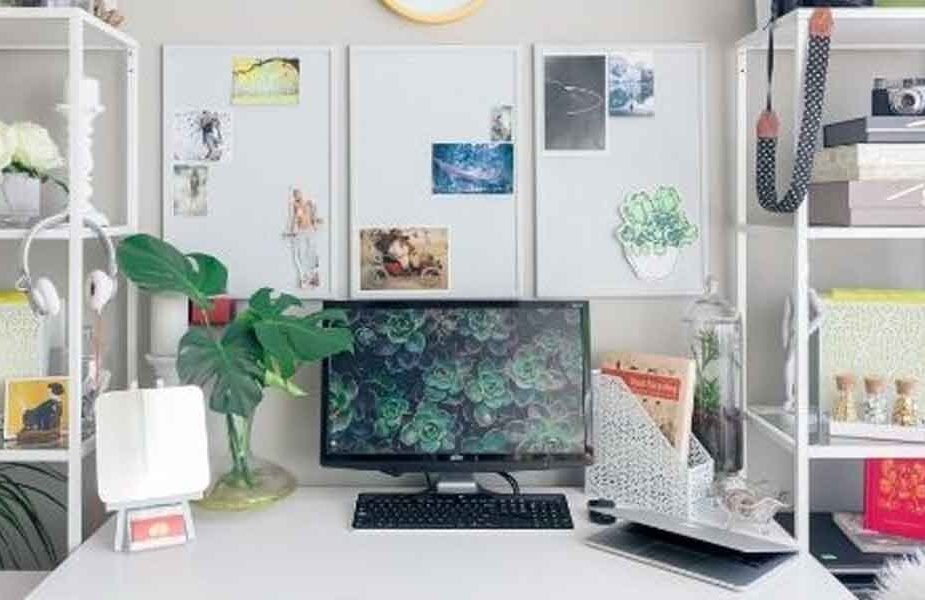
Most students treat their study environment as an afterthought – somewhere between choosing a playlist and finding a pen that works. But at A-level, where the depth of thinking required is categorically different from anything before it, your environment stops being background noise and starts being a variable you can’t afford to ignore.
The question you must ask yourself is not “Does my study environment affect my performance?” because it does. The real question is “Am I allowing it to hinder my progress or am I intentionally creating a space that meets the requirements of advanced secondary study?”
Here’s what that actually looks like.
The Zone Of Productivity Isn’t A Vibe, It’s A Boundary
Social media has made “aesthetic study spaces” a whole genre. Candles, colour-coordinated stationery, carefully arranged succulents. That’s not what we’re talking about here.
The principle behind a productive study zone is psychological, not decorative. When your brain associates a physical space with deep work, transitioning into concentration becomes faster and easier. When that same space is also where you scroll through your phone or watch TV, the association breaks down.
Pick a spot that is only for studying. It doesn’t need to be a separate room – a corner of a bedroom works if you’re consistent about it. What matters is that your brain starts to read the space as a signal. Sit down here, work begins. That signal builds over time, but only if you don’t blur it.
This matters more for students studying outside a traditional school structure. Those pursuing Online A Levels UK through distance learning platforms don’t have a classroom bell to trigger focus. The environment has to do that work instead.
Physical Setup Isn’t Comfort, It’s Function
When you’re focusing intensely for a long block, good ergonomics is a necessity. It’s tough to make yourself study for three hours through unmanaged discomfort because you’ll instinctively react to discomfort by shifting around and losing concentration.
Start with the basics: your screen should be roughly at eye level so your neck isn’t constantly angled down, your chair should support your lower back, and your feet should rest flat on the floor. These aren’t luxuries – they’re the baseline conditions that let your brain stay on the work rather than the ache in your shoulders. A setup that feels “fine” for twenty minutes will quietly erode your focus over a longer session in ways you won’t even consciously notice.
Lighting is equally underrated. A dim room forces your eyes to strain, and harsh overhead lighting creates glare that fatigues you faster than you’d expect. Natural light is ideal, but a decent desk lamp positioned to the side, not behind your screen, goes a long way. The goal is a physical environment that disappears into the background, so the only thing demanding your attention is the work in front of you.
Clutter Is A Cognitive Tax
A study published in the Journal of Environmental Psychology observed that students who were exposed to a cluttered environment had elevated cortisol levels due to stress and could not focus on their tasks as well as those in organised spaces. This is not just a random observation. Clutter captures our attention on an unconscious level, making it harder to focus on the task at hand.
This doesn’t mean you need to be a minimalist. The idea is to keep the working space of your desk clean and free of anything that isn’t immediately relevant to what you’re currently doing. A vertical organisation system can be handy here – a shelf above or a wall grid beside the desk, where your syllabus tracker, your magnetic timetable, and your subject printouts can sit just out of the way but still in view. It’s a form of reducing cognitive load without making it impossible to grab what you need.
One rule that actually works: if you’re not reaching for it this session, it shouldn’t be on the desk.
The Phone Problem Is Harder Than It Looks
Hiding your phone away and setting a designated landing strip for it before you start working is a very effective strategy. There’s solid scientific evidence showing how phones, even when powered off and face-down on a desk, create anticipatory stress in the system where the brain is dedicating a small portion of attention waiting for it to ring/whistle/vibrate. This disrupts deep work.
If you can do a little prep and arrange a space somewhere near where you work where your phone goes to charge and not be stirred until you’re done, you’ll have an easier time capitalizing on the limited moments when you’re in a well-rested, positive, and focused state. This method doesn’t rely on willpower and that’s good because, when you’re revising, there won’t be any of that lying around.
The same logic extends to your laptop if you’re not using it to study. Browser notifications, open tabs, and the ever-present temptation to “quickly check” something are just the phone problem wearing a different hat. If your work is paper-based, close the laptop entirely. If you need it for notes or resources, consider a browser extension that blocks distracting sites during your session and close every tab that isn’t directly relevant to what you’re doing. Friction is your friend, the harder it is to drift, the less often you will.
Build In Recovery As Part Of The System
Having large windows in your study space contributes to maintaining your well-being since natural light helps reduce stress levels and maintain your attention span. If you’re able to, place your desk by a window. This won’t only make your room look spacious and bright – it will also mean that you can study for longer before tiring.
Recovery isn’t a reward you earn after the work is done, it’s the mechanism that makes the next session possible. Build it into the structure from the start, and you’ll find that your capacity to focus compounds over time rather than quietly burning out.
Last modified: March 20, 2026