Best Alternatives for Rice Wine Vinegar (With Ratios)
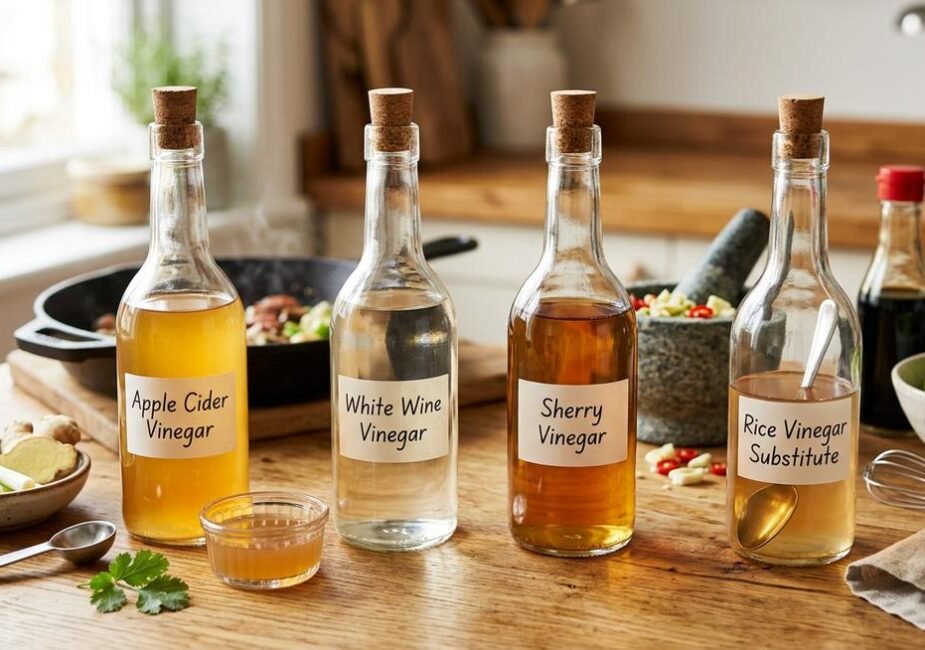
You’re halfway through a stir-fry, the aromatics are hitting the wok, and you reach for the rice wine vinegar. The bottle is empty. Before you scrap the recipe or run to the store, check your pantry: a reliable alternative for rice wine vinegar is almost certainly already on the shelf.
Rice wine vinegar earns its place in Asian cooking through a combination of gentle acidity, faint natural sweetness, and subtle umami depth. Those three traits work together. Lose any one of them in a substitution and the dish shifts — sometimes slightly, sometimes dramatically.
One important distinction first: rice vinegar and rice wine vinegar are often treated as the same product, but they differ. Rice wine vinegar is typically seasoned with sugar and salt, while plain rice vinegar is unseasoned. Knowing which version your recipe calls for determines how much adjustment a substitute needs.
What Makes Rice Wine Vinegar Unique (And Why Substitution Matters)
Rice wine vinegar sits at roughly 4 to 4.5 percent acidity, well below the 5 to 7 percent range of most pantry vinegars. That difference sounds small on paper, but it is enormous on the palate. Lower acidity means the vinegar brightens a dish without overwhelming it.
Flavor Profile at a Glance
The fermented rice base gives rice wine vinegar a faint sweetness and a whisper of umami that white distilled vinegar completely lacks. The color ranges from pale gold to nearly clear, and the aroma is clean rather than sharp. In cooking, these properties do real work. Low acidity tenderizes proteins gently without breaking them down too quickly. The subtle sweetness balances salty soy-based sauces. In sushi rice, it creates that characteristic glossy, lightly tangy finish.
| Vinegar Type | Acidity (%) | Sweetness | Umami | Color |
|---|---|---|---|---|
| Rice Wine Vinegar | 4–4.5% | Mild | Subtle | Pale gold / clear |
| White Wine Vinegar | 5–6% | Very low | None | Clear to pale yellow |
| Apple Cider Vinegar | 5–6% | Moderate (fruity) | None | Amber |
| White Distilled Vinegar | 5–7% | None | None | Clear |
| Champagne Vinegar | ~4.5% | Very low | None | Pale / clear |
| Sherry Vinegar | 7–8% | Low | Slight | Deep amber |
What Happens With the Wrong Substitute
Swap in full-strength white distilled vinegar at a 1:1 ratio and a simple Asian dressing turns harsh and one-dimensional. The sharpness drowns out every other flavor. Sushi rice is even less forgiving: too much acidity causes the starches to behave unpredictably, leaving rice that tastes sour and feels gummy rather than tender and glossy.
Pickling brines are another casualty. An overly aggressive vinegar accelerates texture breakdown, turning crisp vegetables soft within hours instead of days. Ratio adjustment and flavor-profile matching are not optional details. They are the difference between a dish that works and one that does not.
The 8 Best Substitutes for Rice Wine Vinegar
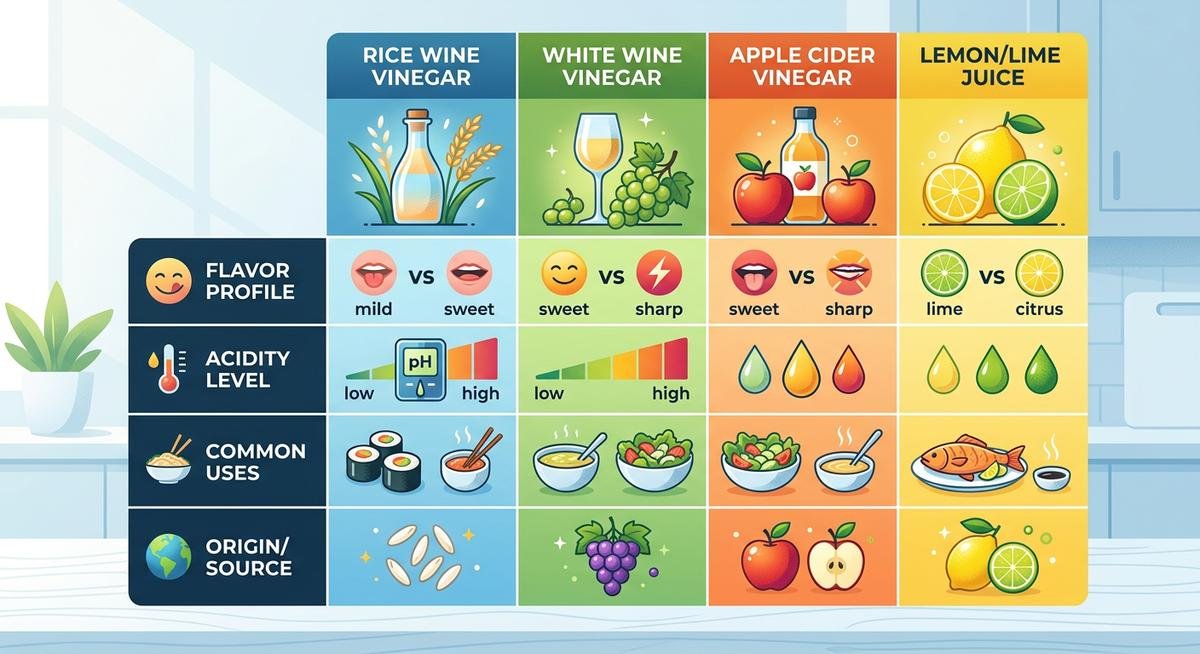
White wine vinegar at a 1:1 ratio with a pinch of sugar is the best all-around alternative for rice wine vinegar, matching acidity and color most closely. For dishes where subtlety matters, champagne vinegar is nearly indistinguishable. Avoid plain white distilled vinegar at full strength.
1. White Wine Vinegar
White wine vinegar is the closest pantry match. It is pale in color, clean in flavor, and nearly identical in acidity to rice wine vinegar. The main gap is sweetness: white wine vinegar runs slightly more tart, so stir in a quarter teaspoon of sugar per tablespoon of vinegar to close that difference. Use it at a 1:1 ratio in dressings, marinades, quick pickles, and cold noodle sauces.
Taste as you go. Start with the sugar adjustment, then add another pinch only if the dressing or sauce still reads as too sharp. This substitute is forgiving enough that small overcorrections won’t ruin the dish.
2. Apple Cider Vinegar
Apple cider vinegar brings a fruity, tangy character with mild natural sweetness, making it a reasonable swap in stir-fries, slaws, and marinades. The acidity runs slightly higher than rice wine vinegar, but the 1:1 ratio holds in most recipes. One caveat: in delicate preparations like a light ginger dressing or a clear dipping sauce, that faint apple note can surface and feel out of place.
For bold, punchy dishes — barbecue-glazed chicken, a spicy slaw, anything with chili-garlic sauce — apple cider vinegar blends right in. It is widely available, inexpensive, and probably already in your cabinet. According to the USDA FoodData Central database, apple cider vinegar and rice vinegar share similar caloric profiles, making the swap nutritionally neutral.
3. Champagne Vinegar
Champagne vinegar is arguably the most refined substitute available. Its acidity hovers near 4.5 percent, the closest of any common vinegar to rice wine vinegar, and its flavor is nearly neutral. Swap it 1:1 with no adjustments needed.
Reach for champagne vinegar when subtlety matters most: light vinaigrettes, crudo, poached seafood, or a delicate cucumber salad. The one practical downside is availability. Most grocery stores stock it inconsistently, and it tends to cost two to three times more than white wine vinegar. If you cook a lot of Asian-inspired dishes and want a permanent substitute, though, a bottle of champagne vinegar pays for itself quickly.
4. Sherry Vinegar
Sherry vinegar is richer and nuttier, with a depth of flavor that can easily overpower a delicate dish. Pull back the quantity: use 3/4 teaspoon of sherry vinegar for every 1 teaspoon of rice wine vinegar called for in the recipe. That reduced ratio prevents the concentrated flavor from dominating.
It works best in hearty applications: braised short ribs, robust marinades, roasted vegetable glazes, and bean-based stews. Keep it away from sushi rice entirely. The dark color and assertive flavor profile clash with the neutral, clean finish that sushi rice demands.
5. Plain White Distilled Vinegar
Sharp, pungent, and completely devoid of sweetness, white distilled vinegar is the emergency-only option. Use half the amount called for — 1/2 teaspoon per 1 teaspoon of rice wine vinegar — and stir in a quarter teaspoon of sugar to soften the edge. Without that sugar adjustment, the result tastes like cleaning solution dressed up as food.
This substitute works when other bold flavors in the dish provide cover: a chili-heavy stir-fry, a thick teriyaki glaze, or a quick vegetable pickle that will be consumed the same day. For anything delicate or raw, choose a different option.
6. Lemon or Lime Juice
For anyone avoiding fermented or alcohol-derived products — including those following halal dietary guidelines — lemon or lime juice is a practical non-vinegar alternative. Fresh citrus acidity reads cleanly in dressings, slaws, and marinades at a 1:1 ratio. Bottled juice works in a pinch but lacks the brightness of fresh-squeezed.
The limitation is clear: citrus flavor is forward and distinctive. Skip this option for sushi rice, miso-based dressings, or any preparation where a neutral fermented backbone is essential. Where it does shine — a Thai-inspired salad, ceviche-style fish, or a citrus ponzu variation — the result often improves on the original.
7. Dry White Wine
Dry white wine adds mild acidity alongside subtle fruitiness and body. A Sauvignon Blanc or Pinot Grigio at a 1:1 ratio works well in pan sauces, braised dishes, and marinades where the cooking process evaporates the alcohol. In raw preparations like dressings, the alcohol remains present and detectable.
Anyone avoiding alcohol for dietary, religious, or health reasons should skip this one entirely. For everyone else, dry white wine is an especially good substitute when deglazing a pan that will become a sauce — the wine lifts fond off the bottom while contributing the mild acidity the recipe needs.
8. Unseasoned Rice Vinegar
Unseasoned rice vinegar is the closest relative on the shelf. The base flavor and acidity are virtually identical. The only difference is the absence of added sugar and salt that define the seasoned (rice wine vinegar) version. Swap it 1:1 and add a quarter teaspoon of sugar plus a small pinch of salt per tablespoon to bridge the gap.
This is the ideal substitute for sushi rice specifically. The flavor profile is correct from the start; only the seasoning balance needs adjustment. If you spot a bottle labeled “rice vinegar” at the store and it does not list sugar or salt in the ingredients, this is what you are holding.
Quick-Reference Substitution Chart
This table gives you the ratio, required adjustments, and best use cases for each substitute at a glance.
| Substitute | Ratio (per 1 tsp rice wine vinegar) | Add Sugar? | Best For | Avoid For |
|---|---|---|---|---|
| White Wine Vinegar | 1:1 | Yes (pinch) | Dressings, marinades, pickles | — |
| Apple Cider Vinegar | 1:1 | No | Stir-fries, slaws, marinades | Delicate sauces |
| Champagne Vinegar | 1:1 | No | Vinaigrettes, seafood, subtle dishes | — |
| Sherry Vinegar | 3/4 tsp | No | Braised dishes, hearty marinades | Sushi rice, light dressings |
| White Distilled Vinegar | 1/2 tsp | Yes (1/4 tsp) | Pickling, bold stir-fries | Raw or delicate dishes |
| Lemon / Lime Juice | 1:1 | No | Dressings, Thai salads, ceviche | Sushi rice, miso-based sauces |
| Dry White Wine | 1:1 | No | Pan sauces, braised dishes | Raw preparations, alcohol-free diets |
| Unseasoned Rice Vinegar | 1:1 | Yes (1/4 tsp + pinch salt) | Sushi rice, all applications | — |
How to Choose the Right Substitute by Dish Type
The best substitute depends less on what is available and more on what you are making. Different dishes tolerate different flavor profiles, and choosing based on your specific recipe eliminates guesswork.
Sushi rice: Unseasoned rice vinegar is the only substitute that reproduces the exact flavor profile. Champagne vinegar is an acceptable second choice. Everything else introduces flavors that compete with the rice.
Stir-fries and wok dishes: Apple cider vinegar or white wine vinegar both work well. The high heat and bold aromatics in stir-fry recipes mask minor flavor differences between substitutes.
Dressings and vinaigrettes: Champagne vinegar or white wine vinegar with a pinch of sugar. These keep the dressing light and balanced. Avoid sherry vinegar and distilled white vinegar, which can overpower raw preparations.
Marinades: Almost any substitute works in a marinade because the other ingredients — soy sauce, garlic, ginger, sesame oil — carry most of the flavor. Apple cider vinegar and dry white wine are especially good choices here.
Pickling: White wine vinegar or white distilled vinegar (at the reduced ratio) handle quick pickles effectively. For longer fermentation pickles, stick to white wine vinegar for a cleaner result.
Frequently Asked Questions
What can I use instead of rice wine vinegar in a recipe?
White wine vinegar with a small pinch of sugar is the most versatile substitute and works in nearly every recipe that calls for rice wine vinegar. Use it at a 1:1 ratio. If the recipe is particularly delicate — a light dressing or sushi rice — champagne vinegar or unseasoned rice vinegar are better choices because they require less flavor adjustment.
Is rice vinegar the same as rice wine vinegar?
They are closely related but not identical. Rice vinegar is typically unseasoned, while rice wine vinegar (also labeled “seasoned rice vinegar”) contains added sugar and salt. In recipes, you can use plain rice vinegar in place of rice wine vinegar by adding roughly a quarter teaspoon of sugar and a pinch of salt per tablespoon to compensate for the missing seasoning.
Can I substitute white wine vinegar for rice wine vinegar?
Yes. White wine vinegar is the closest widely available alternative. Its acidity is slightly higher (5 to 6 percent versus 4 to 4.5 percent), and it lacks the faint sweetness of rice wine vinegar, so adding a small pinch of sugar per tablespoon brings it closer. Use a 1:1 ratio for dressings, marinades, stir-fries, and pickles.
Can I use apple cider vinegar instead of rice wine vinegar?
Apple cider vinegar works at a 1:1 ratio in most recipes, especially stir-fries, slaws, and marinades. Its natural fruitiness can complement bold Asian flavors. Avoid it in very delicate dishes where the mild apple undertone may clash with lighter ingredients.
What is the closest substitute for rice wine vinegar in sushi rice?
Unseasoned rice vinegar is the closest match because it shares the same fermented rice base. Add a quarter teaspoon of sugar and a pinch of salt per tablespoon to replicate the seasoned version. Champagne vinegar is the best non-rice-based alternative for sushi rice, thanks to its very mild acidity and neutral flavor.
Can I just skip the rice wine vinegar entirely?
It depends on the recipe. In a marinade or stir-fry with many other strong flavors, omitting it may go unnoticed. In sushi rice, a dressing, or a dipping sauce, the vinegar provides essential acidity and balance. Leaving it out will result in a noticeably flat-tasting dish. A squeeze of fresh lemon juice can add brightness if no other substitute is available.
Does rice wine vinegar contain alcohol?
Rice wine vinegar is made by fermenting rice wine into vinegar, a process that converts most of the alcohol into acetic acid. The finished product contains trace amounts — typically well under 0.5 percent — making it negligible for most purposes. However, people following strict halal guidelines or avoiding alcohol entirely may prefer lemon juice, lime juice, or a distilled vinegar alternative instead.
Choosing the Right Swap
A missing bottle of rice wine vinegar does not mean a ruined recipe. The right substitute depends on what you are cooking and what is already in your kitchen. White wine vinegar with a pinch of sugar handles most situations. Champagne vinegar and unseasoned rice vinegar are worth keeping on hand for anyone who regularly cooks Japanese or other Asian cuisines. And when all else fails, a squeeze of fresh citrus gets the job done in dressings and marinades.
The key in every case is matching acidity and sweetness, not just swapping liquid for liquid. Taste as you adjust. A small correction with sugar, a slight reduction in quantity, or choosing the right substitute for the specific dish makes all the difference between a forgettable meal and one worth repeating.
Last modified: March 19, 2026