Almond Cherry Italian Ice Cream: The Complete Guide
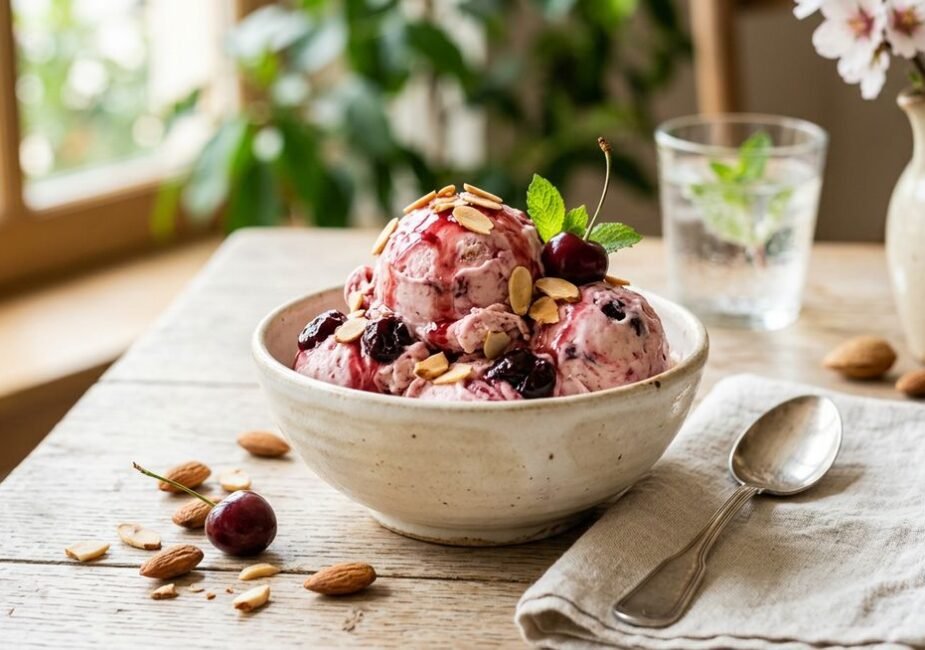
Some flavor pairings feel inevitable once you trace them back far enough. Almond and cherry is one — a combination born in the kitchens of Emilia-Romagna, shaped by the aromatic chemistry of stone fruit, and carried across the Atlantic by Italian immigrants who packed tortoni into fluted paper cups decades before anyone in America had heard the word “gelato.”
The cherries are Amarena: small, wild, sour, preserved in dark syrup by companies like Fabbri since 1905. The almonds are toasted until golden, amplifying a shared aromatic compound called benzaldehyde that makes these two ingredients taste like they were always meant to meet. Put them together in a frozen custard base, and you get something that hits the tongue with a tart-sweet punch followed by a warm, lingering nuttiness — rich without being heavy, complex without trying too hard.
The Italian Roots of Almond and Cherry Ice Cream
Amarena Cherries and the Bologna-Modena Tradition
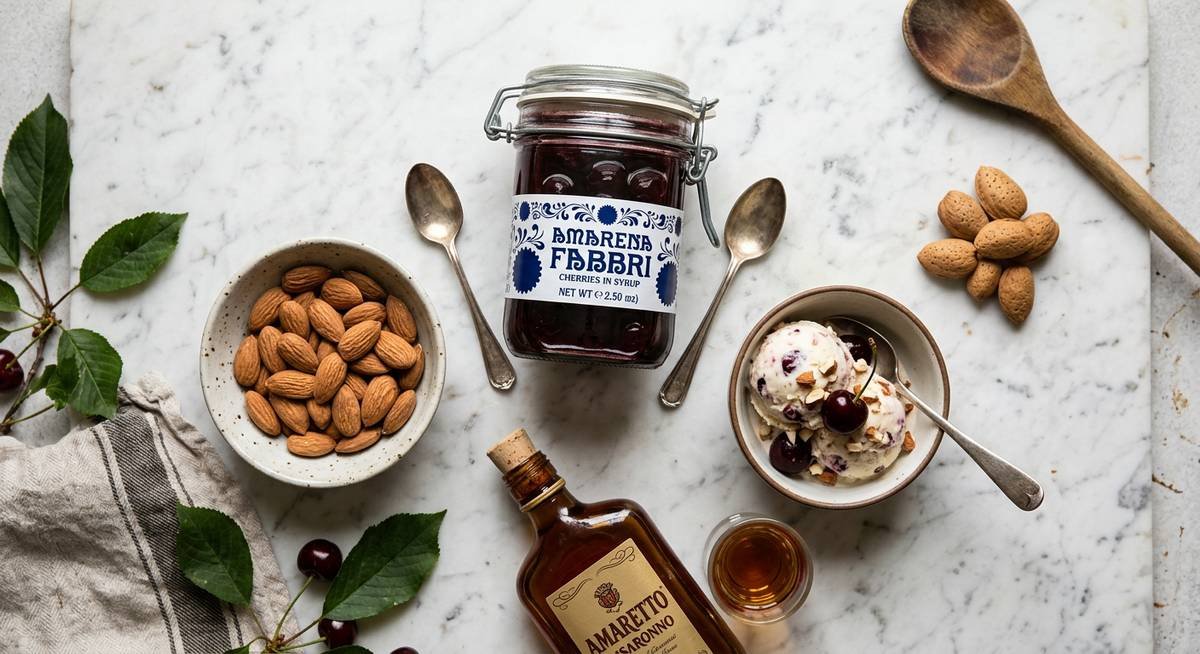
Amarena cherries are not the neon-red maraschino of American sundae bars. They are small, dark, wild sour cherries native to the Emilia-Romagna region of northern Italy — harvested primarily around Bologna and Modena, then preserved in a dense, bittersweet syrup. The flavor is concentrated and tart, with a deep burgundy color that bleeds beautifully into a pale cream base.
The Bologna-based confectionery company Fabbri is widely credited with popularizing Amarena cherries in preserved form. Its distinctive white-and-blue ceramic jar has been a recognizable symbol of Italian gelato culture since 1905, making it one of the oldest continuously marketed specialty dessert ingredients in Italy. Gelaterias across the country still treat Amarena cherries as a defining ingredient, not a garnish.
Amaretto, Almonds, and the Benzaldehyde Connection
The reason almond and cherry taste so right together comes down to a single aromatic compound: benzaldehyde. It is the primary flavor molecule in bitter almonds, apricot pits, and stone fruit — including cherries — which is why amaretto liqueur (traditionally distilled from bitter almonds or apricot kernels) smells almost indistinguishable from cherry at first inhale.
Toasting almonds intensifies this effect. The Maillard reaction during toasting develops benzaldehyde and related aromatic compounds, creating a nuttier, more resonant note that locks in with cherry’s natural acidity. Italian pastry tradition exploited this relationship for centuries — in amaretti cookies, in marzipan paired with preserved fruit, and eventually in gelato. Chemistry dressed up as culture.
The Tortoni Legacy
The tortoni carried almond-cherry flavor from Italian kitchens to American dining rooms. Named after an 18th-century Neapolitan cafe owner who, according to culinary tradition, operated in Paris, the tortoni is a no-churn frozen dessert built from whipped cream and egg whites, set in small paper cups, and finished with crushed amaretti cookies and maraschino cherries on top.
Italian immigrants brought tortoni to the United States, where it became a fixture of mid-century Italian-American restaurants — the humble, make-ahead dessert that arrived at the table in a fluted cup. Its legacy matters because it established almond cherry as a distinctly Italian-American flavor identity, decades before artisan gelato shops made the pairing fashionable again.
| Ingredient / Tradition | Origin | Role in the Almond Cherry Pairing |
|---|---|---|
| Amarena cherries | Emilia-Romagna, Italy | Tart-sweet base cherry; syrup doubles as a ripple swirl |
| Amaretto liqueur | Saronno, Lombardy | Aromatic bridge — shares benzaldehyde with stone fruit |
| Toasted almonds | Mediterranean basin | Maillard-driven nuttiness; textural crunch |
| Amaretti cookies | Piedmont / Lombardy | Crushed topping for tortoni; crisp almond flavor |
| Tortoni tradition | Naples → Paris → USA | No-churn vehicle that brought the pairing to American tables |
Gelato, Tortoni, or Italian-Style Ice Cream — What’s the Difference?
These three frozen desserts share Italian heritage but differ fundamentally in fat content, technique, and texture. Understanding the difference determines which version of almond cherry Italian ice cream you are actually making — or ordering.
Gelato
Gelato is defined by what it lacks: fat and air. Butterfat sits between 4-8%, compared to 14-18% in standard American ice cream, and the churning process incorporates significantly less air (a metric called overrun). The result is denser and more intensely flavored. Gelato is served at approximately 10-15 degrees F, warmer than American ice cream, which keeps it soft enough to scoop cleanly without plasticky resistance.
That warmer serving temperature is structural, not stylistic. Less fat means less insulation, so gelato must be served promptly and at the right temperature to maintain its signature silky consistency. On the tongue, good cherry-almond gelato feels almost velvety — cooler than a mousse but far smoother than a standard scoop.
Italian-Style Ice Cream
“Italian-style ice cream” is largely an American category, not a protected Italian designation. It typically describes ice cream inspired by gelato technique — lower overrun, more intentional flavoring — but made with a richer custard base using egg yolks. The result sits somewhere between American ice cream and authentic gelato: richer than the former, less austere than the latter.
Most homemade almond cherry recipes labeled “Italian-style” fall into this category. They borrow gelato’s philosophy without replicating its exact fat ratios.
Tortoni
Tortoni is the outlier — no churning, no machine, no custard base. The classic preparation combines whipped cream and beaten egg whites, folded together and set in individual paper cups, then frozen until firm. Crushed amaretti cookies and cherries go on top before serving.
The accessibility is the point. Tortoni democratized Italian frozen desserts for home cooks long before countertop ice cream makers existed. A spoonful delivers a lighter, airier mouthfeel than gelato — more like frozen whipped cream with crunchy, cherry-studded pockets.
| Type | Butterfat | Air (Overrun) | Texture | Machine Needed? | Serving Temp |
|---|---|---|---|---|---|
| Gelato | 4-8% | Low (20-35%) | Dense, silky | Yes | ~10-15 °F |
| Italian-Style Ice Cream | 10-14% | Medium (30-50%) | Creamy, rich | Yes | ~5-10 °F |
| Tortoni | Variable (cream-dependent) | High (whipped) | Light, airy | No | ~0-5 °F |
Choosing Your Cherries and Almonds
The cherry and almond you choose define the entire character of the finished dessert. Here is how each option plays out in practice.
| Ingredient | Flavor Profile | Authenticity | Best Use |
|---|---|---|---|
| Amarena cherries in syrup | Tart-sweet, complex, deep | Highest (Italian standard) | Gelato swirl and topping |
| Maraschino cherries | Mild, very sweet, bright | American-classic | Tortoni and no-churn |
| Sour / tart cherries | Sharp, fruity, clean | Moderate | Mix-in when almond leads |
| Fresh sweet cherries (Bing, Rainier) | Mild, juicy, delicate | Low | Macerated, folded in at end |
| Toasted almonds (sliced or slivered) | Nutty, warm, aromatic | High | Fold-in and garnish |
| Almond paste / marzipan | Sweet, dense, fudgy | Moderate | Blended into custard base |
| Amaretto liqueur | Aromatic, subtle, complex | High | 1-2 Tbsp in custard base |
| Pure almond extract | Potent, concentrated | Moderate | 1/4 tsp max — easy to overdo |
Amarena cherries in syrup are the gold standard. Small, dark, and intensely tart-sweet, they come preserved in a thick, bittersweet syrup that doubles as a ready-made ripple — you get two ingredients in one jar. Fabbri is the benchmark brand most professional gelatieri reach for.
Sour or tart cherries (fresh, frozen, or jarred) bring genuine acidity without the syrup’s added sweetness, making them a strong choice when you want the almond flavor to lead. Fresh sweet cherries are the mildest option and work best lightly macerated in sugar before folding in, since their natural sweetness can vanish against a rich cream base.
For almonds, toasting is not optional if you want depth. Eight to ten minutes at 350 degrees F on a dry sheet pan is enough to transform them. Amaretto liqueur contributes aromatic complexity with minimal textural impact — a tablespoon or two in a custard base is often more effective than extract alone. Pure almond extract is potent; even a quarter teaspoon can dominate an entire batch.
Almond Cherry Italian Ice Cream Recipe
This is an Italian-style ice cream — a custard base with egg yolks, churned in a standard home ice cream maker. It lands between gelato and American ice cream: dense enough to taste every ingredient, rich enough to feel like a treat. The Amarena cherry syrup goes in as a ripple at the very end, so you get pockets of deep ruby swirled through pale ivory.
Ingredients
- 2 cups whole milk
- 1 cup heavy cream
- 3/4 cup granulated sugar
- 4 large egg yolks
- 1/4 teaspoon fine sea salt
- 1 tablespoon amaretto liqueur (or 1/4 teaspoon pure almond extract)
- 1/2 cup Amarena cherries, drained and roughly halved (reserve 3 tablespoons syrup)
- 1/3 cup toasted sliced almonds
Instructions
- Toast the almonds. Spread sliced almonds on a dry sheet pan. Bake at 350 degrees F for 8-10 minutes, stirring once halfway through, until golden and fragrant. Set aside to cool completely.
- Make the custard base. Heat milk, cream, and sugar in a medium saucepan over medium heat, stirring until the sugar dissolves and the mixture just begins to steam. Do not boil.
- Temper the egg yolks. Whisk the yolks and salt in a bowl. Slowly pour about half of the hot milk mixture into the yolks while whisking constantly, then pour everything back into the saucepan.
- Cook the custard. Stir continuously over medium-low heat until the mixture coats the back of a spoon and registers 170-175 degrees F on an instant-read thermometer. This takes roughly 5-7 minutes. Do not let it boil or the eggs will curdle.
- Strain and chill. Pour the custard through a fine-mesh strainer into a clean bowl. Stir in the amaretto (or almond extract). Press plastic wrap directly onto the surface to prevent a skin from forming. Refrigerate at least 4 hours, ideally overnight.
- Churn. Pour the chilled custard into your ice cream maker and churn according to the manufacturer’s instructions — usually 20-25 minutes, until it reaches the consistency of thick soft serve.
- Layer and swirl. Transfer one-third of the churned ice cream into a freezer-safe container. Scatter half the Amarena cherries and a third of the toasted almonds over the surface. Drizzle 1 tablespoon of reserved cherry syrup. Repeat with another layer, then top with the remaining ice cream and almonds. Drag a knife or chopstick through a few times to create swirls — do not overmix.
- Freeze. Press plastic wrap onto the surface and freeze for at least 4 hours until firm. Before serving, let the container sit at room temperature for 5-8 minutes to soften slightly — Italian-style ice cream scoops best when it is not rock-hard.
Yield: approximately 1 quart. No ice cream maker? Use the same custard base, but fold the chilled mixture into 1 cup of whipped heavy cream, layer with cherries and almonds in paper cups, and freeze for a tortoni-style variation that requires no machine at all.
Storage and Serving Tips
Italian-style ice cream is denser and lower in air than commercial American ice cream, which means it freezes harder and needs a few minutes at room temperature before scooping. Five to eight minutes on the counter is usually enough. If it still resists the scoop, run hot water over the scooper between servings.
Store in a shallow, wide container rather than a deep one — this reduces the formation of large ice crystals and keeps the texture smoother. Press plastic wrap directly onto the surface before sealing the lid. Homemade almond cherry ice cream keeps well for up to two weeks, though the almond crunch softens noticeably after the first few days. For the best texture contrast, keep a small dish of extra toasted almonds on hand to sprinkle on at serving time.
Frequently Asked Questions
What makes almond cherry ice cream “Italian”?
The Italian identity comes from the ingredient tradition, not just the technique. Amarena cherries from Emilia-Romagna, amaretto liqueur from Lombardy, and the lower-fat, denser churning style of gelato all trace directly to Italian culinary practice. American almond cherry ice cream exists too, but it typically uses maraschino cherries and a higher-fat base — a different dessert with a different ancestry.
Can I make this dairy-free?
Yes. Substitute full-fat coconut milk for both the whole milk and heavy cream. Skip the egg yolks entirely and use 2 tablespoons of cornstarch whisked into the cold coconut milk before heating — this creates a similar body without dairy or eggs. The almond and cherry flavors carry well in a coconut base, though the final texture will be slightly icier than the custard version.
Amarena cherries vs. maraschino — does it really matter?
Significantly. Amarena cherries are tart, complex, and preserved in a syrup that adds flavor depth. American maraschino cherries are bleached, re-dyed, and soaked in a sugar syrup that tastes mostly of sweetness. Both work, but they produce very different results. For an Italian-style profile, Amarena is the clear choice. For a retro tortoni, maraschino is traditional and perfectly appropriate.
How do I prevent the almonds from getting soggy?
Almonds will inevitably soften in frozen custard after 2-3 days. To keep some crunch, fold only half the toasted almonds into the ice cream during the layering step and reserve the rest. Sprinkle the reserved almonds on top of each serving right before eating.
Can I use almond extract instead of amaretto?
Yes, but measure carefully. Amaretto provides a gentle, rounded almond flavor across the entire batch. Pure almond extract is far more concentrated — a quarter teaspoon replaces a full tablespoon of amaretto. Go over that amount and the extract’s sharp, almost medicinal edge can overpower the cherry.
What is the best way to create a cherry ripple or swirl?
Reserve 3 tablespoons of Amarena cherry syrup (straight from the jar) and drizzle it between layers of churned ice cream as you pack the container. Drag a knife or chopstick through in a single pass. One or two strokes is enough — over-swirling blends the syrup into the base and turns the whole batch pink instead of creating distinct ruby streaks.
Last modified: March 19, 2026