Ditch Witch Sonde vs DigiTrak Sonde: Which HDD Sonde System Fits Your Work Better?
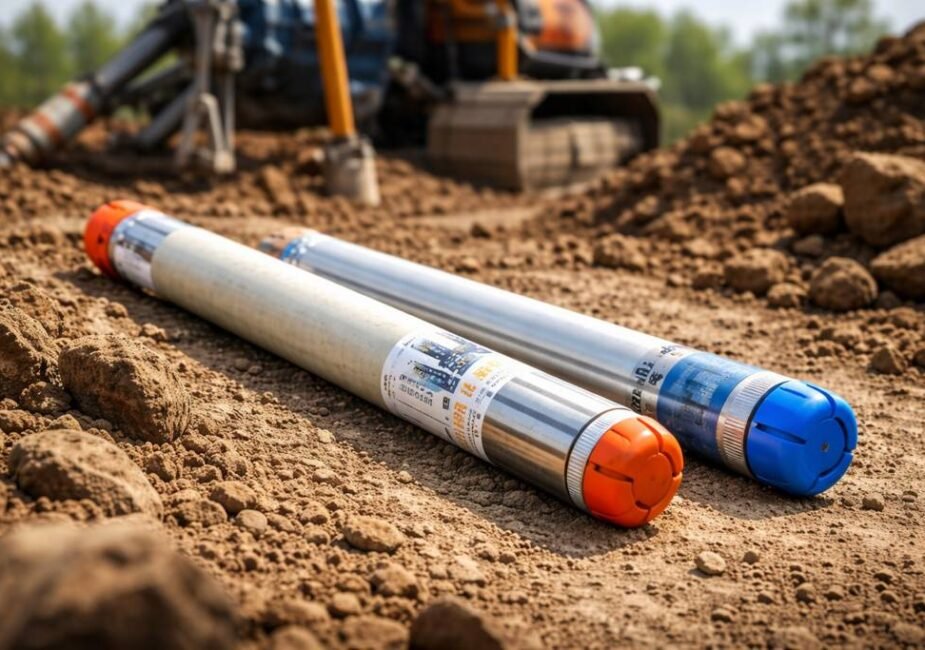
For HDD contractors, the sonde is not a side issue. It drives the locating system. When the signal is clean and consistent, the crew works faster and with more confidence. When the signal struggles with depth, interference, or heat, the whole bore can slow down.
That is why contractors keep comparing Ditch Witch sonde vs DigiTrak sonde.
In current-market terms, that usually means Subsite HDD beacons in the Ditch Witch ecosystem versus DigiTrak transmitters from DCI. Both are built for walkover locating. Both are used on utility and directional drilling jobs. Both offer product lines for standard service work and for more difficult bores. But they do not take the same approach.
The real difference is not just the name on the box. It comes down to platform design, available frequencies, depth range, low-frequency capability, service model, and how well the system fits the work your crew does every week. Some contractors want a simpler setup that stays close to the Ditch Witch and Subsite platform. Others want more frequency options and a wider transmitter lineup for difficult conditions.
This guide compares the two in plain English. It is based only on the manufacturer and product information collected in Step 2. The goal is simple: help HDD contractors, utility contractors, and equipment owners decide which sonde system better fits their work.
What Contractors Usually Mean by “Ditch Witch Sonde” and “DigiTrak Sonde”
Before you compare the systems, it helps to get clear on the names.
When contractors say Ditch Witch sonde, they often mean a Subsite beacon used in the Ditch Witch guidance ecosystem. Ditch Witch directs users to Subsite HDD Guidance, including Marksman, Marksman Plus, Commander 7, and the broader line of Subsite HDD beacons. In other words, the “Ditch Witch sonde” conversation usually leads straight to Subsite products.
When contractors say DigiTrak sonde, they usually mean a DCI DigiTrak transmitter used with a Falcon F2+ or Falcon F5+ locating system. DigiTrak more often uses the word “transmitter,” but in the field many contractors still use “sonde” as a general term.
That matters because this is not only a beacon-to-beacon comparison. It is also a platform comparison. On the Ditch Witch side, the sonde discussion sits inside the Subsite guidance family. On the DigiTrak side, it sits inside DCI’s Falcon locating platform, with its own receivers, displays, and transmitter options.
That framing helps. It keeps the comparison grounded in how the equipment is actually sold and used. It also makes the key question easier to answer: which platform gives your crew the better fit for the jobs you run most often? That may mean routine utility installs, congested urban bores, work near reinforced concrete, or deeper shots where signal handling matters more.
The Main Difference: Integrated Workflow vs Broad Frequency Choice
The cleanest way to understand this comparison is to look at the product logic behind each system.
On the Ditch Witch / Subsite side, the strength is a more integrated workflow. Ditch Witch points users toward Subsite HDD Guidance, and Subsite builds that family around Marksman, Marksman Plus, Commander 7, and compatible HDD beacons. For contractors who want a unified system, that matters. It can make training easier, simplify standardization across crews, and keep service support inside one dealer network.
On the DigiTrak / DCI side, the strength is broader frequency choice and a larger transmitter family. DCI puts heavy emphasis on Falcon F2+, Falcon F5+, multiple transmitter lengths, multi-power operation, and solutions for difficult interference. The Falcon systems are built around the idea that signal conditions change from job to job, and the operator may need more frequency choices to find a workable setup.
That does not make one system automatically better than the other. It depends on the work.
If your crew wants a straightforward platform that stays close to the Ditch Witch and Subsite environment, the Ditch Witch side makes sense. If your crew often works in difficult signal conditions and wants more frequency options, the DigiTrak side has a stronger case.
That is the real split. Ditch Witch / Subsite leans toward a tighter integrated workflow. DigiTrak / DCI leans toward broader frequency flexibility and more transmitter options.
Ditch Witch Sonde System: What the Subsite Platform Offers
The Ditch Witch side of this comparison centers on Subsite HDD beacons and the locating systems built around them. That includes Marksman, Marksman Plus, and the Commander 7 display. For many contractors, the appeal starts with that product family. The drill, the guidance system, the display, and the beacon lineup all sit in the same ecosystem.
Subsite’s beacon family includes models such as the 15T, 17T, and 19T. These are available in one, three, or four frequencies. The newer T-series beacons also offer three field-configurable power levels, automatic tuning circuitry, and a maximum operating temperature of 221°F. Those are practical jobsite features. They give the crew some control without making field setup overly complicated.
One of the clearest differences on the Subsite side is that the company says its HDD beacons are repairable. Subsite also says the electronic module can be replaced through a Ditch Witch dealer. For equipment owners, that matters. A repairable beacon can change long-term ownership cost and downtime planning.
Subsite also gives its newer beacons low-frequency capability, including 1.5 kHz, to help around passive interference such as metal rebar. That is relevant for contractors working in utility corridors, developed areas, and other signal-heavy environments.
So the Ditch Witch sonde case is not hard to see. It offers a focused guidance platform, practical power control, high heat tolerance, low-frequency capability, and a repair path that stands out in the comparison.
Marksman and Marksman Plus are built for different job demands
A useful detail in the Subsite lineup is that Marksman and Marksman Plus are not presented as the same system with minor differences. They are built for different levels of work.
Marksman is the simpler system. With the M17 beacon, it lists 6 receiving frequencies across a 12 to 38 kHz range. That fits routine utility work and everyday bores where the crew needs solid locating performance without managing a large number of frequency choices.
Marksman Plus expands that range. With the M17+ beacon, it lists 32 receiving frequencies across a 1.9 to 46 kHz range. That gives the operator more room to work when interference changes or when the crew needs more options to suit the job.
The depth figures also separate the systems. Marksman with M17 lists 70 feet at normal power. Marksman with M17+ lists 95 feet at normal power and 130 feet at high power. Those are meaningful differences. They show that Marksman Plus is built to cover a wider working range than the standard Marksman setup.
For buyers, that distinction matters. Not every contractor needs the larger system. If most of your work stays in common utility-install conditions, Marksman may cover the job. If you regularly run harder bores, work around more interference, or need more flexibility in the field, Marksman Plus gives the operator more room to work.
Repairability is one of Subsite’s clearest long-term advantages
A lot of buyers focus first on frequencies and depth. Those matter. But ownership cost matters too, especially for contractors who keep equipment in the field for years.
Subsite says its HDD beacons are repairable. It also says the electronic module can be replaced through a Ditch Witch dealer, at about half the cost of a new beacon. That is not a small detail. For contractors who run a steady workload, the ability to repair a beacon instead of replacing it outright can affect both cost and downtime.
This is a practical advantage, not a marketing extra. A sonde works in heat, vibration, fluid, and impact. Over time, wear is inevitable. When something fails, the real question is how expensive it is to get the unit back into service. A repair path gives owners another option.
This also fits the larger Ditch Witch / Subsite story. The system is not only built as a locating platform. It is also built around a dealer service model. For contractors who value that structure, the repair claim strengthens the case for Subsite.
No one should choose a sonde system on repairability alone. But in a side-by-side comparison, this is one of the most concrete differences between the two product families.
DigiTrak Sonde System: Where DCI Stands Out
The DigiTrak side of the comparison centers on DCI transmitters used with the Falcon F2+ and Falcon F5+ systems. If the Ditch Witch / Subsite story is about integration, the DigiTrak story is about frequency range, transmitter choice, and flexibility in difficult conditions.
DCI offers a broader transmitter lineup across the Falcon family. The F5+ transmitter family includes 24-inch, 19-inch, 15-inch, 19-inch Rebar, 15-inch Rebar, and 8-inch models. The F2+ family includes 19-inch, 15-inch, and 8-inch models. That gives contractors more ways to match the transmitter to the job, the housing, and the conditions.
DCI also puts stronger emphasis on the number of available frequencies. The Falcon F2+ is built around 500+ frequencies. The Falcon F5+ is built around 1000+ frequencies. That does not mean crews use all of them on every bore. It means the system is designed to offer more options when common settings do not work well.
The DigiTrak lineup also speaks more directly to interference-heavy work. DCI highlights Sub-k Rebar transmitters and low-frequency operation for work around reinforced concrete and other hard signal environments.
That gives DigiTrak a clear place in the market. For contractors who want a wider set of transmitter choices and more frequency options to work through changing signal conditions, DCI has a strong product story.
Falcon F2+ and F5+ serve different levels of work
The DigiTrak lineup also needs to be read by tier. Falcon F2+ and Falcon F5+ are not the same system with different labels. They sit at different levels.
The F2+ receives across 4.5 to 45 kHz and scans 500+ frequencies. DCI lists it with up to 160 feet of transmitter depth range and up to 200 feet of transmitter data range. That makes it a serious system for contractors who need more than a basic locator but do not need the top end of the Falcon family.
The F5+ pushes farther. It also receives across 4.5 to 45 kHz, but it adds 1000+ frequencies and Sub-k mode covering 0.33 to 0.75 kHz plus 4.5 to 18 kHz. DCI lists up to 180 feet of transmitter depth range and up to 220 feet of data range. DCI also ties that top figure to the 24-inch FT5XLp used in high power and Max Mode.
That distinction matters because it keeps buyers from overgeneralizing the DigiTrak name. F2+ is not a stripped-down entry unit. F5+ is simply the higher-capability platform in the current Falcon line. Contractors should judge them by the work they actually run and by how much frequency and range they need.
DigiTrak’s strongest case is frequency flexibility in difficult conditions
Where DigiTrak most clearly separates itself is in its emphasis on frequency-driven problem solving.
Signal conditions change from site to site. Nearby utilities, reinforced concrete, buried metal, and other interference can make a normal bore difficult to track. DCI’s Falcon platform is built around the idea that the operator may need many more frequency choices to get a usable signal.
That logic shows up in the product specifications. The number of available frequencies is much larger than on the Subsite Marksman family. So is the direct focus on Sub-k operation and Rebar transmitter options. DCI makes those features part of the main product story, not a side note.
For many contractors, that matters more than marketing language. A crew that regularly works around difficult interference may value a locating system with a larger tuning window. More frequency options do not remove the need for operator skill, but they can give the operator more ways to respond when the ground or the site gets difficult.
This does not mean frequency count alone decides the winner. More options can also mean more setup decisions. But for crews that often face signal trouble, DigiTrak’s broader frequency approach is one of its strongest practical advantages.
Depth, Data Range, and What Those Numbers Mean in the Field
Depth figures always draw attention. They should. They affect what a crew can take on with confidence. But they only help if you read them carefully and keep them tied to the exact system, mode, and conditions listed by the manufacturer.
On the Subsite side, Marksman with M17 lists 70 feet of depth at normal power. Marksman with M17+ lists 95 feet at normal power and 130 feet at high power. In the broader T-series beacon sheet, Subsite lists models such as the 19T3 at up to 120 feet in the highest depth column and models such as 17T4 / 17T4G at up to 110 feet. Subsite also notes that those figures are obtained with TKQ / TK RECON4, and that depth with TK will be about 35% less.
On the DigiTrak side, DCI lists up to 160 feet of transmitter depth range for the F2+ and up to 180 feet for the F5+. It also lists up to 200 feet and 220 feet of transmitter data range for those systems.
The practical takeaway is simple. If top-end stated depth is one of your main buying filters, DigiTrak’s current premium systems carry the larger headline figures. If your work stays in more common utility-install depth ranges, those maximum numbers may matter less than workflow, interference handling, or service support.
Depth matters. But the useful question is not only which number is bigger. The useful question is which system gives your crew enough range for the work you actually run.
Bigger depth numbers help only if they match your work
Maximum depth figures are useful, but they can also mislead buyers when they are read without context.
A locating system is a field tool, not a brochure figure. The deepest-rated setup is not always the best fit for a contractor whose work rarely approaches that limit. In many fleets, a system that is easier to support, easier to standardize, and easier to keep in service may create more value than the system with the highest listed maximum.
That matters in this comparison. DigiTrak’s top-end stated depth and data range are clear advantages for contractors who need that extra working window. But many HDD crews spend most of their time on routine utility installation, service bores, and work where consistent performance matters more than rare maximum range.
There is also a gap between maximum stated range and repeatable jobsite use. Signal conditions change with soil, interference, housing setup, power mode, and operator skill. The spec sheet gives you the outer limit. Day-to-day work decides what the crew can use consistently.
So yes, depth should be part of the decision. But it should be judged against your real workload, not against a single top number in isolation.
Interference, Rebar, and Low-Frequency Capability
For many contractors, this is where the comparison becomes most practical.
A sonde that works well in clean ground may still struggle around reinforced concrete, buried metal, or dense passive interference. That is why low-frequency capability matters. It gives the operator another way to work when common settings do not produce a clean signal.
On the Subsite side, the company says its newer beacons include low-frequency capability, including 1.5 kHz, to help around materials such as metal rebar. The M-Series positioning also ties low-frequency operation to passive interference conditions.
On the DigiTrak side, DCI makes this issue more explicit. It offers Sub-k Rebar transmitters for drilling under reinforced concrete. It also lists Sub-k mode on the F5+ at 0.33 to 0.75 kHz, in addition to the standard higher operating bands.
For contractors, the lesson is straightforward. If your work is mostly in open ground and standard utility corridors, low-frequency rebar capability may not drive the decision. But if your jobs often run near reinforced concrete, buried metallic clutter, or difficult developed areas, this part of the comparison deserves close attention.
Both brands address interference. DigiTrak simply builds more of its product identity around it. Subsite addresses it too, but in a narrower way within the Marksman and beacon product family.
DigiTrak makes rebar-focused locating a more visible part of the product story
Both systems give operators tools for difficult signal conditions. The difference is in how directly they present those tools.
Subsite clearly gives the operator low-frequency capability to work around passive interference such as rebar. That is important, and for some contractors it may be enough. But DCI goes farther in its public product positioning by offering dedicated Rebar transmitter variants and by making Sub-k operation a central part of the Falcon F5+ story.
That matters because many buying decisions come from past jobsite problems. A contractor who has lost time on concrete-heavy sites or under reinforced surfaces may prefer a product line that openly says this is one of its main jobs.
DigiTrak’s rebar-focused transmitters make that case directly. They frame difficult interference as a core use case, not as an occasional condition. For contractors who work in urban corridors or around developed infrastructure, that may carry weight.
Still, no sonde solves every interference problem by itself. Crew skill and setup still matter. But if interference and reinforced concrete are common parts of your work, DigiTrak’s product positioning is more direct on this point.
Battery Life, Power Modes, and Heat Tolerance
These details may not sell the system on their own, but they affect how the sonde behaves over a long workweek.
On the Subsite side, the newer beacons offer three field-configurable power levels. Subsite lists 80 hours of battery life for the M17 at normal power. For the M17+, it lists 60 hours at normal power and 30 hours at high power. That makes the tradeoff easy to see. More power can help with range, but it cuts battery life.
On the DigiTrak side, DCI also offers three selectable power modes through its V2 Multi-Power approach. The current Falcon product pages emphasize power control and transmitter options. The core point is the same: the operator can adjust output to suit the job instead of using one fixed setting.
Heat tolerance is also part of field performance. Subsite lists 221°F as the maximum operating temperature for newer T-series beacons. DCI’s legacy F5 transmitter overview lists 220°F maximum temperature for F5 fluid-pressure, dual-frequency, and single-frequency transmitters. That puts both systems in a similar range for high-heat operation.
For equipment owners, these are not minor details. They affect battery planning, job pacing, and whether the system fits the crew’s normal production demands. A sonde system should not only match the job. It should also match the workday.
Power control matters because no two bores are the same
The reason power modes matter is simple: one output level does not fit every job.
On a routine bore with manageable conditions, a crew may not need to push power hard. Running at normal output can preserve battery life and reduce unnecessary strain on the system. On a harder shot, especially one involving greater depth or worse signal conditions, more power may help the operator keep the signal usable.
That is why power control on both sides of this comparison has practical value. It gives the operator a way to adjust the sonde to the job instead of treating every bore as if conditions are identical.
Battery life then becomes more than a line on a spec sheet. It becomes part of job planning. A contractor running predictable service work may be comfortable with normal-power operating time. A crew that often works at higher output will need to manage battery use more carefully.
This is not the flashiest part of the buying decision, but it is real. A sonde system should fit the crew’s daily pace as well as its technical requirements.
Warranty, Service, and Cost of Ownership
A sonde system is not just a purchase. It is an operating asset. That means the comparison should include warranty terms, service structure, and what it takes to keep the equipment working over time.
On the Subsite side, the HDD beacons carry a 3 years / 750 hours warranty. That is a strong ownership point by itself. When paired with Subsite’s stated repairability and dealer-based replacement of the electronic module, it gives the Ditch Witch / Subsite side a clear long-term service argument.
On the DigiTrak side, DCI states a 3 years / 500 hours standard warranty for its 15-inch, 19-inch, and 24-inch transmitters. DCI also offers a 5 years / 750 hours extended warranty for those models. The 8-inch transmitters carry a 90-day warranty. That creates a more model-specific ownership picture, and buyers need to pay attention to the exact transmitter they are considering.
This part of the comparison is easy to overlook, but it matters. The question is not only what the system costs on day one. The better question is what it costs to support over time, how quickly it can return to service, and how clearly the warranty terms match the equipment in your fleet.
For some contractors, that may point toward Subsite. For others, DigiTrak’s performance range and transmitter options may still justify the choice. The key is to compare ownership, not only purchase price.
Housing Compatibility and Mixed-Fleet Reality
Not every contractor buys into a clean, single-brand fleet. Many crews already own housings, tooling, and electronics from earlier purchases. That makes compatibility a practical issue, not a minor technical detail.
Ditch Witch’s electronic housings information states that certain housings will accommodate Ditch Witch and DCI electronics, including 15-inch and 19-inch beacons and sondes. That can matter for contractors trying to protect existing tooling investments or move between brands without changing everything at once.
DCI’s legacy F5 information also says its 15-inch F5 transmitters remain compatible with existing housings that fit 15-inch DigiTrak transmitters, though some tooling adapters may need to change. That is an important qualifier. Compatibility is rarely as simple as a yes-or-no answer. Length, threading, housings, and adapters all affect the final setup.
For buyers, the lesson is clear. If your fleet is mixed, verify the housing details before you commit. A system that looks attractive on paper can become more expensive if it forces unexpected tooling changes across multiple drills or crews.
The good news is that the Step 2 sources do show some crossover in housing applications. That gives mixed-fleet contractors some flexibility. But it still requires careful checking before purchase.
Ditch Witch Sonde vs DigiTrak Sonde: Side-by-Side Comparison Table
| Category | Ditch Witch / Subsite | DigiTrak / DCI |
| Main current locating family | Marksman / Marksman Plus | Falcon F2+ / F5+ |
| Main current display | Commander 7 | Aurora / FCD |
| Frequency positioning | 6 frequencies with M17; 32 frequencies with M17+; range up to 1.9 to 46 kHz on M17+ | 500+ frequencies on F2+; 1000+ frequencies on F5+; standard range 4.5 to 45 kHz, plus Sub-k on F5+ |
| Stated premium depth | Marksman with M17+ up to 130 ft at high power | F2+ up to 160 ft; F5+ up to 180 ft |
| Interference / rebar story | Low-frequency capability including 1.5 kHz; positioned for passive interference such as rebar | Stronger emphasis on rebar-focused tools; Sub-k operation at 0.33 to 0.75 kHz on F5+ |
| Power modes | Three field-configurable power levels | Three selectable power modes |
| Heat tolerance | Newer T-series beacons up to 221°F | Legacy F5 overview lists up to 220°F for several transmitter types |
| Warranty | 3 years / 750 hours on Subsite HDD beacons | 3 years / 500 hours standard on 15″, 19″, and 24″; extended 5 years / 750 hours available |
| Repairability | Explicitly marketed as repairable | No equivalent repairability claim found in the Step 2 source set |
| Mixed-housing relevance | Some Ditch Witch housings fit Ditch Witch and DCI 15″ and 19″ electronics | Some existing DigiTrak-compatible housing setups remain usable, though adapters may vary |
Which One Fits Your Work Better?
The answer depends on the work, not on the brand name alone.
Choose the Ditch Witch / Subsite route if your priority is a more integrated workflow, especially if your fleet already leans Ditch Witch. It makes sense for contractors who value straightforward training, dealer-based support, practical power control, and the long-term ownership benefit of repairable beacons. It also fits crews whose work is mostly routine utility installation and service bores, with harder signal conditions showing up occasionally rather than constantly.
Choose the DigiTrak route if your priority is broader frequency choice, more transmitter options, and higher stated top-end depth capability. It makes sense for contractors who often work in difficult signal environments, around reinforced concrete, or on jobs that demand more tuning flexibility from the locating system. It is also a strong fit for buyers who want a platform with a more explicit focus on interference handling.
There is no universal winner because there is no universal HDD job.
The best sonde system is the one that fits your normal workload, your crews, your housings, and your service expectations. Buy for the conditions you see every week, not for a spec you may never need.
Final Takeaway
The comparison between Ditch Witch sonde vs DigiTrak sonde is really a comparison between two different approaches to HDD locating.
Ditch Witch / Subsite offers a focused platform with practical power control, strong heat tolerance, repairable beacons, and a workflow that suits crews who want consistency and a more unified support structure.
DigiTrak / DCI offers broader frequency coverage, more transmitter options, larger stated depth numbers in its premium systems, and a more visible focus on severe interference and rebar-heavy conditions.
Both can serve professional HDD contractors well. The better choice depends on where your jobs live: in a production environment where a tighter integrated workflow matters most, or in harder signal conditions where a larger tuning window and more transmitter options carry more value.
That is the decision in plain English. Not which logo is better. Which system helps your crew locate with fewer problems and with more confidence.
Last modified: March 18, 2026