Multi-Vehicle Car Accidents in Denver: Who Is Liable?
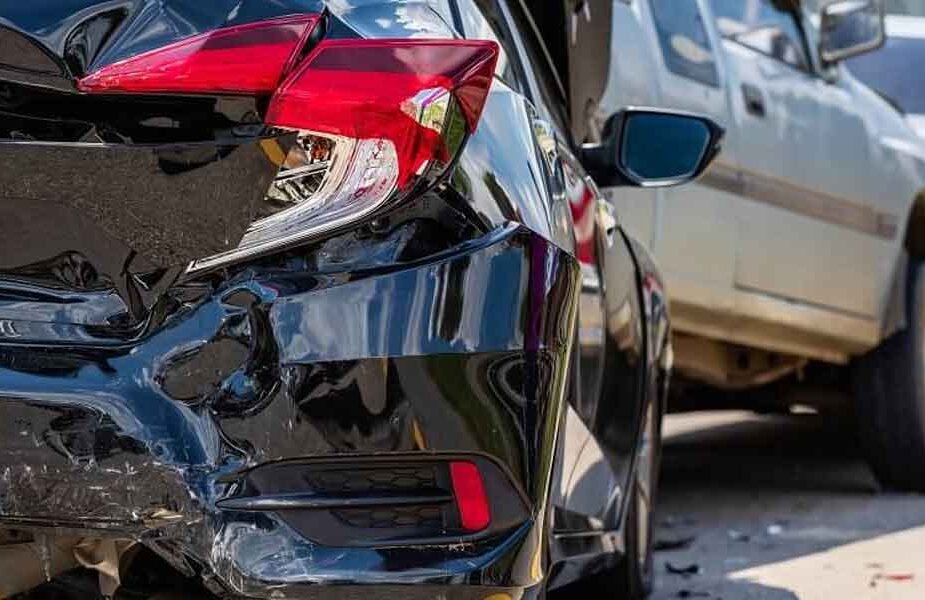
You are cruising down I-25 when the brake lights ahead flicker a warning. A sudden screech, a heavy thud, then impact from behind. In seconds, a simple commute turns into a mangled multi-car collision.
When the dust settles, the next nightmare of insurance finger-pointing is just beginning.
This chaos is becoming more common as the Front Range grows. Recent 2025 data from the Colorado Department of Transportation shows that traffic fatalities in Denver spiked by 21% last year alone. With more cars on the road, the risk of a high-speed chain reaction grows every day.
When multiple bumpers meet, the legal questions pile up as fast as the cars. Determining who is at fault in a multiple-car accident requires untangling a web of driver actions. In this guide, we will break down:
- How Colorado law assigns fault in pile-ups.
- The specific challenges of three-car accidents.
- Injury claims and other types of compensation you can pursue.
Colorado’s Modified Comparative Negligence Law
Colorado law recognizes that accidents are rarely black-and-white. Because of this, the state uses a “modified comparative negligence” system to handle a multi-car collision.
This allows the court to distribute financial responsibility across several different parties at once.
Explaining the 50% Bar Rule
Under C.R.S. § 13-21-111, you can only recover damages if your fault is lower than that of the other parties involved. This is known as the “50% bar.” If a jury decides you are 50% or more responsible for the crash, you are legally prohibited from collecting any settlement money.
If you are 49% at fault, you can still collect, but your award is reduced by that percentage. For example, a $100,000 award would be reduced to $51,000. This is why insurance companies work so hard to push your blame toward that 50% threshold to avoid paying your claim.
How Fault is Divided Among Multiple Drivers
In a pile-up, a judge or jury assigns a specific percentage of fault to every driver. They look at each vehicle’s speed, braking distance, and distractions. The total of all assigned percentages must equal 100%, meaning that fault in a multiple-car accident is a split decision.
If three drivers are involved, one might be 60% liable, another 30%, and you might be 10%. In this case, you would seek compensation for your car wreck from the other two drivers based on their respective shares. This division makes these cases far more complex than a standard two-car crash.
Determining Responsibility in a Three-Car Accident
Establishing liability in a three-car pile-up requires a deep dive into the “duty of care.” Every driver has a legal obligation to operate their vehicle safely and avoid hazards.
When a chain reaction occurs, investigators must determine which driver was the first to breach this duty.
The “Domino Effect” in Rear-End Collisions
In a classic three-car rear-end crash, the rear-most driver is often presumed liable. If Vehicle C hits Vehicle B, which then slams into Vehicle A, Driver C is usually responsible for all damages. This is because they failed to maintain a safe following distance to account for sudden stops.
However, if Vehicle B hits Vehicle A first, and then Vehicle C hits them both, liability is split. In this scenario, asking who is responsible in a three-car accident leads to two separate claims. Physical evidence, such as dashcam footage and “black box” data, is used to establish the sequence of impacts.
Intersection Pile-Ups and Shared Liability
Intersections are common sites for multi-car wrecks, often involving left-hand turns or red-light runners. If one driver jumps a light and hits a second car, sending it spinning into a third, the initial lawbreaker is the primary target. However, the third driver could still be found partially at fault.
If that third driver was speeding or distracted, they might have missed a chance to avoid the spinning car. Colorado laws on car accidents require a review of whether each driver took reasonable action to prevent the collision.
Even a small delay in braking can shift a portion of the blame.
Evidence Needed to Prove a Multi-Car Collision Claim
In a standard two-car accident, the evidence is often straightforward. But a pile-up creates a chaotic scene with overlapping debris and conflicting stories. To secure a fair settlement, you must gather specific evidence that clarifies the timeline of every single impact.
Leveraging Police Reports and Forensic Data
When the Denver Police Department arrives at a major pile-up, they create an official record that serves as the backbone of your claim. This report includes the officer’s professional opinion on the sequence of events. It also details road conditions and any citations issued at the scene.
Beyond the report, forensic data from a vehicle’s “black box” can be a game-changer. These Event Data Recorders track speed, braking, and steering in the seconds before a multi-car collision. This objective data often contradicts the self-serving statements of at-fault drivers.
The Power of Dashcams and Surveillance
Digital evidence is the most effective way to cut through “he-said, she-said” arguments. Dashcam footage provides an unblinking account of which car struck first. In Colorado, this footage is admissible in court as long as the camera does not obstruct the driver’s view.
- Traffic Cameras: Denver’s HALO cameras may capture accidents on major thoroughfares.
- Business Security: Nearby shops often have exterior cameras that record street-level activity.
- Witness Videos: Bystanders often record the aftermath, which can show vehicle positions.
- Photo Documentation: Pictures of skid marks and debris patterns help experts reconstruct the crash.
The Role of Accident Reconstruction Experts
In complex cases, your car accident lawyer denver may hire a reconstruction expert. These professionals use physics and computer modeling to recreate the crash moment by moment. They can determine whether a driver was speeding or failed to brake before the initial impact.
These experts are particularly vital when insurance companies disagree on the percentage of fault. By calculating the impact force, they can determine who is responsible in a multi-car accident.
This scientific approach makes it much harder for insurers to deny your claim based on guesswork.
Types of Car Wreck Compensation Available
Victims of a pile-up often face a mountain of bills that extend far beyond simple vehicle repairs. Understanding the full scope of car wreck compensation is the only way to confirm your settlement covers the long-term reality of your recovery in Denver.
Economic Damages and Financial Recovery
Economic damages are the objective, out-of-pocket costs tied to your multi-car collision. This includes emergency room visits, physical therapy, and lost wages from time missed at work. These figures are calculated using receipts and clear financial records.
In Colorado, you can also claim future medical expenses if your injuries require ongoing care. Keeping a detailed log of every cent spent is vital for your car accident damages claim. This means that no hidden costs are left off the negotiation table.
Non-Economic Damages for Pain and Suffering
Non-economic damages cover the subjective toll an accident takes on your life. Under Colorado’s updated 2025 laws, the statutory cap for these damages was increased to $1.5 million for general personal injury cases.
These caps serve as a ceiling on compensation for losses of enjoyment of life or mental anguish. Because these awards are subjective, insurance companies often try to minimize them. Having a legal advocate will set you on the path to receiving fair compensation.
Why You Need a Car Accident Lawyer in Denver
In a multi-car pile-up, you are fighting three or four different insurance companies. Each one is incentivized to shift the blame onto you to protect their bottom line. Navigating this crossfire alone often leads to a denied or undervalued claim.
The Advantage of Professional Legal Oversight
A car accident lawyer denver acts as your shield against aggressive insurance adjusters. They manage all communications, ensuring you don’t say anything that could imply fault. This protection is very important when the “50% bar” rule disqualifies your recovery.
Legal teams also bring in accident reconstruction experts to prove who is responsible in a multi-car accident. These professionals use physics and vehicle data to show the exact sequence of the crash. Technical evidence is often the only way to break a deadlock between drivers.
Comparative Value of Legal Representation
The complexity of your case dictates how much work goes into the investigation. Here is how a legal team typically manages the different stages of a multi-car claim:
| Task | Description | Goal |
| Evidence Scrutiny | Analyzing police reports and dashcams | Establish the “first mover.” |
| Fault Defense | Disproving claims of your negligence | Stay under the 50% fault bar |
| Damage Audit | Compiling all medical and repair bills | Maximize total compensation |
Managing Multiple Insurance Policies
When several drivers are involved, policy limits can be reached quickly. If the “at-fault” driver has minimal coverage, your lawyer will look for secondary sources of recovery. This might include your own Underinsured Motorist (UIM) coverage or other liable parties.
Strategizing around these policies means you aren’t left with unpaid bills just because one driver was underinsured. A skilled firm knows how to stack these coverages to cover your car accident damages fully. This level of strategy is nearly impossible to manage without professional help.
The Right Steps After a Multi-Vehicle Accident
The aftermath of a pile-up on Denver’s busy corridors is never simple. Between physical recovery and aggressive insurance tactics, the path to a settlement is filled with legal obstacles. Understanding your rights is the first step toward reclaiming your peace of mind.
Experienced car accident attorneys help you face complex, overlapping insurance policies. They provide the strategic oversight needed to protect your fault percentage and your compensation. This often makes the difference between a denied claim and a full recovery.
Taking decisive action today protects you against the complexities of Colorado’s insurance laws. By focusing on facts and leveraging professional resources, you can hold negligent parties accountable.
Last modified: February 27, 2026