How to Streamline Commercial Transport Operations for Better Profit Margins
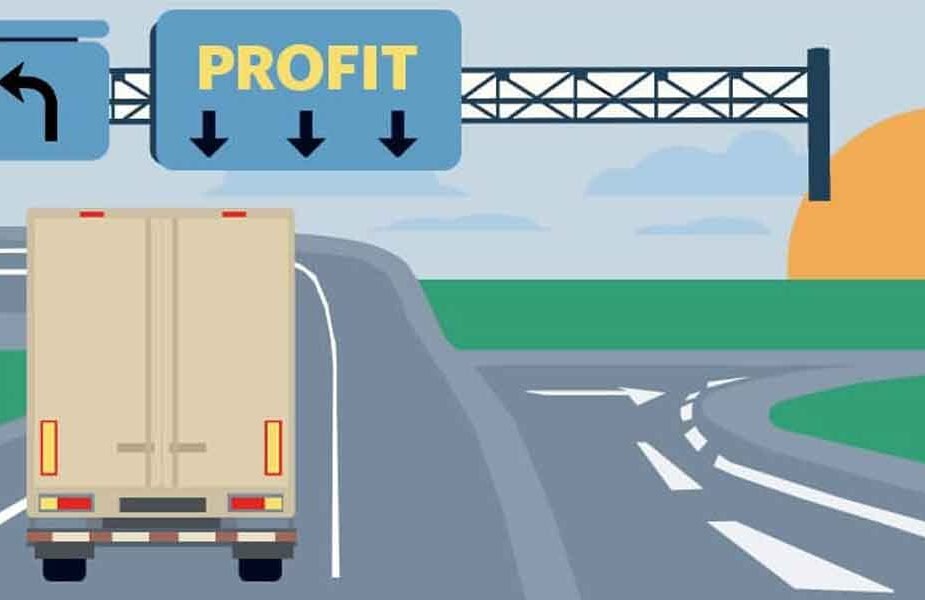
Fuel, wages, and insurance. As a transport operator, you know these costs are high. What you might not see is the 5-10% of your revenue being drained through inefficiencies and blind spots in operations. This is probably the most easily recoverable margin in your business. And unlike negotiating a better fuel contract or pushing back on insurance premiums, recovering it doesn’t require a fight – it requires visibility. The operators pulling ahead right now aren’t running harder; they’re running smarter.
Route Planning Is Still Where Most Fleets Lose Money
The manual ordering is where an individual will literally sit with a spreadsheet and decide which driver goes where. It’s the single most common avoidable cost within transport operations. It’s not that your dispatchers won’t be as good, but the number of variables is simply too high for any one individual to make the optimal planning decisions time after time at scale. Automated planning tools will do this in real-time. They’re considering delivery windows, vehicle capacity, drivers’ hours, road conditions – all happening at the same time. And because it’s real-time it can reschedule things as required. The total mileage will automatically drop as a result.
Dead miles are included within total mileage. Every empty trailer going between jobs is a cost with no corresponding amount. The better the route density – the more likely your vehicle is to return loaded rather than empty. This is one of the clearer indicators that your planning process works or it doesn’t.
Stop Treating Maintenance As Something That Happens After A Breakdown
Emergency maintenance is costly in more than one sense. Not only do you have to pay for the repair itself, but it also interrupts your operations. When your truck breaks down on the road, you’re not just paying for the tow truck and the repairs. You’re paying for the delayed delivery, the rescheduling, and the loss of customer trust.
Telematics systems access real-time engine health, mileage, and driver performance data from your vehicles. This information can automatically send alerts to your repair center based on your actual usage of a vehicle, rather than a cookie-cutter maintenance schedule. A truck that’s been driving thousands of kilometers in the summer need different kinds of maintenance than one making short trips in the winter. If you’re still using the same rules for both of them, then you’re either over- or under-servicing one of those trucks.
Predictive maintenance just means you can stop guessing and start scheduling. You take your truck in for maintenance when you planned to not when you’re forced to.
Centralizing Documentation Speeds Up Cash Flow
Manual paperwork slows everything down – and in transport, slow documentation means slow payment. Proof of delivery forms that need to be physically returned, processed, and matched to invoices can extend the order-to-cash cycle by days or even weeks.
Digitizing PODs and centralizing shipment documentation cuts that lag. When a delivery is confirmed in the field, the record is immediately available to the invoicing team. That acceleration in the billing cycle has a direct effect on working capital – particularly for smaller fleets where cash flow variability is a constant pressure.
This is where moving from scattered spreadsheets to a centralized system becomes a structural decision rather than a tech preference. Good tms software connects dispatch, drivers, and accounts in a single environment – so the delivery confirmation, the invoice, and the carrier record all update together without anyone manually transferring information between systems. The reduction in billing errors and duplicate entries alone justifies the transition for most operations.
Use Your Data To Renegotiate The Contracts Costing You Most
Many transport businesses work with the same carriers because they always have, rather than because they have ever analyzed their network and decided that those carriers are actually providing the right service at the right price. A service level agreement is a tool for doing just that: to explicitly set out the expected level of service in metrics that can be easily reported on.
Real-time analytics on freight spend, on-time delivery rates, and damage claims across carriers give you that basis. When you can show a carrier that their performance on a specific lane is running below agreed service levels, that’s a contract conversation with leverage rather than a difficult phone call with nothing concrete behind it.
Freight auditing is part of this. Verifying invoices against quoted rates catches billing errors that, over the course of a year, can represent meaningful sums. It’s not about assuming dishonesty – it’s about recognizing that high invoice volumes create conditions where errors happen and go unchecked without a systematic review process.
Reduce Support Load By Giving Customers Visibility
WISMO calls – “where is my order?” – are one of the more overlooked administrative costs in transport. When customers can’t see the status of their shipment, they contact someone who has to manually chase an answer. Multiply that across hundreds of deliveries per week and you have a real labor drain.
Automated tracking updates through a customer portal eliminate most of these calls before they happen. Customers see what they need without involving your team. That frees dispatchers and support staff to handle exceptions rather than routine status checks.
Supply chain visibility isn’t just a customer service feature – it shifts your internal team away from reactive communication and toward managing the freight that actually needs attention.
The operations that survive tighter margins aren’t necessarily the ones with the lowest fuel costs. They’re the ones that have removed the friction from every stage between booking and payment.
Last modified: March 31, 2026