Find Ohio’s Giants: A Guide to Champion Trees Near Lewis Center
Your ultimate guide to finding the legendary champion trees near Lewis Center, Ohio. Discover park locations, see the 233-inch white oak, and learn how to hunt for your own giant trees.
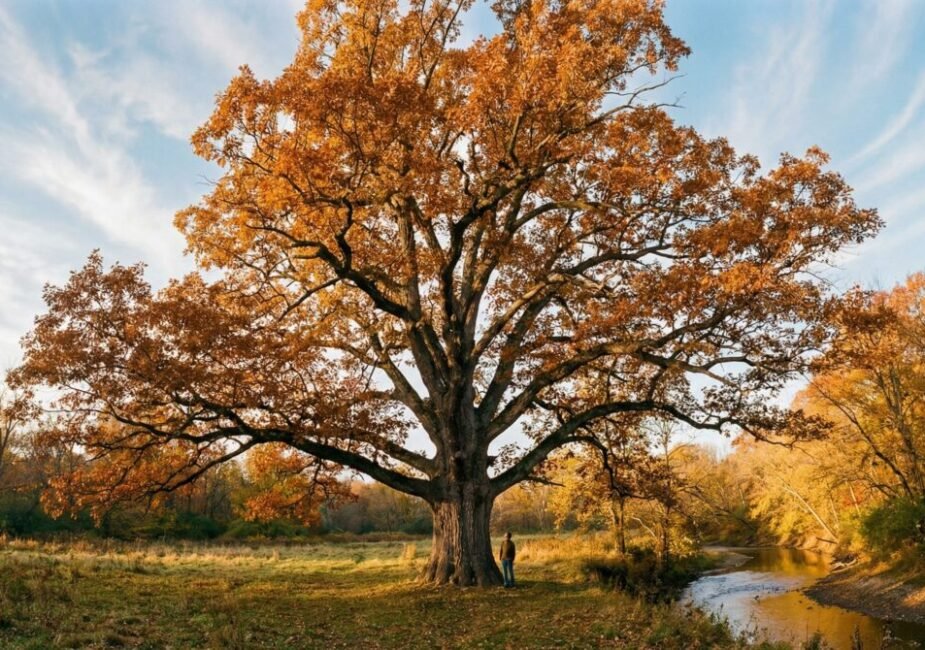
Did you know one of Central Ohio’s most massive white oaks isn’t hidden in a remote, ancient forest? It’s a silent giant, with a trunk stretching over nineteen feet around, quietly presiding over the landscape right here in the Lewis Center area. This magnificent tree is a living testament to the natural wonders hiding in plain sight.
For many, the thrill of discovering these local titans is irresistible. Yet, finding them can feel like a treasure hunt with a torn map. Information is often scattered across forums, outdated lists, and vague blog posts, leaving you wondering where to even begin your search.
This guide changes that. Think of it as your definitive treasure map to the champion trees near Lewis Center, Ohio. We’ll show you exactly where to go, what to look for, and how you can even join the ranks of big-tree hunters yourself. Your adventure into the world of Ohio’s giants starts now.
What Makes a Tree a “Champion”?
The term “champion tree” isn’t just a casual compliment; it’s an official title. Since 1940, the organization American Forests has maintained a national register of the largest known trees of each species. Ohio runs its own program through the Department of Natural Resources (ODNR) to track the state’s biggest specimens.
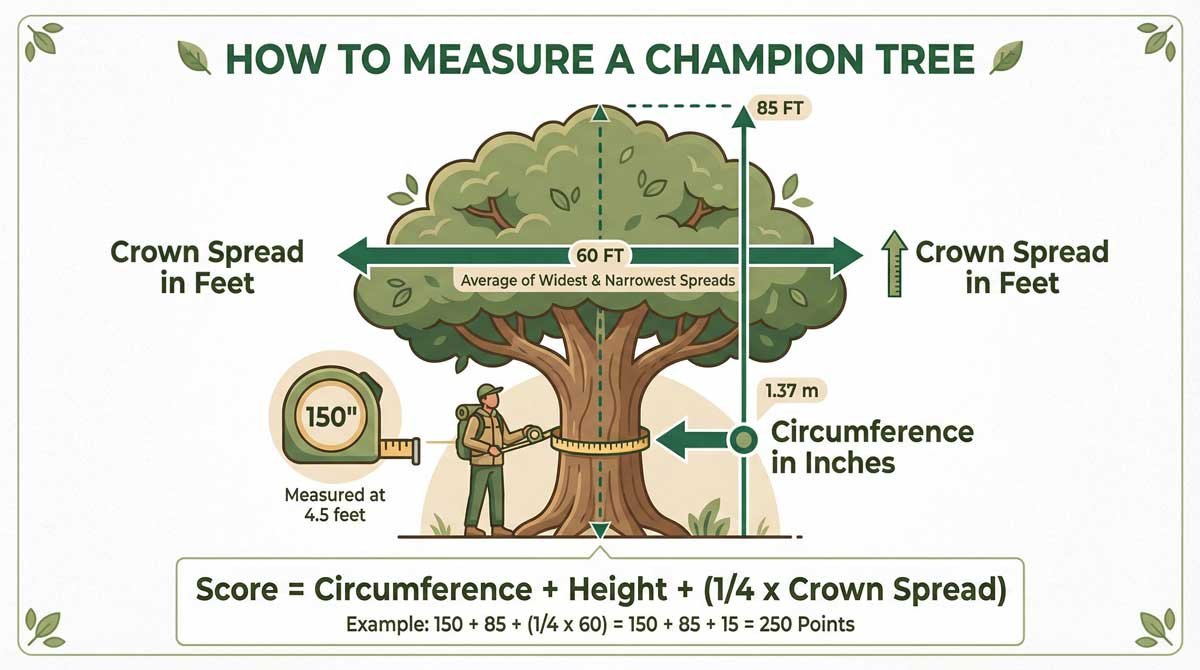
A tree earns its points through a simple formula. It’s a score that values girth, height, and canopy size. The calculation is: Trunk Circumference (in inches) + Tree Height (in feet) + ¼ of the Average Crown Spread (in feet). The tree with the highest score for its species becomes the reigning champion.
Lewis Center sits in a sweet spot for growing these giants. The land, carved by ancient glaciers, was gifted with deep, fertile soil. This rich foundation gives trees like oaks, sycamores, and maples the perfect opportunity to grow to astounding sizes, making the area a prime hunting ground for champions.
The Legend of Lewis Center: A Tale of Two Oaks
While Ohio’s official champion tree list is impressive, local legends often capture the heart of a community. In Lewis Center, the undisputed star is a magnificent white oak. Though not always on the state’s official roster, its sheer size makes it a local champion, boasting a staggering 233-inch circumference, a height of around 70 feet, and a sprawling 124-foot crown.
What makes this tree so special isn’t just its size, but its story. It’s a classic “pasture oak.” Unlike trees in a dense forest that must shoot straight up to compete for sunlight, this oak grew up in an open field. With unlimited access to the sun, it could afford to grow outward, developing the massive, spreading branches that create its breathtaking canopy. This is why pasture oaks often have more character and presence than their taller, skinnier forest-grown cousins.
This giant’s story is also one of preservation. As Lewis Center developed, the neighborhood was planned and built around this tree. Instead of being cleared for construction, it was embraced as a living landmark. It stands today as a powerful reminder of the harmony possible between community growth and the preservation of natural heritage.
Your Treasure Map to Champion Trees Near Lewis Center
Searching for champion trees doesn’t require a trip to a national park. Some of the best habitats for finding giant trees are right here, in our local parks. The secret is knowing where to look. Your best bet is to explore public lands known for mature forests, protected river corridors, and undisturbed ravine systems. Here are three of the best parks near Lewis Center to begin your treasure hunt.
| Park Name | Address | Distance from Lewis Center | Best For | Key Species to Spot |
|---|---|---|---|---|
| Highbanks Metro Park | 9466 Columbus Pike (US 23) | Less than 5 miles | Towering shale bluffs, riverside giants | Sycamore, Cottonwood, Buckeye |
| Char-Mar Ridge Park | 7741 Lewis Center Rd, Westerville | Less than 5 miles | Mature ravine forests, classic Ohio woods | Oak, Hickory, Beech, Maple |
| Alum Creek State Park | 3615 S. Old State Rd, Delaware | Less than 10 miles | Lakeside giants, diverse habitats | Eastern Cottonwood, White Oak |
Highbanks Metro Park is arguably the most dramatic of the three. Its 100-foot shale bluffs overlooking the Olentangy River create a unique microclimate where sycamores and cottonwoods grow to remarkable sizes along the riverbank. The Sycamore Trail is specifically named for the giants you’ll encounter there.
Char-Mar Ridge Park, located directly on Lewis Center Road, is the most convenient stop. Its 128 acres of mature ravine forest are home to the classic Ohio hardwood mix of oak, beech, maple, and hickory. The 1.7-mile Glacier Ridge Trail winds through this forest, and the park even features tree identification signs to help you learn what you’re looking at.
Alum Creek State Park offers a different experience. The floodplain areas near the creek and reservoir are prime habitat for Eastern Cottonwood, one of the fastest-growing and potentially largest trees in Ohio. Keep your eyes open along the water’s edge for these massive, rough-barked giants.
A Short Drive to Greatness: Verified Champions in Columbus
While the Lewis Center area is rich with impressive trees, a short 20-minute drive south to Columbus will bring you face-to-face with several officially recognized Ohio Champion Trees. Many online guides miss this entirely, but some of the state’s most notable trees are hiding in plain sight in the city’s historic parks.
The Columbus Recreation and Parks Department actively tracks and celebrates these urban champions. Goodale Park, one of the oldest parks in Columbus, is home to a state-champion Chinese Catalpa (Catalpa ovata) and a Smoothleaf Elm (Ulmus carpinifolia). In the heart of German Village, Schiller Park harbors two more: a mighty Biltmore Ash (Fraxinus americana var. biltmoreana) and a stately Wych Elm (Ulmus glabra).
These trees offer a fantastic, accessible way to see what makes a true champion. They stand as a testament to the longevity and resilience of urban forests, proving that natural giants can thrive even in the heart of a bustling city. For the dedicated big-tree hunter, a combined day trip — hitting the parks near Lewis Center in the morning and the Columbus champions in the afternoon — makes for an unforgettable experience.
Become a Big Tree Hunter: How to Measure and Nominate a Giant
Finding a massive tree is a thrill, but contributing to its legacy is even better. You can become a citizen scientist and help track Ohio’s natural heritage by learning how to measure and nominate a potential champion. It’s easier than you think, and you don’t need expensive equipment to get started.
Here’s a simple guide to measuring a tree like the pros:
- Measure the Circumference: This is the most important measurement. Wrap a flexible tape measure around the trunk at a standard height of 4.5 feet from the ground. If the tree is on a slope, measure from the uphill side. Record the measurement in inches.
- Estimate the Height: You can get a surprisingly close estimate with a simple trick. Have a friend stand at the base of the tree. Walk backward until the friend and the top of the tree are both in your line of sight. The distance from you to the tree is a rough estimate of its height.
- Calculate the Crown Spread: The crown is the width of the tree’s branches. Pace the distance from the edge of the canopy to the trunk at its widest point. Do the same at the narrowest point. The average of these two numbers is your crown spread.
- Calculate Your Score: Add the circumference (in inches) + height (in feet) + one-quarter of the crown spread (in feet). Compare this to the current state champion for that species on the ODNR website.
- Nominate Your Find: If you think you’ve found a contender, submit a nomination to the Ohio Big Tree Program through the ODNR website. Your discovery could become the next official state champion.
The best time to hunt for big trees is in late fall or early spring, when the leaves have fallen and you can actually see the full shape of the tree’s crown and trunk. A clear winter day is a big-tree hunter’s best friend.
FAQ: Your Champion Tree Questions Answered
What is a champion tree?
A champion tree is the largest known specimen of its species in a specific area, determined by a point system based on its circumference, height, and crown spread. It’s an official title recognized by state and national forestry organizations, including American Forests and the Ohio Department of Natural Resources.
What is the most famous tree in Ohio?
While the state’s largest tree is a massive American Sycamore in Ashland County (measuring 432 inches in circumference and 124 feet tall), the most famous local legend near Lewis Center is the unofficial champion White Oak, known for its incredible 233-inch trunk and sprawling pasture-grown canopy.
How can I find champion trees in Ohio?
The best strategy is to explore public parks with protected, mature forests, especially those with ravines and river corridors. Near Lewis Center, start with Highbanks Metro Park, Char-Mar Ridge Park, and Alum Creek State Park for the highest chances of spotting a giant. You can also search the official ODNR Big Tree database online to find the location of state-registered champions.
What is the Ohio Big Tree Program?
It is a program run by the Ohio Department of Natural Resources (ODNR) that voluntarily tracks, records, and recognizes the largest known trees for each species within the state, relying on nominations from citizen scientists and forestry professionals. Anyone can nominate a tree they believe may be a state champion.
Conclusion: Your Adventure Awaits
The landscape around Lewis Center is more than just a growing community; it’s a gateway to discovering some of Ohio’s most magnificent natural treasures. From the legendary white oak that has watched generations pass to the officially crowned champions just a short drive away, these silent giants — the champion trees near Lewis Center, Ohio — are waiting to be found.
So, take this guide, pick a park, and start your own adventure. The thrill of standing in the shadow of a tree that has weathered centuries is a unique and humbling experience. Who knows? You might just discover the next champion hiding in plain sight.
Last modified: February 26, 2026