Best Alternatives for Eggs in Baking (Tested and Ranked)
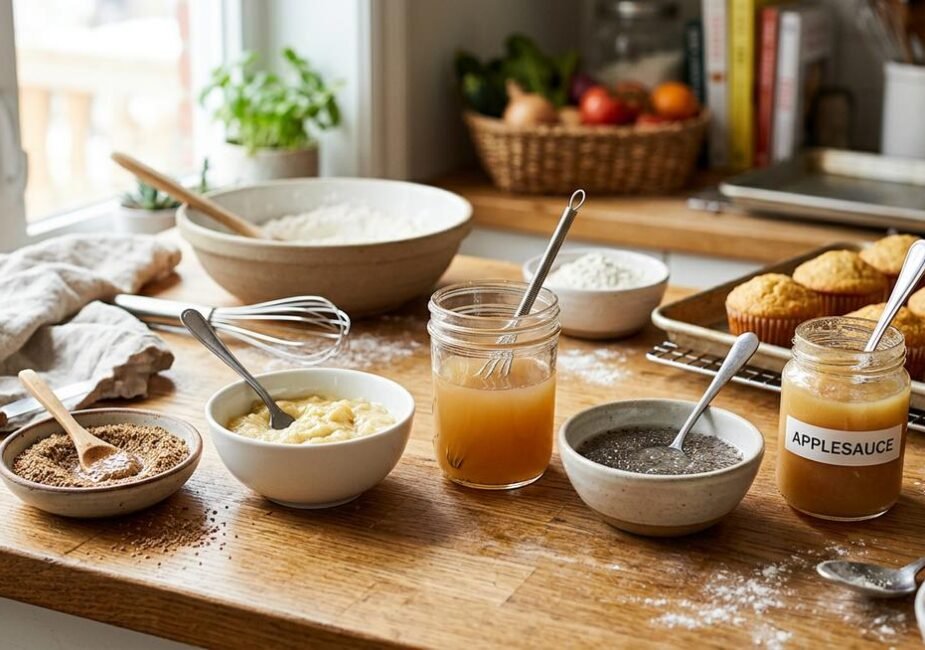
You’re halfway through a recipe and the egg carton is empty. Or maybe eggs were never on the shopping list to begin with — you bake vegan, or your kid has an egg allergy, or you just want to see what happens with applesauce instead. Either way, you need a reliable alternative for eggs in baking that won’t leave you with a dense puck or a crumbly mess.
The problem is that not every egg substitute works in every recipe. A flax egg can hold brownies together beautifully and completely ruin an angel food cake. Aquafaba whips into stiff peaks for meringue but does nothing useful in a cookie. Grabbing the wrong swap wastes ingredients, time, and whatever patience you had left.
The fix is straightforward: figure out what the egg was actually doing in your recipe, then pick a substitute that does that same job. Once that logic clicks, choosing the right replacement becomes almost automatic. Below, you’ll find the functional breakdown, a side-by-side comparison of 14 substitutes, and specific picks organized by what you’re baking.
Why Eggs Matter in Baking (And Why Your Substitute Choice Matters Too)
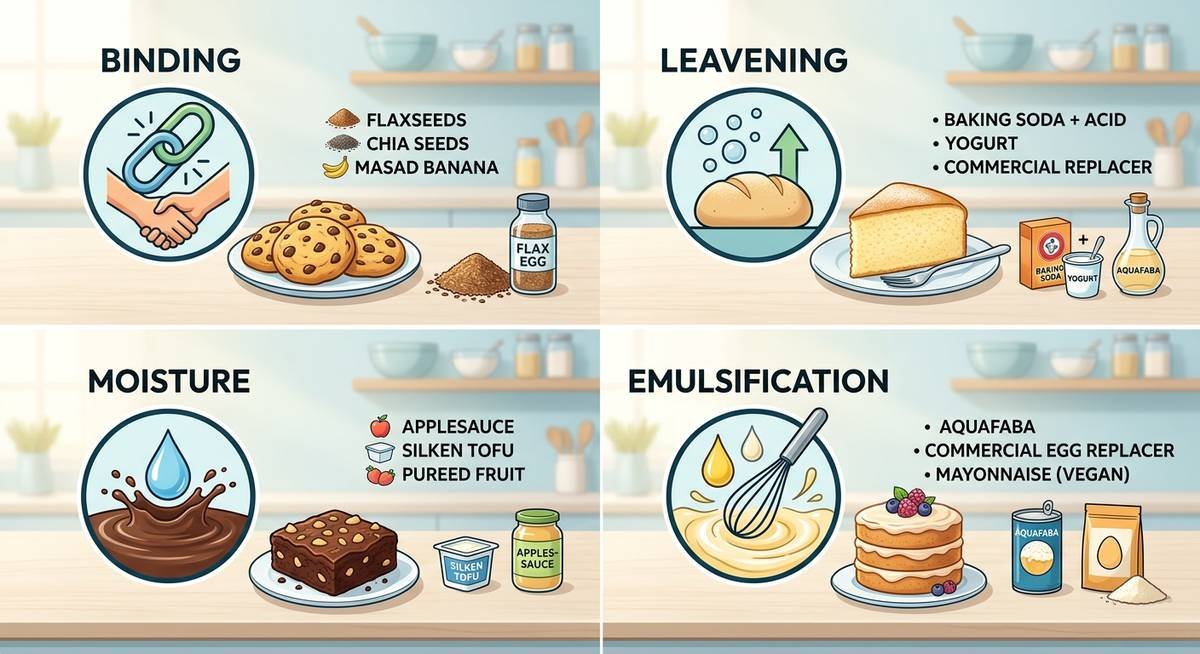
Eggs perform four distinct functions in a recipe — binding, leavening, adding moisture, and emulsifying fat. Swap one egg for the wrong substitute and you’re not just missing an ingredient; you’re missing a specific function. Understanding which job the egg was doing in the first place is the single most important step in egg-free baking.
Binding
Egg proteins coagulate when heated, acting as edible glue that holds cookies, brownies, and bars together. Without a strong binder, the crumb falls apart the moment it cools. A weak substitute here doesn’t just affect texture — it can make clean slicing impossible.
Strong binding substitutes include flax eggs, chia eggs, and commercial egg replacers like Bob’s Red Mill Egg Replacer. All three form a gel that mimics the structural hold of coagulated egg protein.
Leavening
Beaten eggs trap air in their protein matrix, and that trapped air expands in a hot oven to give cakes and muffins their lift. According to the American Egg Board, a whole egg contains roughly 75% water, much of which converts to steam during baking — contributing additional rise beyond the air alone.
Replacing leavening is the hardest task any alternative for eggs in baking faces. No single plant-based ingredient replicates both the protein structure and the steam contribution simultaneously. Aquafaba comes closest, and combining a binding substitute with a small amount of extra baking powder can bridge the gap in most cake recipes.
Moisture and Emulsification
Egg yolks contain lecithin, a natural emulsifier that bonds water and fat into a stable, uniform crumb. That’s why a well-made pound cake stays tender for days rather than drying out overnight. Some substitutes — applesauce, mashed banana, yogurt — add moisture effectively but contribute zero emulsifying power, which means the crumb may be soft on day one but stale faster by day two.
Silken tofu and JUST Egg (a commercial liquid egg replacer made from mung bean protein) are the best options when emulsification matters, since both contain proteins that stabilize fat-water mixtures in a way that fruit purées simply cannot.
| Egg Function | What It Does | Recipes Where It Dominates | Difficulty to Replace |
|---|---|---|---|
| Binding | Holds ingredients together via protein coagulation | Cookies, brownies, bars | Moderate |
| Leavening | Traps air and steam for rise | Cakes, muffins, soufflés | High |
| Moisture | Adds liquid content to the batter | Quick breads, muffins | Low |
| Emulsification | Bonds fat and water for a tender, stable crumb | Layer cakes, pound cakes | Moderate–High |
In practice, most recipes rely on eggs for two or three of these functions at once. Identifying the primary role — before reaching for a substitute — is what separates a bake that works from one that doesn’t.
The Complete Egg Substitute Comparison Table (14 Options)
There are at least 14 reliable alternatives for eggs in baking, each suited to different recipes and dietary needs. Flax and chia eggs excel at binding. Aquafaba and carbonated water add lift. Applesauce and banana bring moisture. The table below lets you compare all of them at a glance — amounts, best uses, flavor notes, and dietary fit.
How to Read This Table
Each row shows exactly how much of a substitute replaces one large egg, plus where it performs best and whether it changes flavor. Dietary tags: V = vegan, A = allergy-safe (egg-free), CF = cholesterol-free, DF = dairy-free.
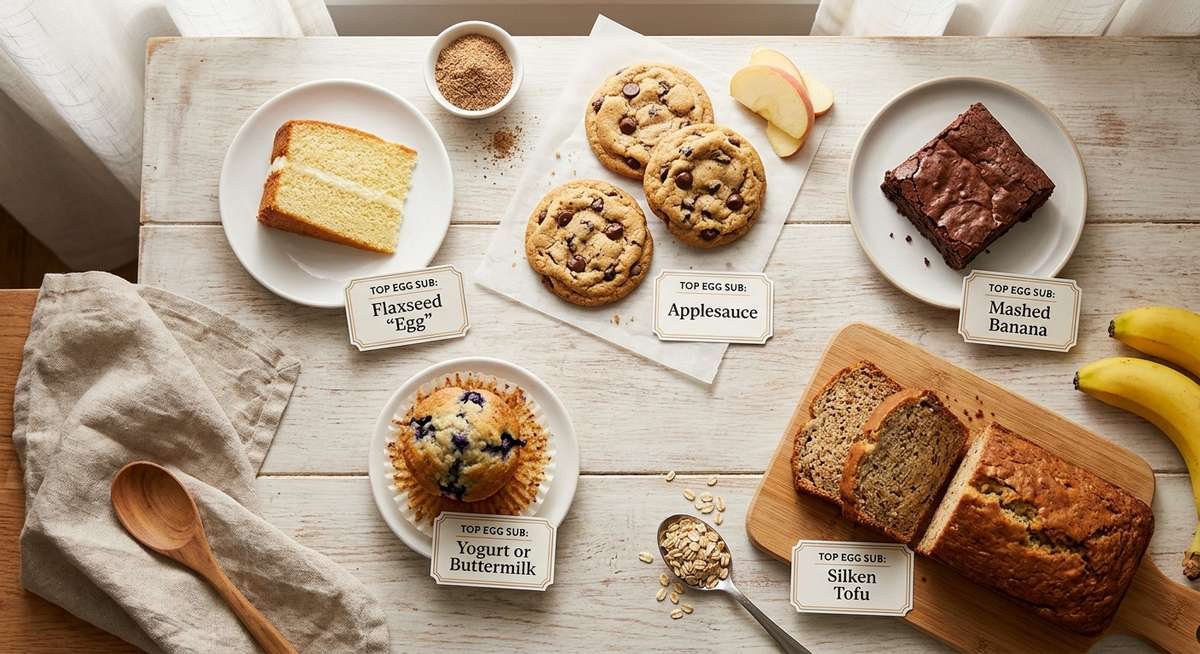
Full Comparison Table
| Substitute | Amount per 1 Egg | Best For | Flavor Impact | Diet |
|---|---|---|---|---|
| Flax egg | 1 tbsp ground flaxseed + 3 tbsp water (rest 5 min) | Cookies, dense muffins, pancakes | Mild, slightly nutty — barely noticeable in spiced recipes | V, A, CF, DF |
| Chia egg | 1 tbsp chia seeds + 3 tbsp water (rest 5 min) | Chewy cookies, quick breads, energy bars | Neutral; visible seeds add slight texture | V, A, CF, DF |
| Unsweetened applesauce | ¼ cup (60 g) | Muffins, quick breads, soft cookies, brownies | Mild apple sweetness; reduce added sugar slightly | V, A, CF, DF |
| Mashed ripe banana | ¼ cup (about ½ medium banana) | Brownies, banana bread, dense cakes | Noticeable banana flavor — best where complementary | V, A, CF, DF |
| Aquafaba | 3 tbsp (liquid from canned chickpeas) | Cakes, meringues, macarons, light cookies | Virtually neutral when baked | V, A, CF, DF |
| Plain yogurt or dairy-free yogurt | ¼ cup (60 g) | Muffins, quick breads, layer cakes | Slight tang that enhances fruit-forward flavors | A, CF (V/DF if dairy-free) |
| Silken tofu (blended smooth) | ¼ cup (60 g) | Brownies, dense cakes, custard-style pies | Neutral when blended thoroughly — no beany taste | V, A, CF, DF |
| Vinegar + baking soda | 1 tbsp white vinegar + 1 tsp baking soda | Fluffy cakes, cupcakes (leavening only) | None — acid-base reaction produces CO₂ only | V, A, CF, DF |
| Commercial egg replacer (Bob’s Red Mill) | Follow package directions (~1.5 tsp powder + 2–3 tbsp water) | Cakes, cookies, muffins — all-purpose | Neutral; designed to mimic eggs without off-flavors | V, A, CF, DF |
| JUST Egg (liquid) | 3 tbsp | Quiches, frittatas, rich cakes, custards | Closest to real egg flavor and color | V, A, CF, DF |
| Carbonated water | ¼ cup (60 ml) | Light, airy cakes and pancakes (leavening only) | None — provides lift through dissolved CO₂ | V, A, CF, DF |
| Pumpkin purée | ¼ cup (60 g) | Spiced muffins, quick breads, autumn-flavored cookies | Earthy, mildly sweet — pairs with cinnamon and nutmeg | V, A, CF, DF |
| Buttermilk | ¼ cup + pinch of extra baking soda | Muffins, pancakes, scones, quick breads | Subtle tang; activates baking soda for added lift | A, CF |
| Arrowroot powder | 2 tbsp + 3 tbsp water | Light cookies, gluten-free baking, delicate pastries | Neutral; adds slight crispness to edges | V, A, CF, DF |
A note on combining substitutes: recipes calling for two or more eggs sometimes benefit from mixing approaches. For a two-egg cake, one flax egg for binding plus ¼ cup applesauce for moisture can outperform doubling either one alone. Experiment in small batches first.
Best Egg Substitutes by Baked Good
The right alternative for eggs in baking depends almost entirely on what you’re making. Below, each category gets its top picks — organized by the egg function that matters most in that specific type of recipe.
Cakes
Cakes demand the most from an egg substitute because they rely on structure, lift, and a tender crumb simultaneously. Aquafaba is the standout option. Three tablespoons replaces one egg, and when whipped briefly before folding in, it traps air in a way that closely mimics the leavening role of whole eggs in layer cakes and sponge cakes.
Commercial egg replacers — particularly Bob’s Red Mill Egg Replacer and Orgran No Egg — are equally reliable and more consistent for bakers who want a predictable result every time. For denser cakes like carrot or banana cake, a flax egg works well, though it adds a faint earthy note and a slightly darker color to the batter.
If a recipe calls for three or more eggs (common in chiffon and genoise), consider combining aquafaba with a vinegar-baking soda reaction for extra lift. No single vegan egg replacer can fully replicate the structural role of three whipped eggs, but layering two mechanisms gets much closer.
Cookies
Cookie texture is where substitute choice becomes most consequential. For chewy cookies — classic chocolate chip, oatmeal raisin, peanut butter — a flax egg or chia egg delivers the binding and slight chewiness that eggs normally provide, without dramatically altering flavor. The flax egg substitute ratio for baking cookies is always 1 tablespoon ground flaxseed to 3 tablespoons water per egg, rested until gel-like.
Applesauce or mashed banana both produce softer, cakier cookies — ideal if that’s the texture you prefer, but disappointing if you wanted crisp edges and a chewy center. For thin, crispy cookies, arrowroot powder mixed with water adds binding without extra moisture, keeping the dough drier and the edges snappier.
Avoid carbonated water in most cookie recipes. The extra lift it creates tends to produce a puffed, overly airy result that collapses and goes flat as it cools.
Brownies
Brownies are the most forgiving baked good for egg substitution. The dense, fudgy structure tolerates a wide range of replacements without noticeable texture loss. Silken tofu (¼ cup blended per egg), unsweetened applesauce (¼ cup per egg), and mashed ripe banana (¼ cup per egg) all work exceptionally well.
All three substitutes lean into fudginess rather than fighting it — a genuine bonus for most brownie lovers. Silken tofu produces the most neutral flavor, making it the strongest pick when you don’t want fruit notes competing with the chocolate. Applesauce adds a barely-there sweetness that complements cocoa, while banana pairs naturally with recipes that already include peanut butter or coffee.
For fudge brownies specifically, reducing the oven temperature by 10°F (5°C) and adding 1–2 minutes of bake time helps compensate for the extra moisture that plant-based substitutes introduce.
Muffins and Quick Breads
Muffins and quick breads naturally tolerate denser, moister crumbs, which makes them an ideal match for moisture-rich substitutes. Plain yogurt or dairy-free yogurt (¼ cup per egg) adds both binding and a gentle tang that enhances flavors like blueberry, lemon, or poppy seed. Buttermilk (¼ cup per egg, combined with an extra pinch of baking soda) activates lift through acidity and keeps the crumb tender.
Pumpkin purée (¼ cup per egg) is an underrated option that most competing guides overlook. It contributes moisture, mild sweetness, and a subtle earthiness that pairs naturally with spiced recipes — zucchini bread, bran muffins, morning glory muffins. Unlike layer cakes, muffins don’t need a perfectly open crumb, so the slightly denser result from any fruit or vegetable purée is a non-issue here.
For banana bread — technically a quick bread — mashed banana does double duty as both the egg replacer and a flavor ingredient, which means you can often skip a separate substitute entirely and simply add an extra quarter-banana per egg called for.
Tips for Egg-Free Baking Success
Choosing the right substitute is half the battle. The other half is technique. A few adjustments can make the difference between a passable result and one that nobody would guess is egg-free.
- Measure precisely. Egg substitutes are less forgiving of approximation than real eggs. Use measuring spoons and cups, not eyeballing.
- Don’t overmix. Without egg proteins to stabilize the batter, overmixing develops too much gluten, which leads to tough, rubbery results — especially in cakes and muffins.
- Add a tablespoon of extra fat. If your recipe originally called for eggs and you’re using a fat-free substitute (like aquafaba or carbonated water), adding a tablespoon of neutral oil or melted butter improves crumb tenderness.
- Let gel-based substitutes hydrate fully. Flax eggs and chia eggs need a full 5 minutes to thicken. Rushing this step weakens their binding power significantly.
- Reduce sugar slightly with fruit-based swaps. Applesauce, banana, and pumpkin purée all add natural sweetness. Cutting 1–2 tablespoons of sugar from the recipe prevents cloying results.
Frequently Asked Questions
What is the best egg substitute for baking cakes and cookies?
For cakes, aquafaba (3 tablespoons per egg) is the most versatile option — it provides both lift and moisture without altering flavor. For chewy cookies, a flax egg (1 tablespoon ground flaxseed + 3 tablespoons water) delivers binding and texture closest to a real egg. Commercial egg replacers like Bob’s Red Mill work reliably across both categories.
Can I use banana instead of eggs in baking?
Yes. Use ¼ cup mashed ripe banana per egg. It works best in brownies, banana bread, muffins, and dense cakes where the banana flavor complements the recipe. Avoid it in delicate sponge cakes or vanilla-forward recipes where the banana taste would be unwelcome.
How much flaxseed replaces one egg in a recipe?
Mix 1 tablespoon of ground flaxseed (also called flax meal) with 3 tablespoons of water and let it rest for 5 minutes until it forms a thick, gel-like consistency. This makes one flax egg, which replaces one large egg. Use golden flaxseed for a lighter color in pale batters.
How do I substitute eggs in baking without affecting texture?
Match the substitute to the egg’s function in your recipe. Use a binding substitute (flax, chia) for cookies and bars, a leavening substitute (aquafaba, vinegar + baking soda) for cakes, and a moisture substitute (applesauce, yogurt) for muffins. Combining two substitutes — one for structure and one for moisture — often produces the closest texture to the original recipe.
What can I use instead of eggs in brownies?
Brownies are the easiest baked good to make without eggs. Silken tofu (¼ cup blended smooth), unsweetened applesauce (¼ cup), or mashed banana (¼ cup) all produce rich, fudgy results. Silken tofu gives the most neutral flavor; banana and applesauce add subtle sweetness that pairs well with chocolate.
Are commercial egg replacers better than homemade alternatives?
Commercial egg replacers like Bob’s Red Mill, Orgran No Egg, and JUST Egg are formulated to mimic multiple egg functions at once, which makes them more predictable across a variety of recipes. Homemade alternatives (flax eggs, applesauce, banana) are cheaper and require no special purchase, but each one excels in a narrower range of recipes. For bakers who want a single all-purpose solution, a commercial replacer is the most convenient choice.
Choosing Your Egg Substitute
Every egg substitute has a sweet spot. Flax and chia eggs are the workhorses for binding-heavy recipes. Aquafaba is the go-to when lift matters. Applesauce, banana, and yogurt shine wherever moisture is the primary need. And commercial replacers like Bob’s Red Mill offer convenience when you don’t want to think about which function to prioritize.
Start with the comparison table, identify what your recipe needs from its eggs, and pick accordingly. Most bakers find that after two or three successful swaps, the process becomes second nature — no more guessing, no more flat cakes, and no more emergency trips to the store for a single carton of eggs.
Last modified: March 19, 2026