Annaliese Witschak: The Quiet Strength Behind George Soros and Her Own Enduring Legacy
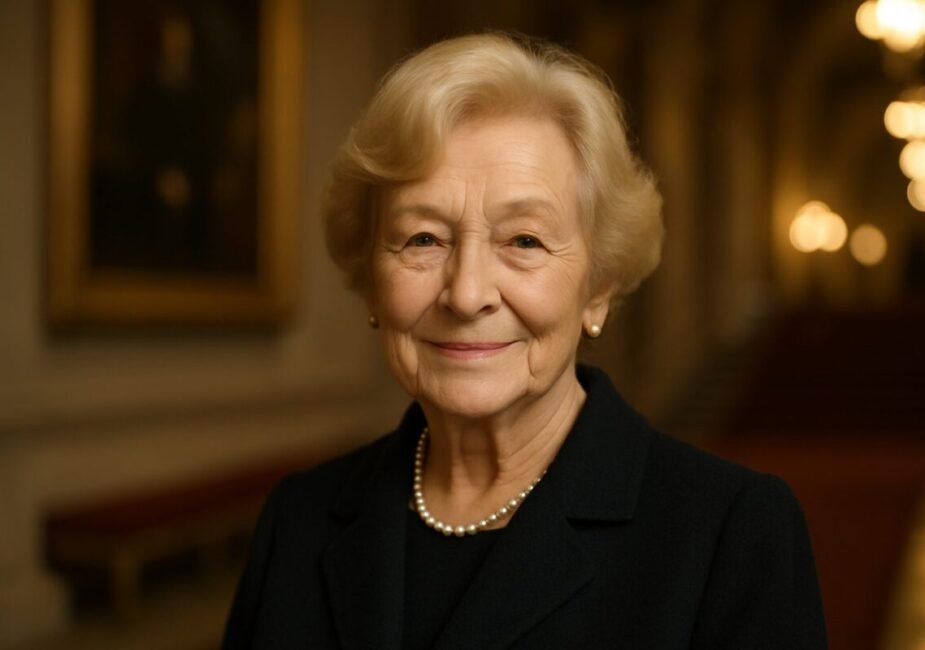
Introduction: The Life of Annaliese Witschak
What is the true measure of a person’s life—is it the fame of their spouse, or the quiet, persistent strength of their own character? For Annaliese Witschak, the answer lies in the latter.
While widely known as the first wife of billionaire investor George Soros, her story is far richer than a footnote in a famous man’s biography.
It is a testament to resilience, a deep love for the arts, and a profound commitment to family.
Born into the turmoil of 1930s Germany, Annaliese Witschak navigated immense personal loss and the chaos of war to build a life of purpose in America.
Her journey from an orphaned immigrant to a dedicated philanthropist and patron of the arts is a compelling narrative of self-determination.
This article explores the life of Annaliese Witschak, highlighting the quiet influence she wielded and the enduring legacy she created, independent of the financial empire she helped to build.
A Childhood Forged in Wartime Germany
Annaliese Witschak was born on January 3, 1934, in Verden an der Aller, a small town in northern Germany. Her early years were marked by a series of heartbreaking losses.
Her father, Walter Witshchak, passed away in 1937, leaving her mother, Elisabeth, to raise the family alone.
Elisabeth supported them through various odd jobs and by writing for a local paper.
Orphaned by Tragedy
The shadow of World War II loomed large over her childhood, bringing displacement and hardship.
Annaliese often had to live with relatives during her mother’s recurring hospitalizations.
The greatest sorrow came when she was just sixteen. Her mother and her only brother, Hans, died within six months of each other, leaving Annaliese an orphan. These years, she would later recall, were the loneliest of her life.
The Enduring Power of Music
Despite the adversity, Annaliese found solace and inspiration in her education. She loved school and excelled, particularly under the guidance of her music teacher.
He encouraged her to join the chorus and pursue the piano, which she often played with her mother.
A pivotal moment occurred when her teacher took the class to see the opera in Hanover.
She later wrote that the experience “felt like a whole other world opened up for me,” cementing a lifelong passion for music that would define her later years.
From Hamburg Secretary to New York Immigrant
Eager to continue her studies, Annaliese was blocked by her aunt and uncle, who insisted she attend secretarial school to support herself. She accepted the path and moved to Hamburg.
Living independently for the first time, she began to flourish, securing work first in publishing and then for Shell Oil. She lived frugally, sometimes sharing a single bread roll for breakfast with her roommate.
After several years, Annaliese felt restless and, with little to keep her in Germany, made the bold decision to emigrate to the United States in 1955.
She arrived in New York, finding work as a secretary and a keypunch operator for an insurance company. Her new colleagues quickly became friends, helping her to find her place in the bustling city that would become her permanent home.
The Soros Years: Partnership and Family
In 1957, Annaliese met George Soros, a fellow immigrant who had arrived in the U.S. just a year earlier.
She was immediately taken with him, describing him as “unlike anyone she had ever met before.”
They married in 1960, beginning a partnership that would last for over two decades.
Annaliese provided the quiet strength and stability that supported George Soros during his formative years in finance.
Together, they raised three children who would go on to become accomplished in their own right: Robert, Andrea, and Jonathan.
Annaliese devoted herself to nurturing her family and became a renowned host.
She taught herself to cook to impress her husband and guests, and their home was often filled with philosophers, academics, and anti-apartheid activists.
The couple separated in 1977 and divorced in 1983, but they remained on good terms until the end. Annaliese never lost the resilience that carried her through her youth.
A Life Rediscovered: Philanthropy and the Arts
Following her separation, Annaliese Witschak made a conscious choice to step away from the public eye.
She focused on her family and rediscovered her independence and personal passions.
She chose not to remarry, instead embracing a life of travel, often on trips that involved biking or hiking.
She became known for her ability to make friends quickly and keep them close for a lifetime.
Her deepest commitment was to music and the arts, a passion that had been sparked in her difficult childhood.
She became a fixture at Carnegie Hall and the Metropolitan Opera.
Championing Young Concert Artists
Annaliese became a major benefactor of Young Concert Artists (YCA), an organization dedicated to supporting emerging concert musicians. She served on their board of directors for more than 40 years.
In 2004, the Annaliese Soros Educational Residency Program was endowed in her name, a lasting testament to her dedication to nurturing young talent.
A Patron of the Hamptons Arts Scene
Her philanthropic reach extended to the Hamptons, where she had a summer home for six decades. She helped launch the Southampton Performing Arts festival in 1981.
She also joined the board of Pianofest in the Hamptons in the early 1990s, remaining a board member until her death. Annaliese frequently welcomed artists to stay in her apartment, taking a personal interest in their lives and careers.
Legacy and Final Chapter
In her later life, Annaliese returned regularly to Germany, renting an apartment in Berlin to enjoy the city’s vibrant opera and concert scene. She took her last trip there in 2024 to celebrate her ninetieth birthday.
Annaliese Witschak, who had survived the loss of her entire immediate family, passed away on September 5, 2025, at the age of 91.
Her life was centered on her network of committed friendships and her devotion to her family.
She is survived by her three adoring children—Robert, Andrea, and Jonathan—and nine grandchildren.
The legacy of Annaliese Witschak is not one of inherited wealth, but of quiet strength, cultural patronage, and the profound impact of a life lived with grace and purpose.
Frequently Asked Questions (FAQ)
Who was Annaliese Witschak?
Annaliese Witschak was a German-American philanthropist and patron of the arts, best known as the first wife of billionaire George Soros. She was a dedicated supporter of young musicians and cultural institutions.
When did Annaliese Witschak marry George Soros?
Annaliese Witschak and George Soros met in 1957 and were married in 1960. They had three children together before separating in 1977 and divorcing in 1983.
How many children did Annaliese Witschak have?
She had three children with George Soros: Robert Daniel Soros, Andrea Soros Colombel, and Jonathan Tivadar Soros. All three have become successful entrepreneurs and philanthropists.
When did Annaliese Witschak die?
Annaliese Witschak passed away on September 5, 2025, at the age of 91, of natural causes.
What was Annaliese Witschak’s contribution to the arts?
She was a major benefactor and board member for over 40 years of Young Concert Artists (YCA). She also helped launch the Southampton Performing Arts festival and served on the board of Pianofest in the Hamptons.
Last modified: November 29, 2025