Business Owners: What to Look for in Enterprise Search Software
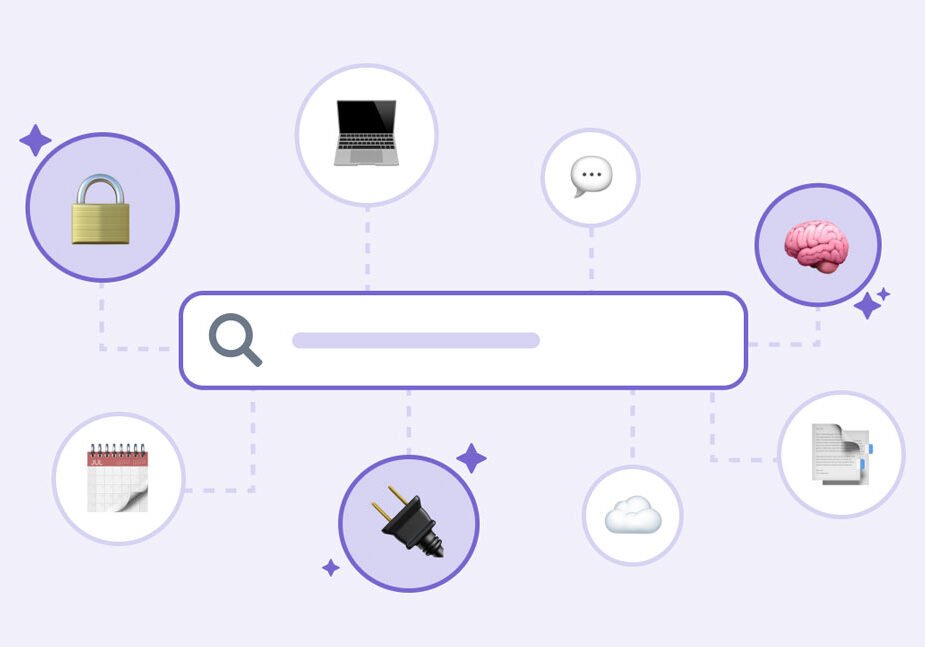
Selecting the appropriate enterprise search software can drastically reduce the time employees spend looking for information, boosting overall productivity. A study by McKinsey found that employees spend 1.8 hours every day—9.3 hours per week, on average—searching and gathering information. Hence, implementing a robust enterprise search system is not just a luxury but a necessity for efficient business operations.
To help business owners make the best decision, this article delves into crucial aspects of enterprise search solutions. From key features to seamless integration with existing systems, understanding these factors will help you choose a software that not only supports your current data infrastructure but also adapts to future growth. Below, we explore what to prioritize in your selection process.
Key Features to Consider in Enterprise Search Software
When evaluating enterprise search software, the ability to deliver quick and accurate results is paramount. A system that offers advanced search capabilities, including natural language processing and machine learning, can significantly improve the relevacy of search results, which is vital for user satisfaction and productivity.
Another critical aspect is the software’s security features. As enterprise search platforms will access a company’s sensitive data, security protocols like access controls and data encryption are essential in preventing unauthorized use and potential data breaches. This ensures that sensitive information remains protected while allowing employees to find the data they need efficiently.
Business owners should also look for customizable and user-friendly interfaces that can be tailored to their organization’s specific requirements. A high level of customization means the software can grow and evolve alongside the business, adding new data sources and indexing capabilities as needed. Effective search software for enterprises is vital for ensuring that all these aspects work harmoniously to enhance productivity across the organization.
Assessing Scalability and Performance for Growing Data Needs
As businesses grow, their data volumes expand exponentially. Therefore, the scalability of an enterprise search software is critical to ensure that it can handle increased data loads without a decline in performance. This includes looking at the search engine’s indexing speed and query response time under heavy use conditions.
Scalability also relates to the software’s capacity to index and search various data types, including unstructured data like emails, documents, and multimedia content. This capacity should be tested against the expected growth trajectory of the company to avoid the risk of future bottlenecks that could impede business operations.
Owners should simulate future data scenarios and potentially even conduct load testing during the trial period of the software. This type of performance testing can reveal how the system behaves under stress, providing insights into its long-term viability and helping to forecast the need for upgrades or expansions.
Integrating Enterprise Search with Existing Business Systems
The potential of an enterprise search software significantly depends on its ability to integrate with the existing IT ecosystem. An enterprise search solution that can seamlessly pull in data from various sources, such as CRM systems, databases, and cloud storage, will provide a more comprehensive search experience.
Focusing on solutions that offer API compatibility and pre-built connectors can ease the integration process. These features minimize the need for custom development work and facilitate a smoother implementation, ensuring that different company systems can effectively ‘talk’ to the search engine.
Furthermore, consulting with IT specialists to gauge the complexity of integrating each option is advisable. They can help you understand possible technical challenges and assist with implementing the integration in a manner that minimizes disruption to your daily operations.
Evaluating User Experience and Search Relevance in Enterprise Solutions
User experience is critical to the success of any enterprise search tool. A system with a steep learning curve or an unintuitive interface can hinder adoption, leading to lower productivity and frustration among employees. Hence, it’s important to select a system with an engaging and straightforward user interface.
Search relevance is another key aspect, as it ensures the delivery of meaningful results. Users should be able to fine-tune their searches using advanced filters and facets, which leads to more accurate retrieval of data. Tools that utilize user behavior and search analytics to refine their results over time provide a continuously improving search experience.
When possible, conducting user acceptance testing during a trial period should be a standard practice. This empowers real users to provide feedback on the search system’s effectiveness, allowing business owners to assess how well the solution meets the needs of their workforce before making a full commitment.
Ultimately, the right enterprise search software can transform the way a company accesses and utilizes its vast reserves of data. By emphasizing features like scalability, integration capabilities, and user experience, business leaders can facilitate efficient knowledge sharing and decision-making. This streamlined access to information can lead to a more innovative and agile organization that is well-equipped to face the challenges of an increasingly data-driven business environment.
Last modified: April 2, 2026