How SASE Connect Solutions Are Reshaping Modern Business Networks
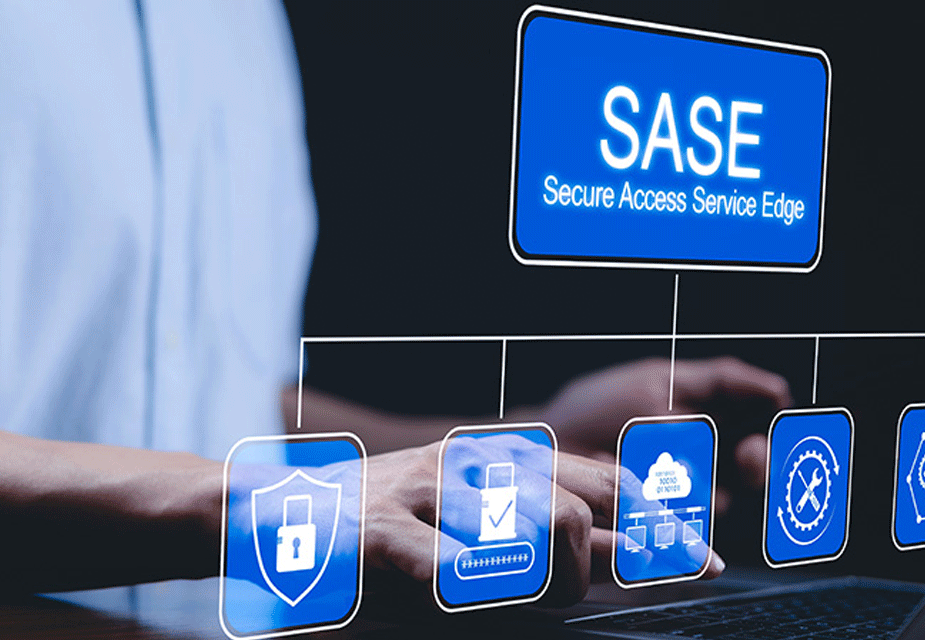
In today’s fast-paced digital economy, the demand for robust network security and seamless performance has never been higher. Businesses are continually searching for ways to protect sensitive data while optimizing access across distributed teams and dynamic work environments. The shift toward cloud-delivered architectures has amplified these needs, and in response, Secure Access Service Edge (SASE) has emerged as a game-changing framework. For organizations seeking a future-proof approach to combine network efficiency and security, SASE Solutions are quickly gaining momentum.
This growing reliance on cloud applications, remote work, and an increasingly complex threat landscape makes traditional network perimeters obsolete. SASE connects users securely to applications, regardless of location or device, thus helping companies transform their networks for agility and resilience. As organizations evolve, SASE establishes itself as the foundation for modern business connectivity and protection.
Understanding SASE
SASE, pronounced ‘sassy,’ changes the landscape of enterprise networking by uniting wide-area networking (WAN) capabilities with comprehensive security tools in a single, cloud-native model. The design of SASE enables secure, direct-to-cloud connections for users, sites, and devices, doing away with outdated castle-and-moat approaches. Instead, security follows the user wherever they connect, making the business network more adaptable and protected in today’s distributed environment.
The convergence at the heart of SASE is what sets it apart. By leveraging cloud delivery, SASE minimizes the complexity and overhead associated with traditional network and security products. Security policies can be centrally defined and enforced globally. In this way, businesses of all sizes can achieve a uniform and easily manageable security stance across their entire digital footprint. For more insights on SASE’s importance in the enterprise space, Gartner’s research provides a comprehensive perspective on market trends and adoption strategies.
Key Components of SASE
A fully functional SASE environment is built upon several core technologies, each contributing to secure, high-performing network experiences:
- Software-Defined Wide Area Network (SD-WAN):Directs traffic intelligently and efficiently, maximizing application performance across all network paths.
- Secure Web Gateway (SWG):Blocks access to malicious sites and filters unwanted content to prevent web-based threats.
- Cloud Access Security Broker (CASB):Monitors and secures the use of cloud applications, enforcing security policies and preventing data leaks.
- Zero Trust Network Access (ZTNA):Authenticates every user and device before granting access, based on strict identity and context checks.
- Firewall as a Service (FWaaS):Delivers firewall capabilities from the cloud, strengthening protection against external and internal threats.
Additional technologies often extend SASE’s reach, such as secure DNS filtering, cloud sandboxing for real-time malware analysis, and advanced threat intelligence integration, offering network teams even greater tools for proactive defense. These integrations allow businesses to stay ahead of emerging threats as cybercriminals adopt increasingly sophisticated tactics.
Benefits of SASE for Businesses
SASE offers a compelling value proposition for enterprises looking to reinforce network defenses while simplifying operations. The main advantages include:
- Enhanced Security:The seamless integration of security layers provides all-encompassing protection against modern cyber threats, from malware to data breaches.
- Improved Performance:SD-WAN optimizes application delivery and user experience by dynamically responding to changing network conditions.
- Scalability:Cloud-first design allows organizations to grow or adapt their security and networking capabilities as business needs evolve.
- Simplified Management:Unified control centralizes policy enforcement and network oversight, reducing the administrative burden for IT teams.
Furthermore, adopting SASE streamlines vendor management and reduces total cost of ownership, as previously disparate network and security systems are replaced by consolidated solutions. This cost-efficiency enables IT departments to reallocate resources toward innovation and value-added projects. Not only do SASE solutions drive efficiency, but their flexibility also ensures security can keep pace with digital transformation initiatives.
SASE and the Hybrid Workforce
The acceleration of remote and hybrid work models has underscored the limitations of legacy networking strategies. SASE directly supports the distributed workforce by enabling secure, reliable connections from virtually any location. Employees can access company resources, collaborate on cloud platforms, and communicate seamlessly without exposing the network to additional risks. According to Hughes Network Systems, 63% of companies operate within a hybrid model, which further demonstrates SASE’s relevance in bridging the gap between secure access and flexible working arrangements.
With SASE, organizations can implement granular access controls, ensure compliance with regional data regulations, and monitor activity at every entry and exit point—regardless of geographic boundaries. This all-encompassing approach empowers businesses to expand their reach, attract top talent globally, and operate smoothly in an ever-evolving business landscape.
Challenges in SASE Implementation
While SASE unlocks significant benefits, organizations often face challenges in the rollout process, such as:
- Integration Complexities:Bringing SASE into established networks can involve significant changes and require phased adoptions.
- Consistent Policy Enforcement:Maintaining unified security policies across varied environments takes careful design and ongoing attention.
- Talent Shortages:Some companies lack the in-house skill sets to architect or operate complex SASE systems, making partnerships or managed services critical for success.
Continued staff training and selecting trusted vendors are essential to overcoming these challenges. Collaboration between IT, security professionals, and executive leadership helps ensure SASE strategies align with long-term business goals. Organizations pursuing a phased adoption strategy often experience greater success, enabling them to maintain business continuity and minimize disruptions as new systems are integrated, tested, and optimized for unique operational needs.
Future Trends in SASE Adoption
Looking ahead, adoption of SASE is expected to accelerate as businesses continue the shift to cloud and edge computing. Notable trends shaping the SASE landscape include:
- AI-Driven Security:Artificial intelligence is being embedded for better threat detection, response, and automated risk management (Forbes).
- Zero Trust Advancements:Broader adoption of zero trust security principles is providing deeper, context-aware access controls.
- Service Consolidation:Vendors are integrating more networking and security capabilities into fewer platforms to lower the total cost of ownership and simplify operations.
SASE is increasingly being adopted by mid-market organizations and smaller enterprises, not just large enterprises, as technologies become more affordable and easy to implement. Regulatory changes and industry compliance mandates for cybersecurity best practices are expected to further propel SASE adoption across a diverse range of industries, from finance and healthcare to education and retail. The integration of user and entity behavior analytics (UEBA) and endpoint detection and response (EDR) tools into SASE is also anticipated to become more prevalent, enhancing visibility and early detection of insider or advanced persistent threats.
Conclusion
SASE connect solutions represent a pivotal evolution in network security and connectivity for the modern enterprise. By merging essential networking tools with robust, cloud-delivered security, SASE empowers organizations to move with agility and confidence. Companies embracing SASE find themselves better equipped to manage remote workforces, protect digital assets, and position their networks for the future of business.
The evolution of SASE is a testament to the demands of our interconnected era. As digital innovation accelerates, businesses must prioritize both protection and performance. With SASE, organizations can address today’s dynamic security challenges while maintaining flexibility to adapt to tomorrow’s technology shifts, knowing their people, data, and operations are secure—wherever business takes them.
Last modified: March 16, 2026