Nimedes: The Ultimate Guide to the Platform & Philosophy
Tired of workplace chaos? Discover Nimedes, the revolutionary concept that’s both a unified digital workspace and a powerful strategic framework. This ultimate guide unpacks its dual meaning, compares it to tools like Asana & Slack, and offers a practical case study to help you balance innovation and stability.
Is your team drowning in a sea of apps? Juggling project boards, chat windows, and a dozen browser tabs just to keep a project moving is the new normal. It’s a chaotic dance that drains productivity and fuels frustration. Amidst this digital noise, a new term, “nimedes,” is quietly gaining traction, promising a smarter way to work.
But ask five different people what nimedes means, and you might get five different answers. Is it a revolutionary software platform? A new-age business philosophy? Or just another corporate buzzword? The confusion is the biggest barrier to understanding its power. The truth is, it’s both a platform and a philosophy, and they are deeply connected.
This guide cuts through the noise. Forget the vague definitions and generic listicles. We will unpack the dual meaning of nimedes, offering a deep dive into the all-in-one digital workspace and the strategic framework for balancing innovation with stability. This is the only resource you’ll need to not only understand nimedes and its role in workflow optimization, but to start applying it.
What is Nimedes? Unpacking the Dual Meaning
The term “nimedes” didn’t appear overnight. Its origins are murky, but it seems to have emerged from the intersection of tech startups and strategic business thinking. The name itself offers a clue. “Ni” suggests newness and innovation, while “medes” hints at mediation or finding a middle ground. Together, they form a concept that is all about balanced innovation.
This dual nature is the key to understanding nimedes. It’s not just a tool, nor is it just an idea. It’s a practical system built on a powerful philosophy. Let’s break down its two distinct but related identities.
Nimedes as a Unified Digital Workspace (The Platform)
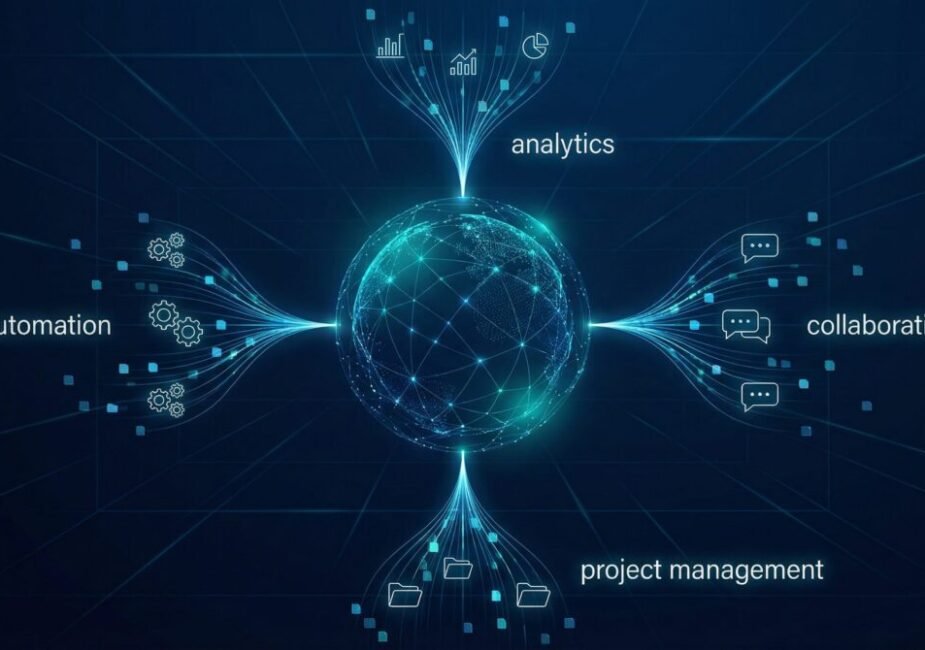
In its most concrete form, Nimedes is a unified digital workspace. Think of it as a central hub designed to replace the fragmented ecosystem of apps that most businesses rely on. Instead of jumping between project management tools, communication apps, and data dashboards, teams can do it all in one place. This platform integrates project management, automation, real-time collaboration, and data analytics into a single, seamless environment.
Nimedes as a Strategic Framework (The Philosophy)
Beyond the software, Nimedes is a strategic framework for navigating the modern business landscape. This philosophy is about finding the sweet spot between innovation and stability. It provides a mental model for making decisions that encourage creativity without sacrificing structure. It’s a way of thinking that helps teams stay agile and responsive while still maintaining a clear sense of direction and purpose.
The Nimedes Platform: An All-in-One Workspace for Workflow Optimization?
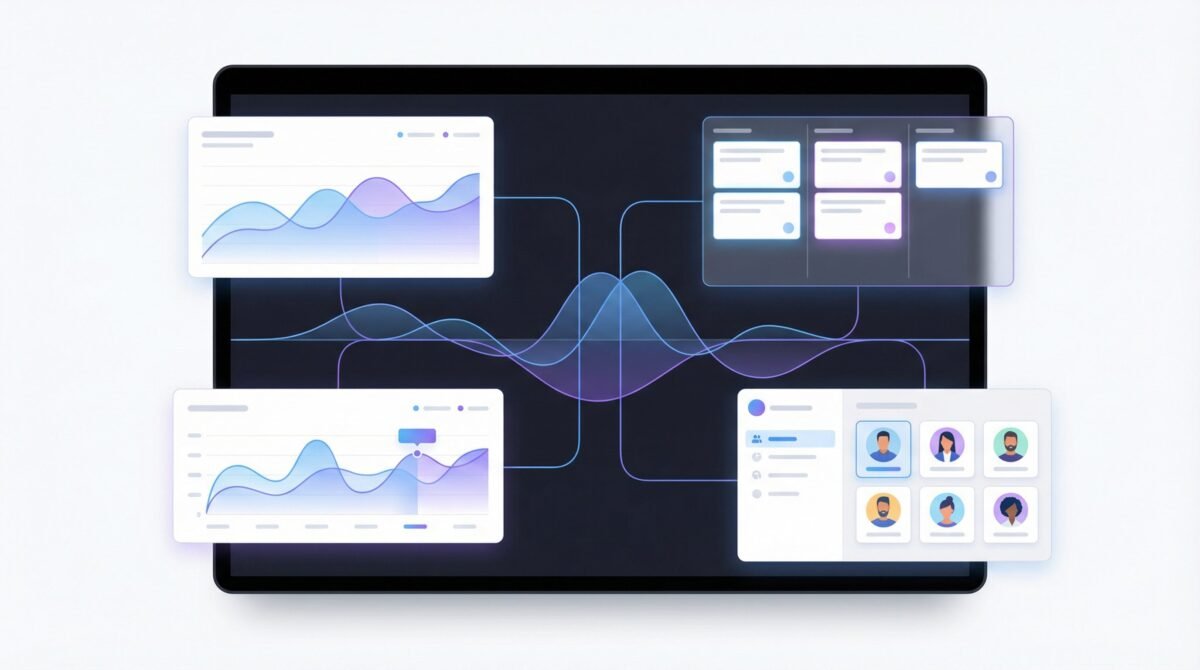
So, what does the Nimedes platform actually do? It’s designed to be the command center for your entire workflow. The goal is to eliminate the friction caused by constantly switching between different applications. It achieves this by focusing on four core pillars.
First, it offers centralized access. All your apps, files, and project boards are brought together into one secure dashboard. With single sign-on, you log in once and have everything you need at your fingertips. Second, it fosters seamless collaboration. Built-in communication tools, shared workspaces, and transparent progress tracking keep everyone on the same page, whether they’re in the same room or across the globe. Third, it provides real-time analytics. The platform automatically gathers data on team performance and project metrics, giving managers instant insights to make informed decisions. Finally, it ensures enterprise-grade security, using advanced encryption and authentication protocols to protect your sensitive data.
But how does it stack up against the tools you already use? Here’s a direct comparison.
Nimedes vs. The Competition: A Head-to-Head Look
| Feature | Nimedes | Trello | Asana | Slack |
|---|---|---|---|---|
| Core Function | Unified workspace for projects, communication, and analytics | Visual Kanban-style task management | Comprehensive project and workflow management | Real-time team communication and chat |
| Pricing Philosophy | All-in-one subscription, reducing the need for multiple tool licenses | Freemium model with tiered features for power-ups | Per-user subscription with different tiers for complexity | Per-user subscription with limits on message history |
| Ideal User | Teams seeking to consolidate tools and simplify complex workflows | Individuals and small teams focused on visual task tracking | Mid-to-large teams managing complex, multi-stage projects | Teams needing instant, channel-based communication |
| Integration | Deep, native integration of multiple functions in one platform | Strong integration with third-party apps, but requires setup | Extensive library of integrations to connect external tools | Acts as a communication hub that integrates with other apps |
This table highlights the fundamental difference. While tools like Trello, Asana, and Slack excel at their specific functions, Nimedes aims to replace the need for them by providing a truly integrated environment. It’s a shift from a collection of specialized tools to a single, unified system.
The Nimedes Philosophy: Balancing Innovation and Stability

Beyond the software, Nimedes offers a powerful way of thinking. This philosophy provides a framework for making smarter decisions by balancing two competing, yet essential, forces: the drive for innovation and the need for stability. It’s not about choosing one over the other; it’s about creating a system where both can thrive. This framework is built on four core pillars.
- Balance: This is the heart of the philosophy. It’s about finding the productive middle ground between rigid control and chaotic freedom. It means having clear processes and guidelines, but also leaving room for creativity and experimentation.
- Adaptation: The business world is in constant flux. Adaptation is the ability to pivot and adjust to changing circumstances without losing sight of your core mission. It’s like a tree that sways in the wind but remains firmly rooted.
- Resilience: Things will go wrong. Resilience is about building systems that can withstand setbacks and failures. When a part of the process breaks, a resilient team adjusts and learns, rather than grinding to a halt.
- Innovation: Stability should not lead to stagnation. This pillar is about maintaining forward momentum and continuously seeking better ways of doing things, but in a structured and sustainable way. It’s progress without recklessness.
To see how this works in practice, let’s look at a real-world scenario.
Case Study: A Marketing Team Reimagines Black Friday
The Scenario: A mid-sized e-commerce company’s marketing team was tasked with planning the annual Black Friday campaign. Historically, this was their most stressful and chaotic period. The creative team would pitch ambitious ideas, while the operations team would struggle to execute them within the tight budget and timeline.
The Challenge: Last year’s campaign was a near-disaster. A last-minute, unvetted creative idea led to a technical glitch on the website, causing hours of downtime and significant revenue loss. The team was stuck between stifling creativity to ensure stability and risking chaos for the sake of innovation.
Applying the Nimedes Philosophy: The marketing director decided to try a new approach based on the Nimedes framework.
- Balance: Instead of a free-for-all brainstorming session, they established a “creative sandbox.” The creative team was given a clear budget and a list of technical non-negotiables. Within those boundaries, they had complete freedom to experiment.
- Adaptation: They built the campaign in modular blocks. Instead of one massive, unchangeable plan, they had several smaller, independent promotions. When a competitor launched an unexpected sale a week before Black Friday, the team was able to quickly adapt by swapping out one of their planned modules for a more competitive offer, without derailing the entire campaign.
- Resilience: Every new promotional idea had to go through a small-scale “failure test.” They ran A/B tests on a small segment of their audience to see if the offers were appealing and if the tech could handle the traffic. This allowed them to identify and fix potential problems before the main event.
- Innovation: The team dedicated 10% of their budget to a single, high-risk, high-reward idea: a gamified shopping experience. Because the rest of the campaign was built on a stable and resilient foundation, they had the confidence to take a calculated risk. This single innovation became the most talked-about part of their campaign.
The Result: The Black Friday campaign was the most successful in the company’s history. Revenue increased by 40%, and the team reported significantly lower stress levels. More importantly, they had created a repeatable framework—a balanced system for future campaigns that fostered both creativity and stability.
Who is Nimedes For? Real-World Applications
While the principles of Nimedes can be applied universally, certain teams and industries are uniquely positioned to benefit from its dual focus on structure and flexibility. It’s more than just a tool for “any business.” It’s a solution for specific challenges.
Tech Startups: These companies live in a state of rapid growth and constant change. They need to innovate to survive, but they also need to build scalable processes to avoid imploding. The Nimedes framework helps them strike this delicate balance, allowing them to grow their teams and products without losing the agile culture that made them successful in the first place.
Creative Agencies: For advertising, design, or marketing agencies, the core challenge is balancing client demands (stability, deadlines, budgets) with creative exploration (innovation). Nimedes provides a model for creating structured workflows that protect timelines and budgets, while still giving creative professionals the freedom to experiment and produce their best work.
Remote Teams: The shift to remote work has created a new set of challenges. Communication becomes fragmented, and it’s easy for team members to feel disconnected and out of sync. A unified digital workspace like the Nimedes platform is a natural fit. By bringing all communication, project management, and files into one central hub, it creates a virtual office that keeps everyone aligned, no matter where they are.
Common Misconceptions About Nimedes
As with any emerging concept, a cloud of myths and misunderstandings has formed around Nimedes. Let’s clear the air and address the three most common ones.
“It’s just another buzzword.”
While it’s easy to be cynical in a world saturated with corporate jargon, Nimedes describes something tangible and practical. Whether you’re referring to the unified software platform or the strategic framework, both have concrete applications that solve real-world problems. It’s not just talk; it’s a tool and a method for improving how teams work.
“It’s only for large corporations.”
This is a common misconception. In fact, smaller organizations and startups often see the benefits of Nimedes more quickly because they are more agile. They can implement the principles of structured flexibility and see the impact on their workflow almost immediately. You don’t need a massive budget or a dedicated change management team to start thinking and working in a more balanced way.
“It replaces human decision-making.”
This is perhaps the most misguided myth. Nimedes doesn’t replace human judgment; it enhances it. The platform’s analytics provide data-driven insights, but it’s still up to the managers and team members to interpret that data and make strategic decisions. The philosophy, by its very nature, is about empowering people to think more critically and creatively within a structured environment. It’s a framework for better thinking, not a replacement for it.
Frequently Asked Questions (FAQ)
- 1. What is Nimedes used for in simple terms?
- In simple terms, Nimedes serves two main purposes. As a digital platform, it acts as a unified workspace that brings project management, team collaboration, and data analytics into one place to reduce complexity. As a philosophy, it provides a mental framework for balancing innovation with stability, helping teams make smarter, more adaptive decisions.
- 2. Is Nimedes a real software or just a concept?
- It’s both. Several companies have developed software platforms under the “Nimedes” name, offering the unified digital workspace described in this article. At the same time, the term is widely used by business strategists and thought leaders to describe the conceptual framework of balancing structure and flexibility. The dual meaning is a core part of its identity.
- 3. How does Nimedes differ from traditional project management tools?
- Traditional tools like Trello or Asana are typically focused on one primary function, such as task management. Nimedes is different because its primary goal is unification. It aims to integrate multiple functions—project management, communication, and analytics—into a single, seamless platform, thereby reducing the need for multiple, disconnected tools.
- 4. Can small businesses benefit from Nimedes principles?
- Absolutely. In fact, small businesses and startups are often in the best position to benefit. Their natural agility allows them to quickly adopt the Nimedes philosophy of structured flexibility, helping them scale efficiently without losing their innovative edge. The principles do not require a large budget, only a willingness to embrace a more balanced approach to work.
- 5. What is the origin of the term Nimedes?
- The exact origin is not definitively known, but it is believed to have emerged from the tech and business strategy sectors. The name itself is thought to be a blend of “ni” (suggesting newness or innovation) and “medes” (hinting at mediation or a middle ground), perfectly capturing its core concept of balanced innovation.
Conclusion: Beyond the Buzzword, a Better Way to Work
In the end, Nimedes is more than just a platform or a philosophy. It’s a response to the growing complexity of modern work. It offers a path away from the chaos of fragmented tools and rigid, outdated processes. It provides a practical framework for building teams that are both innovative and stable, creative and disciplined, agile and resilient.
Whether you choose to adopt a Nimedes platform for better team collaboration or simply begin to apply the principles in your daily work, the goal is the same: to find that powerful middle ground. It’s not about a radical overhaul overnight. It’s about taking one small step toward a more balanced, intentional, and effective way of working. Start with a single project. Identify one area where you can introduce structured flexibility. The results, especially in workflow optimization and team collaboration, might just surprise you.
Last modified: February 26, 2026