Who Is Ludwig Göransson’s Wife? Meet Violinist Serena McKinney
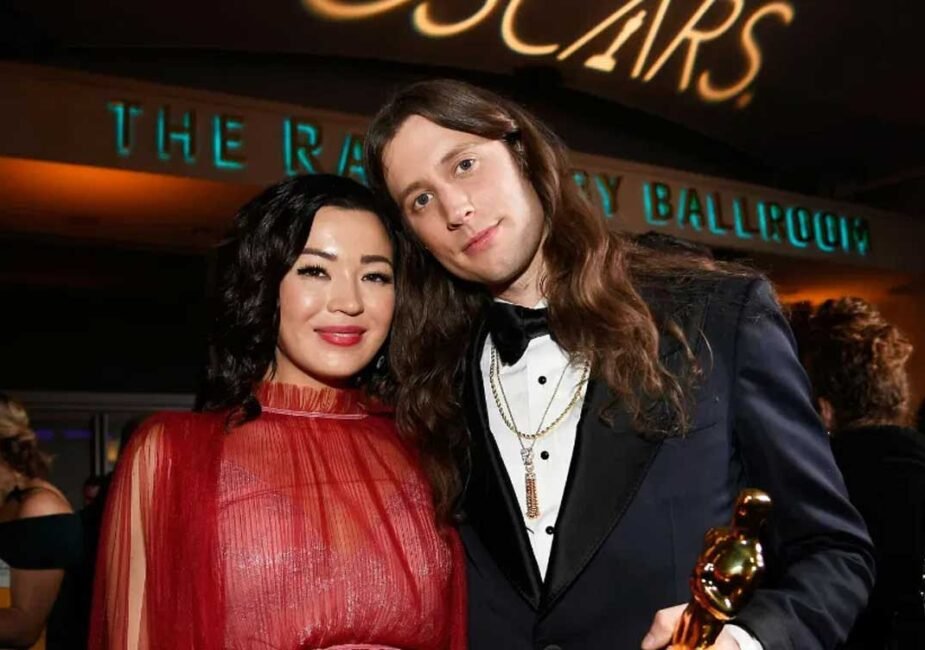
Ludwig Göransson’s wife is Serena McKinney, an acclaimed violinist who has played a pivotal role in some of Hollywood’s most celebrated film scores. The couple married in 2018 after meeting a decade earlier at a recording session. McKinney isn’t just the Oscar-winning composer’s spouse—she’s a distinguished musician who has contributed to over 98 film soundtracks, including Göransson’s own masterworks like Oppenheimer, Tenet, and Sinners.
Their partnership represents one of the most creative musical collaborations in modern cinema. While Ludwig crafts the compositional architecture, Serena brings his vision to life through her violin, often serving as concertmaster or featured soloist. From her role as the sole violin voice in Oppenheimer to her expanded position as executive music producer on Sinners, she’s proven herself both an exceptional performer and a creative force in her own right.
This is the story of how two young musicians met in a Los Angeles studio and built both a marriage and a musical legacy that continues to shape the sound of contemporary film.
Who Is Serena McKinney?
Serena McKinney is a professional violinist whose career began remarkably early. She picked up the instrument at age three. By four, she was giving recitals. This wasn’t a childhood phase—it was the beginning of a lifelong calling.
Born in Salt Lake City, Utah, McKinney studied under Ralph Matson, the concertmaster of the Utah Symphony. At sixteen, she performed Tchaikovsky’s Violin Concerto with that same orchestra as a featured soloist. It was a moment that signaled she was ready for bigger stages.
She moved to Los Angeles to attend the Colburn School of Performing Arts, one of the most selective conservatories in the country. There, she studied under Robert Lipsett as part of the Artist Diploma program. The school’s intimate environment—just 31 students—allowed her to develop alongside some of the most talented young musicians in the world.
McKinney also co-founded the Janaki String Trio with violist Katie Kadararuch and cellist Arnold Chori. The ensemble has performed internationally, focusing on both classical repertoire and lesser-known works by composers like Cécile Chaminade. Her advocacy for underrepresented voices in classical music continues through these performances.
Today, her filmography includes over 98 movie soundtracks. She performs on a Joseph and Antonius Gagliano violin from 1740, an instrument whose warm, expressive tone has become integral to scores heard by millions worldwide.
How Ludwig Göransson and Serena McKinney Met
In 2008, a young Ludwig Göransson was working as an assistant to composer Theodore Shapiro. It wasn’t glamorous work—organizing scores, sitting in on sessions, learning the business from the inside. But it put him in the room where it happened.
Serena McKinney was there too, violin in hand, part of the orchestra recording a film score. They were both among the youngest people in the session. There’s something about being the rookies in a room full of veterans—it creates an instant kinship.
They didn’t start dating immediately. First came friendship. Concerts together. Dinner parties. Conversations about music that stretched late into the night. They shared the same hunger to create, the same respect for the craft, the same understanding of what it meant to dedicate your life to something as demanding as music.
Ten years later, in 2018, they married. By then, Ludwig was no longer an assistant—he’d already won an Oscar for Black Panther. And Serena had become one of the most sought-after violinists in Los Angeles, a fixture in film scoring sessions across the city.
What began at a recording session became a partnership that would define both their careers.
Their Professional Collaboration: A Creative Partnership

Ludwig and Serena don’t just work in the same industry—they work together, intimately, on the same projects. She’s not a session musician he calls in for a day. She’s his collaborator, often from the first experimental sketch to the final recording.
Her roles vary by project. Sometimes she’s the concertmaster, leading the string section. Other times she’s a featured soloist, her violin carrying entire emotional arcs of a film. Most recently, on Sinners, she stepped into a producer role, shaping the musical vision from the ground up.
Here’s a look at their major collaborations:
| Film | Year | Serena’s Role | Notable Contribution |
|---|---|---|---|
| Black Panther | 2018 | Violinist | Orchestra member during Ludwig’s first Oscar win |
| The Mandalorian | 2019-2023 | Violinist | Performed on recurring musical themes |
| Tenet | 2020 | Concertmaster | Led the string section through inverted soundscapes |
| Black Panther: Wakanda Forever | 2022 | Score Reader | Provided technical support during composition |
| Oppenheimer | 2023 | Violin Soloist | Performed all solo violin parts, became “lifeblood of the film” |
| Sinners | 2025 | Executive Music Producer & Music Supervisor | On-set daily in New Orleans, shaped 29 music moments |
Their process is collaborative from the start. When Ludwig needs to explore a new sound, he doesn’t write a part and hand it to her—they experiment together. For Oppenheimer, that meant late nights in their home studio, testing how far they could push the violin into unfamiliar territory. For Sinners, it meant relocating to New Orleans for three months with their children, embedding themselves in the production.
This isn’t the typical composer-performer relationship. It’s a creative dialogue where both voices matter equally.
Serena’s Role in Oppenheimer: The Violin That Became a Character

When Christopher Nolan told Ludwig Göransson he wanted a violin-heavy score for Oppenheimer, Ludwig went straight home. Serena was waiting.
Nolan’s vision was specific. He didn’t want the violin to be background atmosphere. He wanted it to represent J. Robert Oppenheimer’s interior world—brilliant, romantic, capable of beauty, but also neurotic and capable of destruction. One instrument needed to contain all those contradictions.
Ludwig and Serena spent weeks experimenting. They explored microtonal glissandos, where the pitch slides between notes in ways that feel unsettling. They tested extreme vibrato, pushing the instrument to the edge of what sounds musical. They recorded take after take, searching for textures that could capture a man at war with himself.
The score’s architecture reflects their concept. When Oppenheimer gives his first lecture alone on screen, there’s one violin. As more characters enter his life, more violins join the score. By the time he’s leading the Manhattan Project, surrounded by scientists and military officials, there’s a full string orchestra. The violin becomes a mirror of his isolation and his company.
Serena recorded all the solo violin parts. In Ludwig’s words, she became “the lifeblood of the film.” Her performance isn’t just accompaniment—it’s a character in its own right, as essential to the storytelling as Cillian Murphy’s face.
When Ludwig won his second Oscar for Best Original Score at the 2024 Academy Awards, he thanked Nolan for suggesting the violin. That suggestion allowed him to collaborate with “my wonderful wife and acclaimed violinist, Serena Göransson.” The score also earned him a Golden Globe, a BAFTA, and a Grammy. Serena’s violin is threaded through every one of those achievements.
The Sinners Project: Serena Steps Into Larger Role
Sinners marked a turning point. For the first time, Serena wasn’t just performing—she was producing.
The film, directed by Ryan Coogler, required 29 distinct musical moments. Not background score. Not transitions. Full musical performances that needed to feel organic, lived-in, authentic to the period and characters. It couldn’t feel like a musical, but the music had to carry weight.
Serena earned her first credits as executive music producer and music supervisor. She and Ludwig moved to New Orleans for three months while the film shot. They were on set daily, working alongside the casting department, the choreographer, the camera crew. Every musical moment required coordination across departments.
One scene in particular demanded weeks of pre-production. A complex sequence where the music shifts through different eras and styles as the camera moves through the space. Serena helped map out the choreography, how the extras would move, how the camera would track through the scene. It was filmmaking as much as it was music production.
This wasn’t session work. This was creative leadership.
The role represents the evolution of their partnership. She’s no longer solely the performer bringing Ludwig’s compositions to life. She’s now shaping the musical vision itself, deciding what serves the story, what works on set, what will cut together in post-production.
Family Life: Balancing Careers and Parenthood
Ludwig and Serena have two sons: Apollo, born in 2019, and Romeo, born sometime after. The family lives in Los Angeles, but their work often takes them elsewhere.
During the Sinners shoot, they brought the kids to New Orleans. Living on location with young children while working on a major film isn’t easy, but for them it was non-negotiable. They’ve built their lives around music, but they’ve also built a family. One doesn’t take priority over the other—they integrate.
Ludwig has reflected on how far they’ve come. “From being students and living in a dorm to working on a movie like Sinners, together with our partners and having our kids with us.” There’s gratitude in that statement, an awareness of how rare it is to build a life where your creative work and your personal life aren’t in conflict.
Both of them understand the demands of film production. The long hours. The last-minute changes. The intensity of a scoring session or a shoot. That shared understanding is its own form of support. They’re not asking each other to compromise their work—they’re finding ways to build a life where both can thrive.
Serena’s Independent Career Beyond Ludwig’s Projects
Serena McKinney’s career doesn’t orbit her husband’s success. She’s built an impressive filmography across a wide range of composers and projects.
Her credits include work on Alita: Battle Angel, Toy Story 4, The Incredibles 2, The LEGO Movie 2, Spider-Man: Homecoming, I Am Legend, and the 2014 Godzilla. She’s recorded with some of the most legendary composers in film: John Williams, Hans Zimmer, Thomas Newman, Randy Newman. These aren’t collaborations arranged through Ludwig—they’re the result of her reputation as one of LA’s finest violinists.
Beyond film, she remains active in classical and chamber music. The Janaki String Trio continues to perform, bringing lesser-known repertoire to audiences. In 2017, she returned to Utah for a recital featuring works by Mozart, Prokofiev, and Paganini. She’s also contributed to video game scores, including Dark Void.
Her work exists in two realms. There’s the collaborative world she shares with Ludwig, where their creative instincts are intertwined. And there’s the professional world she’s built independently, where she’s valued for her artistry, her technique, and her reliability.
Both matter. Both define who she is.
Hollywood’s Music Power Couple
In an industry where “power couple” often means two stars who share red carpets, Ludwig and Serena represent something different. They’re a creative partnership where both contribute at the highest level of their respective fields.
Ludwig is one of the most successful composers of the 21st century. Three Oscars. Multiple Grammys. A Golden Globe. A BAFTA. Work with directors like Christopher Nolan, Ryan Coogler, and the Russo Brothers. His music has defined some of the most important films of the past decade.
Serena is an accomplished violinist with nearly 100 film credits, a classical music career, and now producing credits. She’s performed for orchestras since childhood, studied at one of the nation’s best conservatories, and built a reputation in an industry where your phone only rings if you’re excellent.
Together, they’ve created a model for what creative collaboration in marriage can look like. Not one person in the spotlight while the other supports from the shadows. Not competition. Partnership. Two people who respect each other’s gifts and find ways to make those gifts work in harmony.
From their first meeting in 2008 to their current success in 2026, they’ve built something rare. A marriage. A creative alliance. A family. And a legacy that’s still being written with every new score, every performance, every project they take on together or apart.
Frequently Asked Questions About Ludwig Göransson’s Wife
Who is Ludwig Göransson married to?
Ludwig Göransson is married to Serena McKinney, an accomplished American violinist. They tied the knot in 2018 after meeting ten years earlier at a film scoring session. McKinney is a professional musician with an extensive career in both film music and classical performance.
How did Ludwig Göransson meet Serena McKinney?
They met in 2008 at a recording session for composer Theodore Shapiro. Ludwig was working as Shapiro’s assistant, and Serena was performing in the orchestra. They were both among the youngest musicians present, which created an immediate connection. Their relationship began as friendship before developing into romance over the following years.
What does Serena McKinney do professionally?
Serena McKinney is a professional violinist who has worked on over 98 film soundtracks. She serves in various capacities including concertmaster, featured soloist, and most recently as executive music producer and music supervisor on the film Sinners. She’s also a co-founder of the Janaki String Trio and performs classical repertoire alongside her film work.
How many children do Ludwig Göransson and Serena McKinney have?
Ludwig and Serena have two sons together: Apollo, born in 2019, and Romeo. The family resides in Los Angeles, California, though their work often takes them on location for film projects.
Did Serena McKinney play violin in Oppenheimer?
Yes. Serena performed all of the solo violin parts in Oppenheimer. Director Christopher Nolan specifically wanted a violin-heavy score, and Ludwig collaborated intensively with Serena to create the film’s distinctive violin sound. Ludwig credited her work as becoming “the lifeblood of the film.” Her contributions were acknowledged during Ludwig’s Oscar acceptance speech when he won Best Original Score for the film in 2024.
What is Serena McKinney’s background?
Serena McKinney was born in Salt Lake City, Utah, and began playing violin at age three. She gave her first recital at age four. She studied under Ralph Matson, concertmaster of the Utah Symphony, and performed as a soloist with that orchestra at age sixteen. She later attended the Colburn School of Performing Arts in Los Angeles, studying under Robert Lipsett in the Artist Diploma program.
How many films has Serena McKinney worked on?
Serena has contributed to over 98 film soundtracks throughout her career. Her work spans projects with numerous composers, including John Williams, Hans Zimmer, Thomas Newman, and Randy Newman, as well as her collaborations with her husband Ludwig Göransson.
Is Serena Göransson the same person as Serena McKinney?
Yes, they are the same person. Serena McKinney uses both her maiden name (McKinney) and married name (Göransson) professionally. In film credits, you’ll see her listed as both Serena McKinney and Serena Göransson depending on the project.
What violin does Serena McKinney play?
Serena performs on a Joseph and Antonius Gagliano violin crafted in 1740. This Italian instrument, over 280 years old, is known for its warm and expressive tone, which has become an integral part of the sound on dozens of major film soundtracks.
What was Serena McKinney’s role in Sinners?
In Sinners, Serena took on her first credits as executive music producer and music supervisor. She was on set daily during the three-month shoot in New Orleans, working across departments to shape 29 distinct musical moments in the film. This represented an expanded role beyond her typical work as a performer, establishing her as a creative producer in her own right.
Conclusion
From a chance meeting at a 2008 recording session to becoming one of Hollywood’s most accomplished creative partnerships, Ludwig Göransson and Serena McKinney have built something extraordinary. She’s not simply the wife of an Oscar-winning composer—she’s an acclaimed violinist with her own distinguished career spanning nearly 100 films, classical performances, and now producing credits.
Their collaboration runs deeper than professional convenience. When Ludwig creates, Serena is often the first person in the room, experimenting with sounds, pushing instruments into new territory, bringing his compositional vision into physical reality through her bow and strings. From the haunting solo violin of Oppenheimer to the authentic musical atmosphere of Sinners, her artistry has shaped the sound of some of this century’s most important films.
But perhaps what’s most impressive is how they’ve maintained distinct identities while building a shared legacy. Serena’s independent work—with composers like John Williams and Hans Zimmer, through her chamber music with the Janaki String Trio—proves she’s an artist of exceptional caliber on her own terms. Ludwig’s vision gains power from her performance, but her talent stands on its own merit.
As they continue their journey from those early days in dorm rooms to raising two sons while working on major film productions, they’ve proven that creative partnerships and lasting marriages aren’t mutually exclusive. They’re building both, one project, one performance, one family moment at a time.
Last modified: March 17, 2026