How do HVAC Contractors Identify Refrigerant Issues?
Refrigerant plays a central role in heating and cooling systems, allowing heat to be absorbed, transferred, and released in a controlled cycle. When refrigerant levels or flow are disrupted, system performance often declines in noticeable and subtle ways. HVAC contractors are trained to recognize these changes early, preventing extended discomfort and mechanical strain. Identifying refrigerant issues requires a structured approach that combines observation, measurement, and system knowledge. Contractors rely on operational symptoms, pressure readings, and component behavior to determine whether refrigerant is leaking, restricted, or improperly balanced. Their methods help restore stable operation while protecting the system from further complications that can arise when refrigerant problems are left unresolved.
Understanding Refrigerant Problems in HVAC Systems
- Recognizing Performance Changes During Operation
One of the first ways HVAC contractors identify refrigerant issues is by observing how a system performs during normal operation. Inconsistent cooling, longer run times, or difficulty reaching set temperatures often indicate that refrigerant is not circulating as intended. Contractors pay close attention to how quickly the system responds to thermostat changes and whether airflow feels weaker or warmer than expected. They also listen for unusual sounds, such as hissing or bubbling, which can suggest refrigerant movement where it should not occur. These performance cues provide an initial direction for further inspection and testing. Rather than relying on assumptions, contractors document these symptoms to guide the next diagnostic steps and narrow down possible causes.
- Visual Inspection of Components and Connections
After identifying operational concerns, HVAC contractors conduct a detailed visual inspection of system components. Refrigerant issues often leave physical evidence, such as oil residue near line connections, coils, or valves. Since refrigerant circulates with compressor oil, leaks frequently carry oil traces that are visible on tubing or fittings. Contractors inspect service ports, brazed joints, and accessible coils for signs of wear or corrosion. During this stage, some homeowners choose to learn more for our hvac services after seeing how thorough inspections can reveal hidden issues. Visual checks help contractors determine whether leaks are likely and whether additional testing is required to confirm their findings.
- Measuring Pressure and Temperature Readings
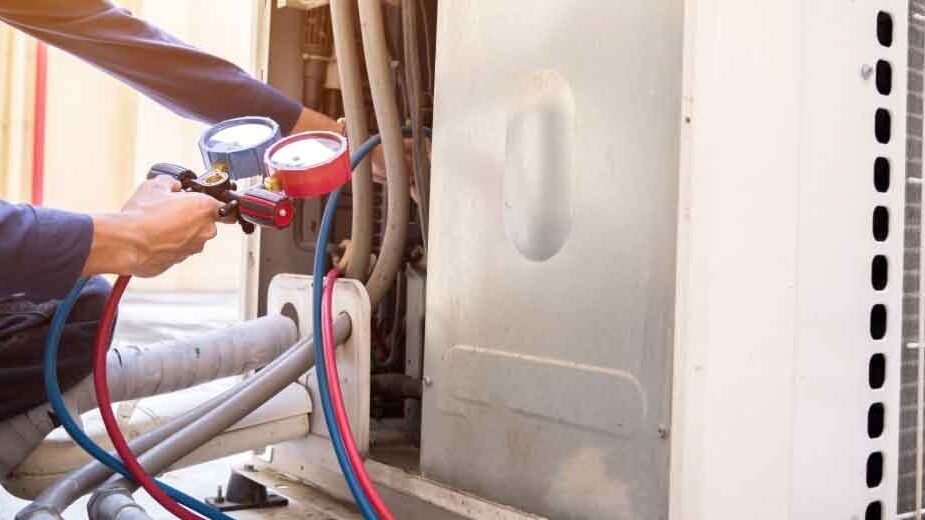
Accurate measurement is essential when diagnosing refrigerant problems. HVAC contractors connect gauges to measure system pressure and compare readings to manufacturer specifications. Abnormal pressure levels can indicate undercharging, overcharging, or flow restrictions. Temperature measurements at various points in the system help confirm whether the refrigerant is absorbing and releasing heat properly. Contractors analyze the relationship between pressure and temperature to assess refrigerant state and circulation. These readings provide objective data that supports or eliminates potential causes identified during earlier observations. Careful interpretation ensures that corrective actions address the actual issue rather than symptoms alone.
- Evaluating Superheat and Subcooling Levels
Superheat and subcooling measurements offer deeper insight into refrigerant performance. HVAC contractors calculate these values to determine how effectively refrigerant changes phase within the system. Incorrect superheat may indicate insufficient refrigerant charge or airflow issues, while abnormal subcooling can suggest overcharging or flow restrictions. Contractors use these calculations to refine their diagnosis and confirm whether refrigerant quantity and flow align with design expectations. This process requires precision and familiarity with system specifications, as even small deviations can affect performance. By evaluating these factors, contractors gain a clearer picture of refrigerant behavior throughout the cycle.
- Detecting Leaks Through Targeted Testing
When refrigerant loss is suspected, HVAC contractors use targeted leak detection methods to locate the source. Electronic detectors, pressure testing, and dye-based techniques help identify leaks that are not visible. Contractors carefully isolate system components to avoid unnecessary disassembly and ensure accurate results. Finding the exact location of a leak allows for proper repair rather than repeated recharging. This step protects the system from ongoing loss and reduces the risk of environmental impact. Effective leak detection is critical to resolving refrigerant issues and restoring stable operation.
- Assessing Component Function and System Balance
Refrigerant problems are sometimes linked to component malfunctions rather than leaks alone. HVAC contractors evaluate compressors, expansion devices, and metering components to ensure they regulate refrigerant flow correctly. A faulty valve or restricted filter can mimic refrigerant loss by limiting circulation. Contractors examine these components to confirm that refrigerant moves smoothly through the system. This assessment prevents misdiagnosis and ensures that repairs address the underlying cause. Balanced system operation depends on each component functioning as intended, making this step essential to long-term reliability.
- Preventing Recurrence Through System Adjustments
Once refrigerant issues are identified and corrected, HVAC contractors focus on preventing recurrence. They verify repairs, adjust refrigerant levels, and confirm stable operation under varying conditions. Contractors may recommend airflow improvements or maintenance practices that reduce stress on the system. These adjustments help maintain proper refrigerant balance and reduce the likelihood of future issues. Preventive steps extend system life and improve comfort, reinforcing the value of a thorough diagnostic process.
Identifying refrigerant issues requires more than adding refrigerant or replacing parts. HVAC contractors rely on observation, measurement, and systematic testing to understand how refrigerant behaves within a system. Their approach ensures that problems are addressed at the source rather than masked by temporary fixes. By combining performance evaluation, visual inspection, precise measurements, and component assessment, contractors restore balance and protect system integrity. This careful process ensures consistent comfort, efficient operation, and long-term reliability, underscoring the vital role of professional diagnosis in maintaining heating and cooling systems.
Last modified: December 30, 2025