10 Best Bulgarian Split Squat Alternatives (Ranked for Every Goal)
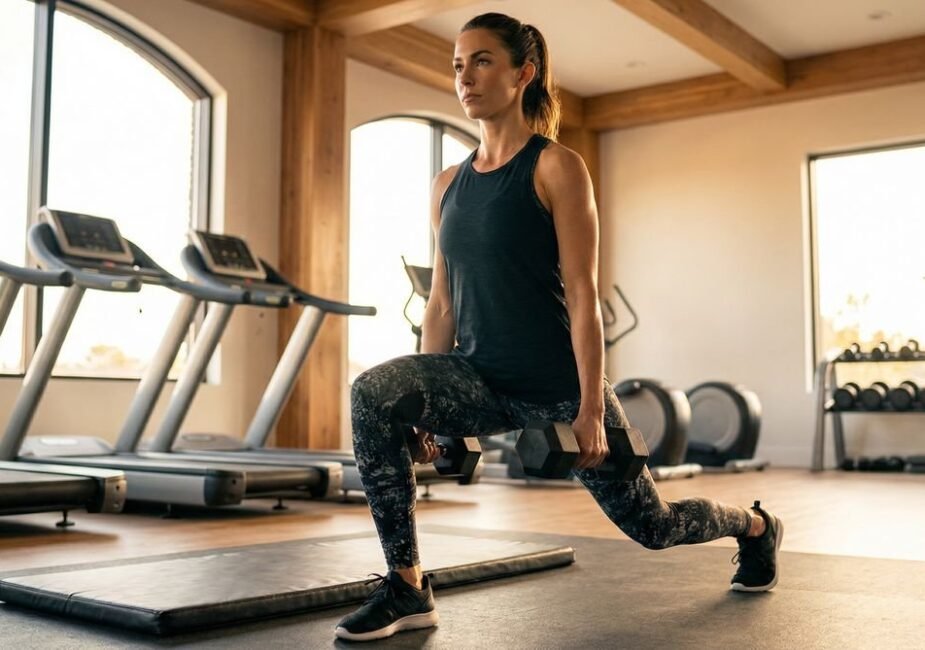
Love them or hate them, Bulgarian Split Squats (BSS) are one of the most effective exercises for building powerful, well-defined legs. But let’s be honest: they can also be brutally difficult, awkward to set up, and unforgiving on the knees and hips. If you’ve ever found yourself wobbling through a set or feeling a pinch in your knee, you’ve probably wondered if there’s a better way.
Good news: you don’t have to suffer through the BSS to achieve impressive lower-body results. Whether you’re dealing with pain, limited equipment, or just a deep-seated hatred for the exercise, a world of effective alternatives is waiting for you. This guide provides the top 10 Bulgarian split squat substitutes, ranked by difficulty and tailored to your specific goals, so you can build stronger legs, your way.
Why You Might Need a BSS Alternative
The Bulgarian Split Squat is a phenomenal exercise, but its challenges are what lead many people to seek a substitute. Understanding these hurdles is the first step to finding the perfect alternative for your routine.
First, the balance and stability demands are significant. Elevating one foot on a bench creates an unstable environment that requires a tremendous amount of core strength and coordination to manage. This can make it difficult to focus on the working leg and often leads to wobbly, ineffective reps.
Second, the exercise requires good mobility, particularly in the hip flexors and ankles. If the hip flexor of your back leg is tight, it can pull your pelvis out of alignment and strain your lower back. Likewise, limited ankle mobility in your front foot can make it difficult to squat to depth without your heel lifting off the ground.
Finally, many people experience knee or hip pain during the BSS. This can stem from improper form, but it can also exacerbate pre-existing joint issues. Forcing the movement when it causes pain is a recipe for injury, making an alternative not just a preference, but a necessity.
How to Choose the Right Alternative for You
Navigating the world of lower-body exercises can be overwhelming. To simplify your choice, here is a straightforward guide to selecting the best Bulgarian split squat alternative based on your specific needs and circumstances.
- If you have sensitive knees, prioritize exercises that reduce the strain on the knee joint. The best options are Step-Ups and Single-Leg Glute Bridges, as they build strength with a more controlled range of motion.
- If you work out at home and have no bench, you can still get a fantastic workout. Focus on Regular Split Squats and Reverse Lunges, which require minimal to no equipment and mimic the single-leg training stimulus.
- If your primary goal is to maximize glute growth, choose exercises that specifically isolate and overload the gluteal muscles. Single-Leg Hip Thrusts and Staggered-Stance Romanian Deadlifts (RDLs) are superior choices for targeting your posterior chain.
- If you are a beginner, it’s crucial to build a solid foundation before attempting more complex movements. Start with Regular Split Squats and Glute Bridges to develop unilateral strength and stability safely.
Bulgarian Split Squat Alternatives: Comparison Table
To help you choose the best fit, this table breaks down the top 10 alternatives by their primary muscle focus, difficulty, and equipment requirements.
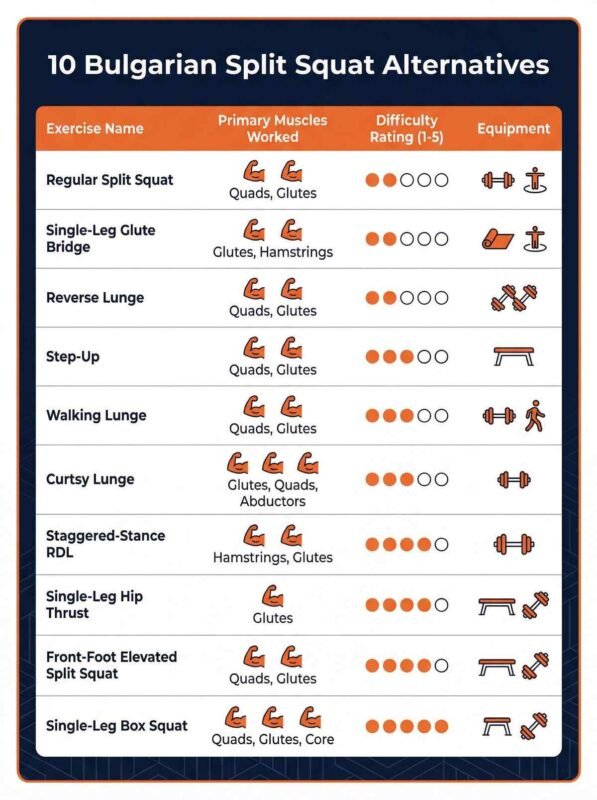
| Exercise | Primary Muscle(s) | Secondary Muscle(s) | Difficulty (1-5) | Equipment Needed |
|---|---|---|---|---|
| 1. Regular Split Squat | Quads, Glutes | Hamstrings, Core | 2 | None (or Dumbbells) |
| 2. Single-Leg Glute Bridge | Glutes | Hamstrings, Core | 2 | None |
| 3. Reverse Lunge | Glutes, Quads | Hamstrings, Core | 2 | None (or Dumbbells) |
| 4. Step-Up | Quads, Glutes | Hamstrings, Calves | 3 | Bench or Box, Dumbbells |
| 5. Walking Lunge | Quads, Glutes | Hamstrings, Adductors | 3 | Dumbbells |
| 6. Curtsy Lunge | Glutes (Medius), Quads | Adductors, Core | 3 | None (or Dumbbells) |
| 7. Staggered-Stance RDL | Hamstrings, Glutes | Lower Back, Core | 4 | Dumbbells or Kettlebell |
| 8. Single-Leg Hip Thrust | Glutes | Hamstrings, Core | 4 | Bench, Dumbbell or Barbell |
| 9. Front-Foot Elevated Split Squat | Hamstrings, Glutes | Quads, Adductors | 4 | Low Box or Plate |
| 10. Single-Leg Box Squat | Quads, Glutes | Hamstrings, Core | 5 | Bench or Box |
The Top 10 Bulgarian Split Squat Alternatives
Here are the ten best exercises you can use to replace the Bulgarian split squat, starting with the most beginner-friendly options and progressing to more advanced movements.
1. Regular Split Squat
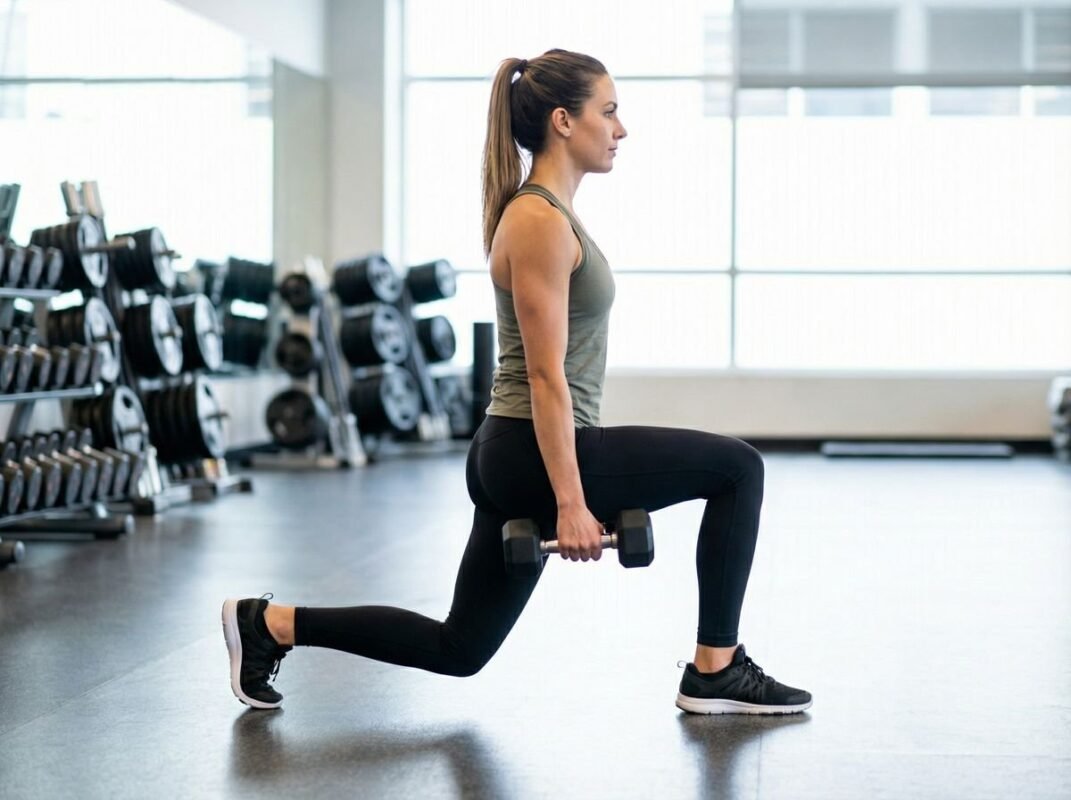
Why it’s a great alternative: The regular split squat is the perfect starting point. By keeping your back foot on the ground, you remove the balance challenge of the BSS, allowing you to focus entirely on building foundational single-leg strength. It’s the most direct regression and an excellent way to master the movement pattern safely.
Muscles Worked: Quads, Glutes, Hamstrings, Core.
How to Perform:
- Stand with your feet hip-width apart. Take a generous step forward with your right foot, as if you are in a static lunge position.
- Keep your torso upright and your core engaged. Distribute your weight evenly between your front and back foot.
- Slowly lower your hips until your back knee gently taps the floor or comes close to it. Your front thigh should be parallel to the ground.
- Drive through the heel of your front foot to return to the starting position.
- Complete all reps on one side before switching to the other.
Expert Tip: To emphasize your quads, allow your front knee to travel slightly forward over your toes. For more glute activation, maintain a vertical shin on your front leg.
2. Single-Leg Glute Bridge
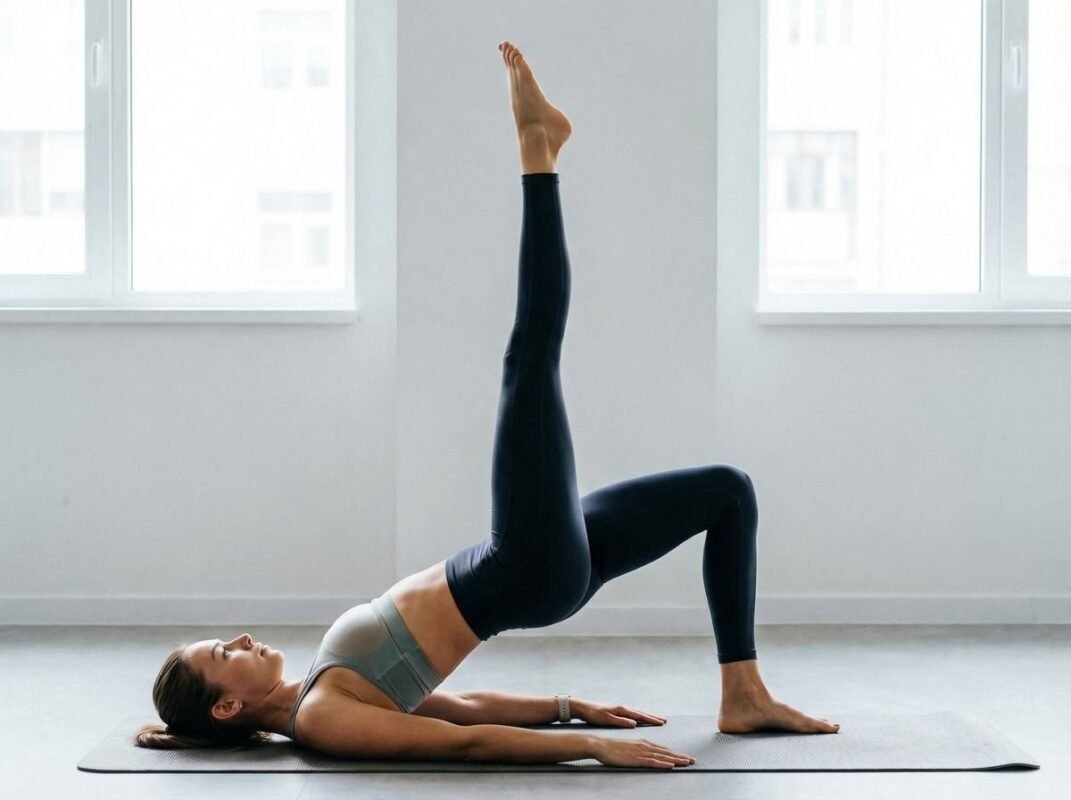
Why it’s a great alternative: If knee pain is your primary concern, the single-leg glute bridge is your best friend. It completely unloads the knee joint while delivering a powerful glute and hamstring workout. It’s a fantastic way to isolate the posterior chain without any knee stress.
Muscles Worked: Glutes, Hamstrings, Core.
How to Perform:
- Lie on your back with your knees bent and feet flat on the floor, hip-width apart.
- Extend one leg straight out. Keep your knees aligned.
- Engage your core and drive through the heel of the foot that is on the ground, lifting your hips toward the ceiling.
- Squeeze your glutes at the top, creating a straight line from your shoulders to your knee.
- Lower your hips back down with control.
Expert Tip: Avoid arching your lower back. Keep your ribcage down and focus on driving the movement with your glutes, not your spine.
3. Reverse Lunge
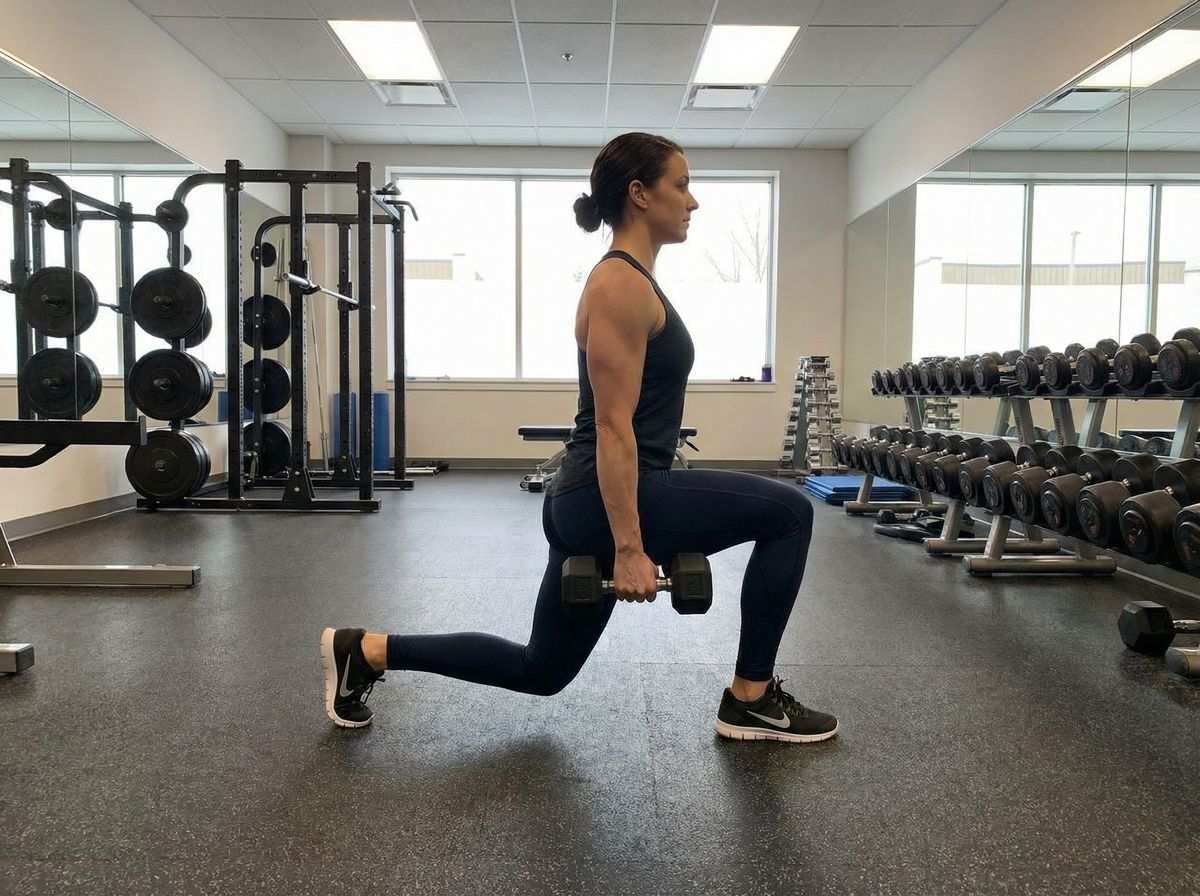
Why it’s a great alternative: The reverse lunge is a dynamic, knee-friendly alternative that’s perfect for home workouts. Stepping backward is generally easier on the knees than stepping forward, and it places a greater emphasis on the glutes and hamstrings compared to a traditional forward lunge.
Muscles Worked: Glutes, Quads, Hamstrings, Core.
How to Perform:
- Stand tall with your feet hip-width apart.
- Take a large step backward with your left foot, landing on the ball of your foot.
- Lower your hips until both knees are bent at approximately a 90-degree angle. Your front thigh should be parallel to the floor, and your back knee should hover just above the ground.
- Push through your front heel to return to the starting position.
- Alternate legs with each rep or complete all reps on one side before switching.
Expert Tip: For maximum glute activation, take a slightly longer step back and lean your torso forward slightly over your front leg.
4. Step-Up
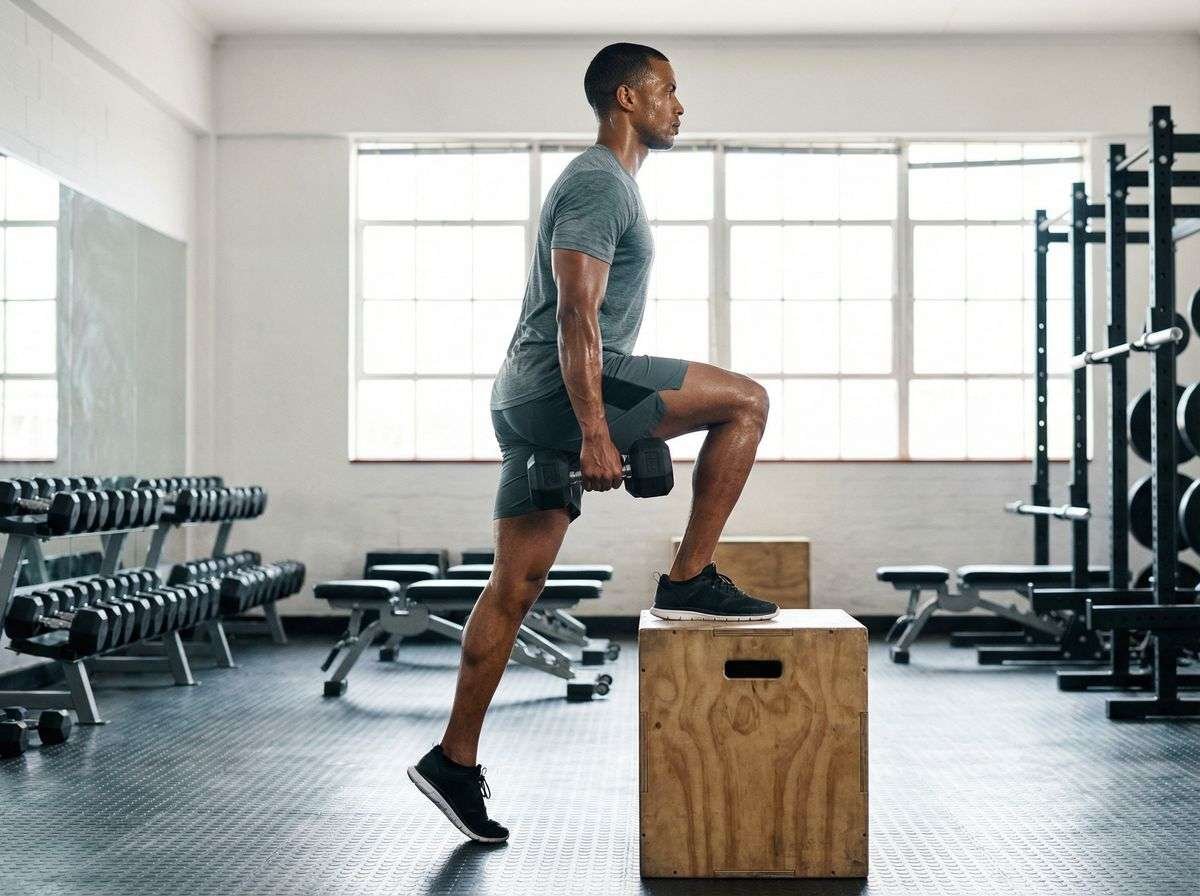
Why it’s a great alternative: Step-ups are a functional movement that directly translates to real-life activities like climbing stairs. They are excellent for targeting the quads and glutes while also improving balance and proprioception. You can easily adjust the height of the step to modify the difficulty.
Muscles Worked: Quads, Glutes, Hamstrings, Calves.
How to Perform:
- Stand in front of a sturdy bench or box.
- Place your entire right foot firmly on top of the box.
- Press through your right heel to lift your body up until your right leg is straight. Bring your left foot to meet your right foot on the box.
- Slowly lower your left foot back to the ground with control, followed by your right foot.
Expert Tip: Focus on driving the movement with your lead leg. Avoid pushing off with your back foot. The slower and more controlled the descent, the more you will get out of the exercise.
5. Walking Lunge
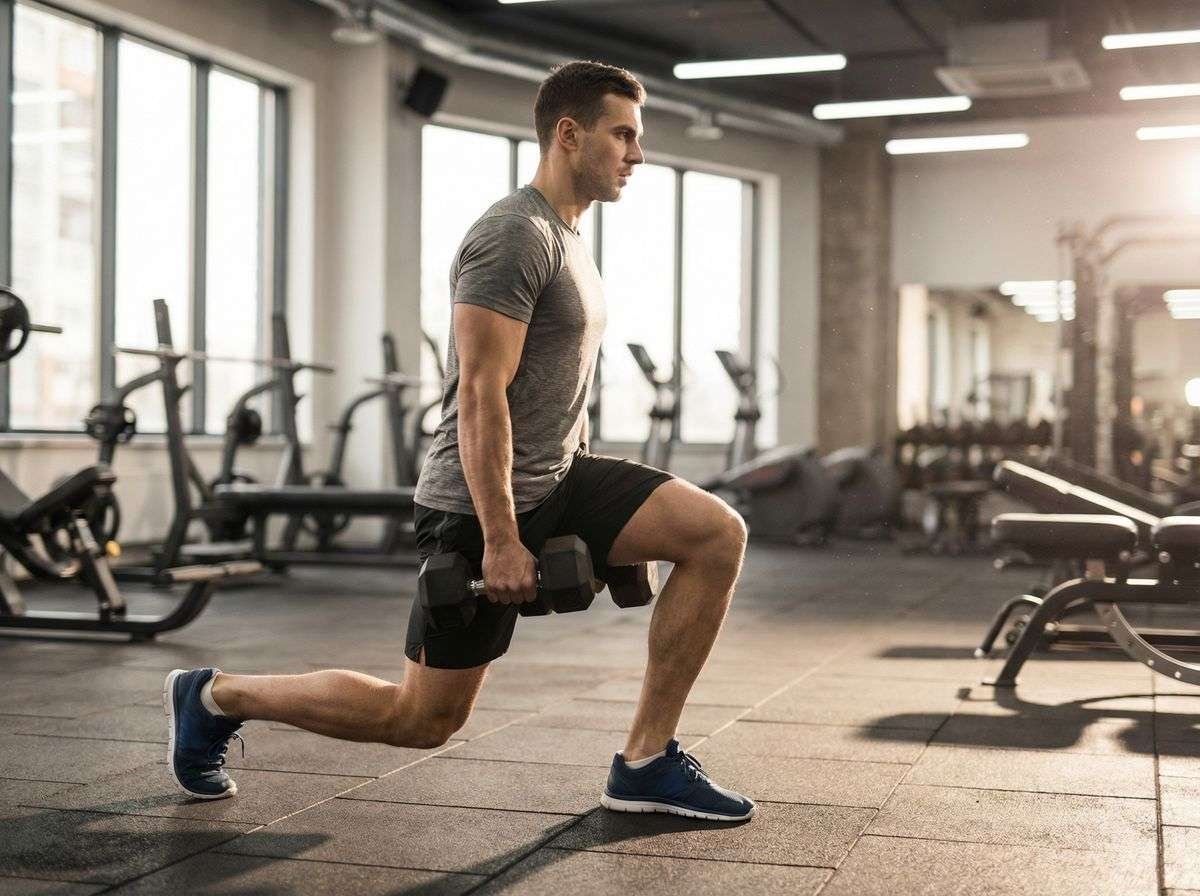
Why it’s a great alternative: The walking lunge adds a dynamic, forward-moving component that challenges your coordination and cardiovascular system more than static alternatives. It’s a highly functional exercise that improves your ability to move powerfully and athletically.
Muscles Worked: Quads, Glutes, Hamstrings, Adductors.
How to Perform:
- Stand with your feet together, holding dumbbells if desired.
- Take a large step forward with your right foot.
- Lower your hips until both knees are bent at a 90-degree angle. Your back knee should hover just above the floor.
- Instead of pushing back to the start, drive through your front heel and bring your back foot forward to meet your front foot.
- Repeat the movement, this time stepping forward with your left foot.
Expert Tip: Keep your core tight and your torso upright throughout the movement. Avoid letting your front knee cave inward.
6. Curtsy Lunge
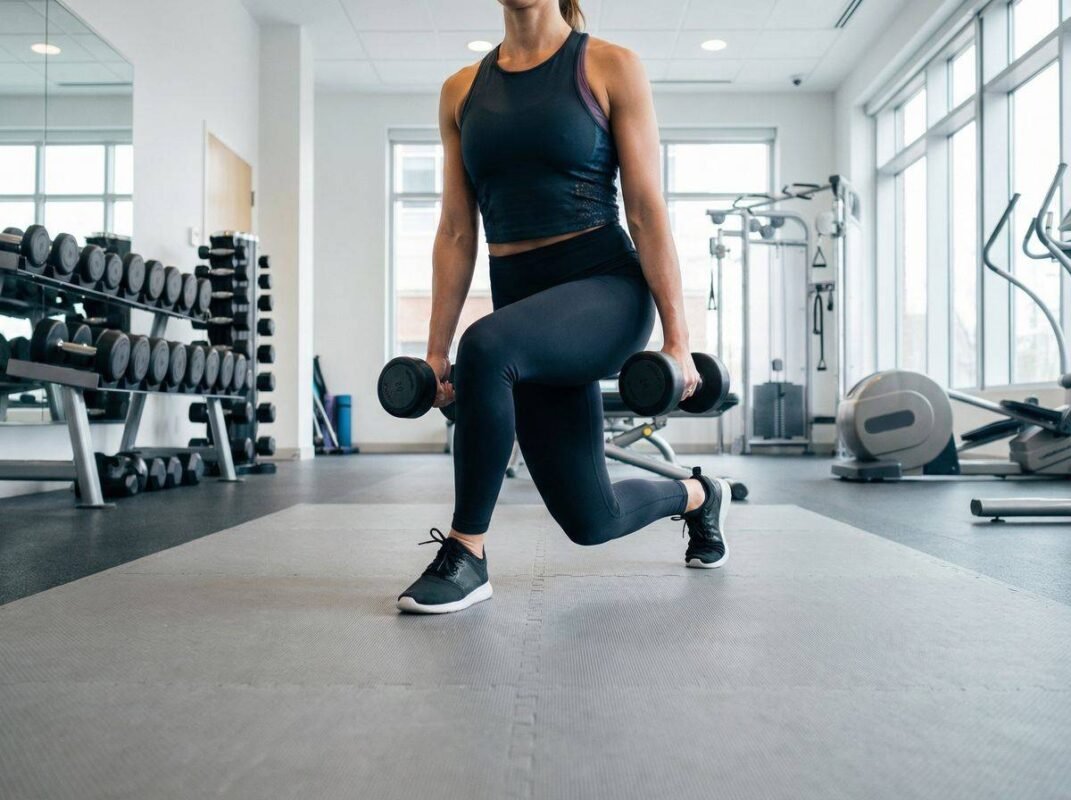
Why it’s a great alternative: The curtsy lunge is a unique variation that targets the gluteus medius (the side of your glutes) more than other lunges. This is crucial for hip stability and can help create a more rounded, well-developed look. It also challenges your adductors and core in a novel way.
Muscles Worked: Glutes (Medius), Quads, Adductors, Core.
How to Perform:
- Stand with your feet hip-width apart.
- Step your left leg back and across behind your right leg, as if you were doing a curtsy.
- Lower your hips until your front thigh is nearly parallel to the floor. Keep your front knee aligned with your front foot.
- Push through your front heel to return to the starting position.
- Complete all reps on one side before switching.
Expert Tip: The range of motion will feel different from a standard lunge. Only go as deep as you can while maintaining good form and without feeling any strain in your knees.
7. Staggered-Stance Romanian Deadlift (RDL)
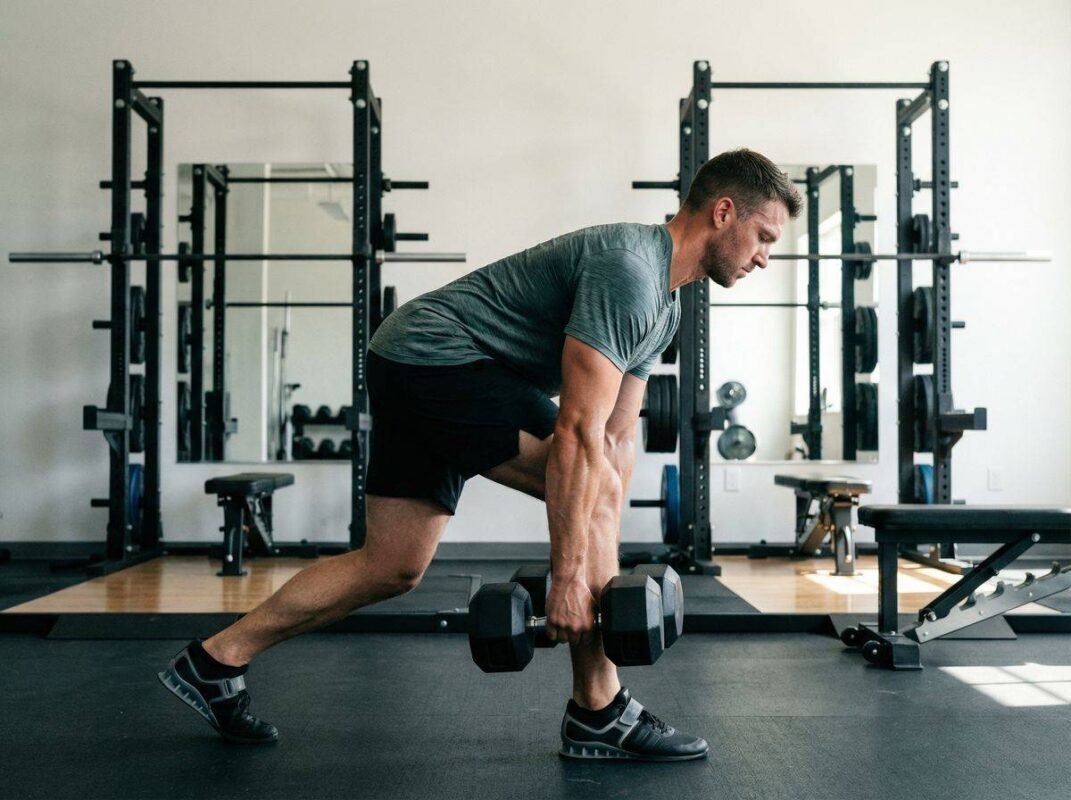
Why it’s a great alternative: This exercise is one of the best for shifting the focus from the quads to the posterior chain. If you want to build powerful hamstrings and glutes, the staggered-stance RDL is a top-tier choice. It creates a similar single-leg loading pattern to the BSS but with a hip-hinge movement.
Muscles Worked: Hamstrings, Glutes, Lower Back, Core.
How to Perform:
- Stand with your feet hip-width apart, holding a dumbbell in each hand in front of your thighs.
- Step your left foot back about 12 inches, resting on the ball of your foot. Most of your weight should be on your front (right) leg.
- Keeping your back straight, hinge at your hips and lower the dumbbells toward the floor. Keep a slight bend in your front knee.
- Lower as far as your hamstring flexibility allows without rounding your back.
- Squeeze your glutes and hamstrings to drive your hips forward and return to the starting position.
Expert Tip: Think about pushing your hips back as you lower the weights, rather than just bending over. The dumbbells should stay close to your front leg.
8. Single-Leg Hip Thrust
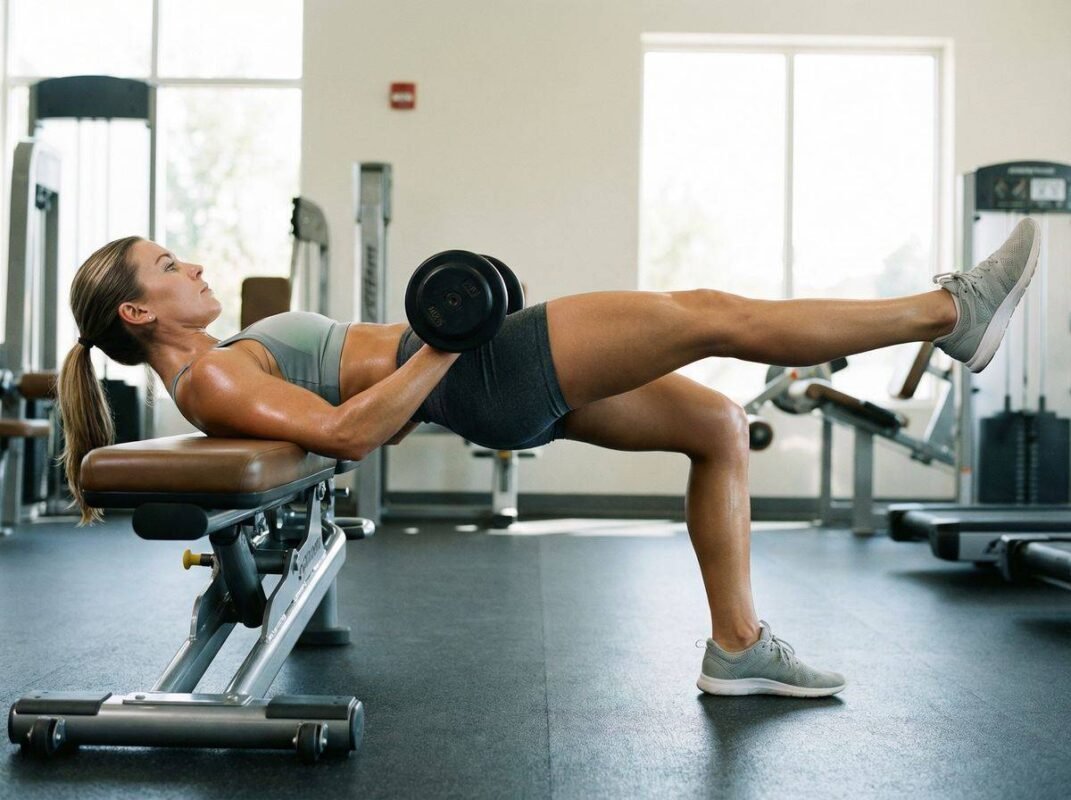
Why it’s a great alternative: For pure glute isolation, few exercises can match the single-leg hip thrust. By supporting your upper back on a bench, you can achieve a greater range of motion and focus all the tension directly on your glutes. It’s an advanced move for those serious about building a stronger posterior.
Muscles Worked: Glutes, Hamstrings, Core.
How to Perform:
- Sit on the floor with your upper back against a sturdy bench.
- Place your right foot flat on the floor with your knee bent. Extend your left leg straight out.
- Drive through your right heel, lifting your hips until your torso and right thigh form a straight line. Keep your chin tucked.
- Squeeze your glutes hard at the top of the movement.
- Lower your hips back down with control.
Expert Tip: Don’t let your hips drop on the non-working side. Keep your pelvis level throughout the entire set to ensure the working glute is doing all the work.
9. Front-Foot Elevated Split Squat
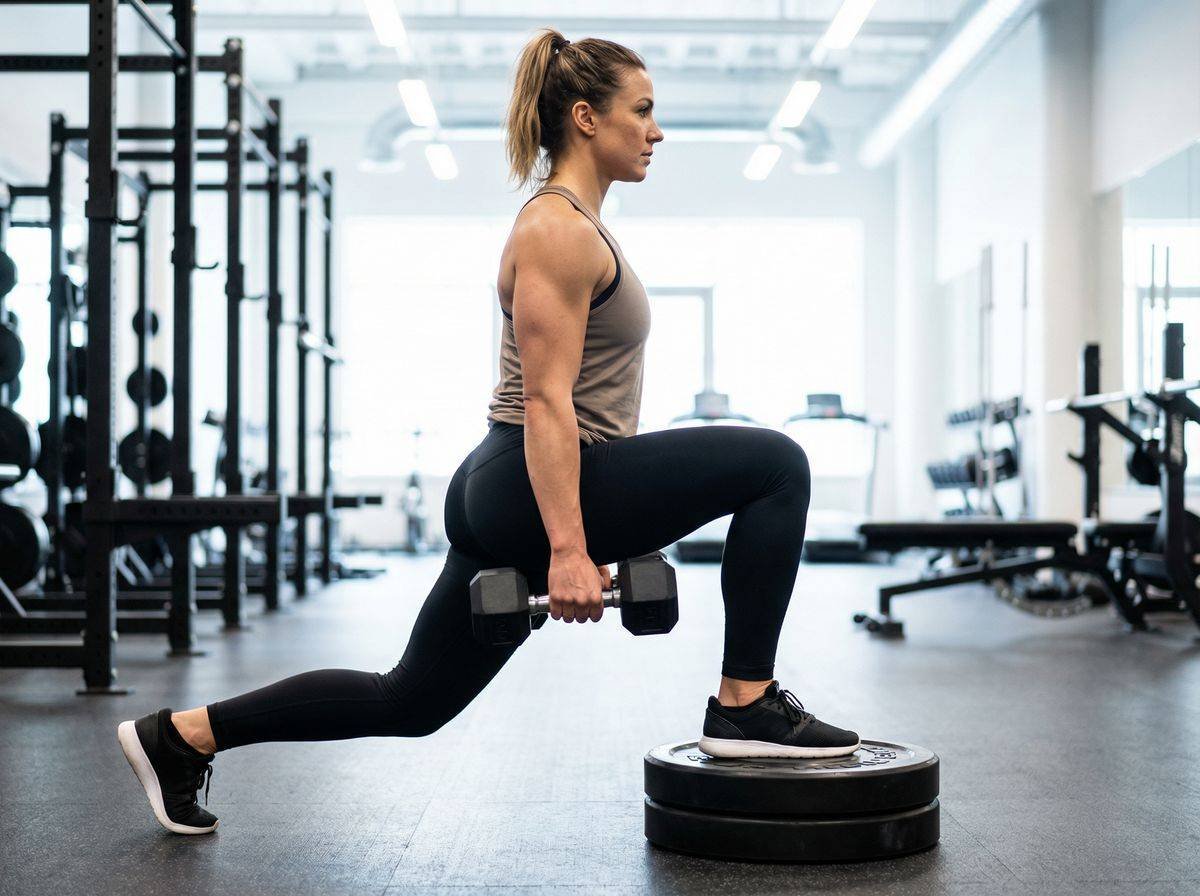
Why it’s a great alternative: By elevating your front foot on a low box or weight plate, you increase the exercise’s range of motion. This deeper stretch places a greater emphasis on the hamstrings and glutes of the front leg, making it an excellent progression from the regular split squat for posterior chain development.
Muscles Worked: Hamstrings, Glutes, Quads, Adductors.
How to Perform:
- Place your right foot on a low platform (2–4 inches high). Step your left foot back into a lunge stance.
- Keeping your torso upright, lower your hips until your back knee is close to the floor.
- You should feel a deep stretch in the hamstring and glute of your front leg.
- Drive through your front heel to return to the start.
Expert Tip: Start with a very low platform. Increasing the height too quickly can put undue stress on the hip flexor of the back leg.
10. Single-Leg Box Squat
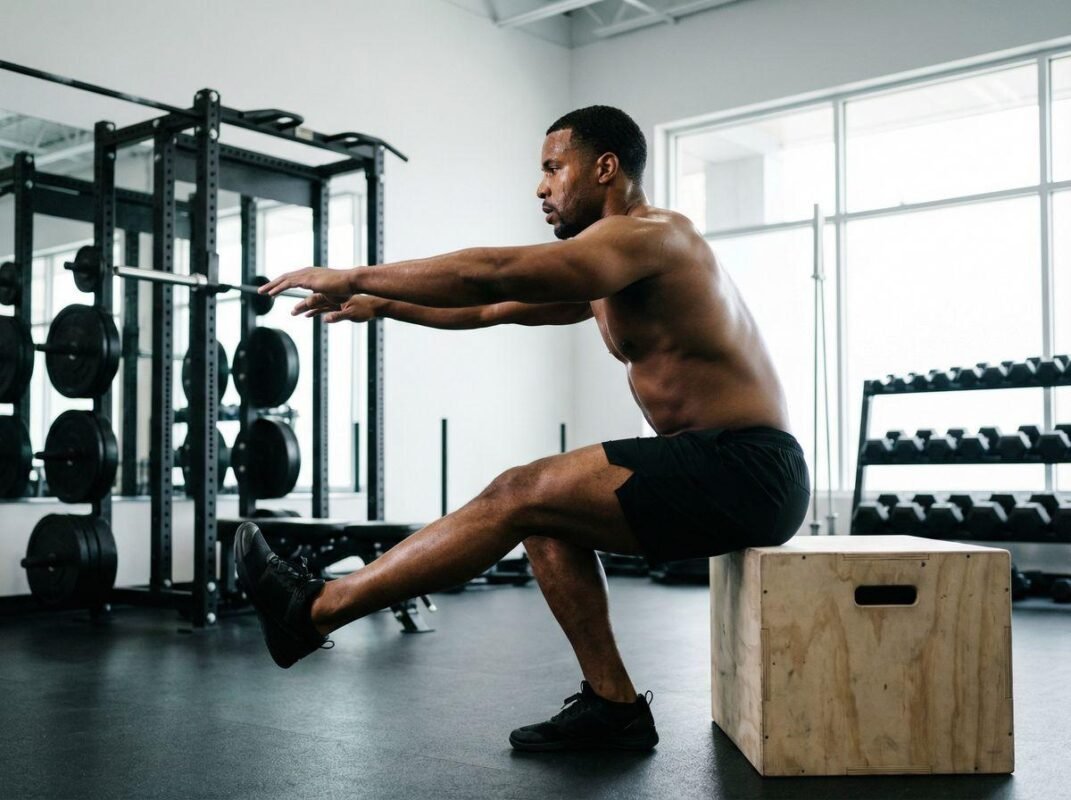
Why it’s a great alternative: This is one of the most advanced and effective alternatives. It closely mimics the strength and stability demands of a pistol squat but with a built-in safety measure. It’s a true test of single-leg strength, balance, and control, making it a fantastic goal for any athlete.
Muscles Worked: Quads, Glutes, Hamstrings, Core.
How to Perform:
- Stand in front of a bench or box, balancing on your right leg with your left leg extended in front of you.
- Keeping your back straight and chest up, hinge at your hips and squat down until you are sitting on the box.
- Pause for a moment on the box, but do not relax completely.
- Drive through your right heel, pushing yourself back up to the starting position without using momentum.
Expert Tip: Use a higher box to start, and gradually decrease the height as you get stronger. This will help you build the strength and confidence to perform the full movement.
The Science of Unilateral Training: Why These Exercises Work
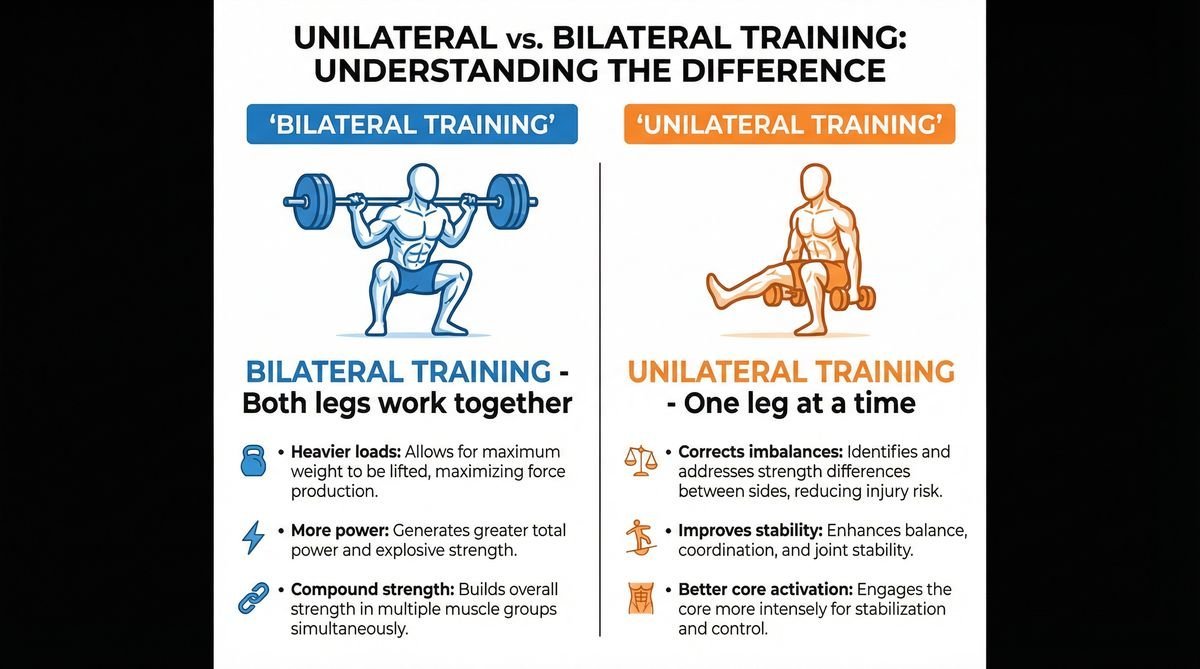
All of the alternatives listed above are forms of unilateral training, which means they work one limb at a time. This approach offers unique benefits that bilateral (two-limbed) exercises like the traditional barbell squat can’t match. According to the American Council on Exercise, unilateral training is highly effective for correcting muscle imbalances, improving core stability, and enhancing functional strength that translates to everyday life and sports.
Recent scientific research further validates the use of varied single-leg exercises. A 2025 study published in BMC Sports Science, Medicine & Rehabilitation examined how small changes in form during a Bulgarian Split Squat could target different muscles. The researchers found that leaning the trunk forward significantly increased activation in the gluteus maximus and biceps femoris (a major hamstring muscle). This demonstrates that you don’t need to stick to one rigid exercise; by choosing different alternatives and modifying your form, you can strategically emphasize specific muscles to meet your individual goals.
Frequently Asked Questions (FAQ)
What is the best Bulgarian split squat alternative for bad knees?
The best alternatives for sensitive knees are the Single-Leg Glute Bridge and the Step-Up. Both exercises minimize stress on the knee joint while effectively strengthening the surrounding muscles, particularly the glutes and quads.
What can I do instead of Bulgarian split squats if I don’t have a bench?
If you don’t have a bench, the Reverse Lunge and the Regular Split Squat are your best options. They require no equipment (or just a pair of dumbbells) and effectively replicate the single-leg training stimulus at home.
Are lunges or split squats a better alternative?
It depends on your goal. Split squats are better for building raw strength and muscle because they are more stable, allowing you to lift heavier weight. Lunges (especially walking lunges) are more dynamic and better for improving functional fitness, coordination, and cardiovascular endurance.
Can I still build strong glutes without Bulgarian split squats?
Absolutely. In fact, some alternatives are even better for glute isolation. The Single-Leg Hip Thrust and Staggered-Stance RDL are specifically designed to target the glutes and hamstrings, making them superior choices if glute growth is your primary objective.
What is the easiest alternative for a beginner?
The Regular Split Squat is the easiest and most direct alternative. It teaches the fundamental movement pattern of the BSS without the difficult balance component, making it the perfect starting point for any beginner.
Conclusion
The Bulgarian Split Squat is a powerful tool, but it is by no means the only path to a strong, balanced lower body. The best exercise is ultimately the one you can perform consistently, with good form, and without pain. By understanding your own body, goals, and limitations, you can choose an alternative from this list that works for you.
Stop forcing an exercise that feels wrong. Instead, embrace the variety and find a substitute that not only delivers results but also makes your training more enjoyable and sustainable. Pick an alternative, master the form, and get ready to build the powerful legs you’ve been working toward.
References
[1] Aygun-Polat, E., et al. (2025). Targeted muscle activation in Bulgarian split squat variations. BMC Sports Sci Med Rehabil, 27(1), 251. https://pubmed.ncbi.nlm.nih.gov/40867012/
[2] Mayo Clinic. Strength training: Get stronger, leaner, healthier. https://www.mayoclinic.org/healthy-lifestyle/fitness/in-depth/strength-training/art-20046670
[3] American Council on Exercise. (2018). The Benefits of Unilateral Training. https://www.acefitness.org/resources/pros/expert-articles/7035/the-benefits-of-unilateral-training/
Last modified: March 6, 2026